
Trees
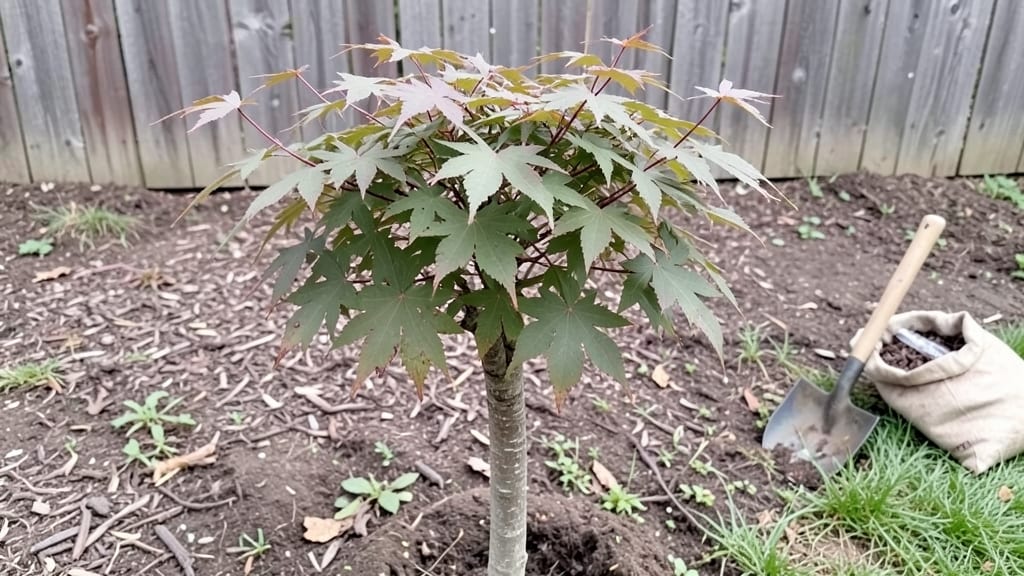
Planting a Japanese maple near your house creates a living work of art that transforms any yard into a serene retreat. 🌿 I’ve watched mine turn from a bare spot to a lush focal point over just three seasons, its delicate foliage casting perfect shade for summer afternoons while adding color year-round.
The key isn’t just picking a spot—it’s choosing the right variety for your space, whether that’s a dwarf ‘Cloud Nine’ for tight patios or a standard ‘Bloodgood’ to frame a walkway.
The biggest challenge isn’t the planting—it’s the planning. Roots need room to breathe without crowding foundations, and mature canopies should complement (not compete with) your home’s architecture. I learned this the hard way when my first maple’s branches scraped a second-story window during storms.
The solution? Plant at least 15 feet from walls for standard varieties, and prune strategically to guide growth away from structures.
What you’ll love most is how these trees anchor your outdoor spaces. Their layered foliage softens harsh lines, while seasonal colors—from spring’s chartreuse to autumn’s fiery red—keep your yard dynamic. Even in winter, their silhouette adds structure when other plants fade.
Pair it with a gravel path or outdoor seating, and you’ve got a private oasis that feels like a secret garden.
For smaller yards, dwarf varieties save space without sacrificing impact. Just remember: leaf litter is inevitable, so plan for easy cleanup or mulch-heavy areas. The payoff? A tree that grows with your home, adapting to its surroundings while giving back in beauty and shade every single season.
📚 In This Guide
- What you need
- Instructions
- Tips and common mistakes
- Wrapping up and next steps
What you need
- ● Japanese Maple Tree: 1 container-grown sapling (3–5 gallons) or 1 bare-root tree (for dormant planting in fall/winter).
- ● Size tip: Choose a mature size based on your space (e.g., ‘Bloodgood’ or ‘Emperor I’ for compact varieties).
- ● Planting Hole: 1 hole twice as wide and slightly shallower than the root ball.
- ● Depth: Top of root ball should sit 1–2 inches above ground level (prevents waterlogging).
- ○ Soil Amendments (Optional but Recommended): Compost or aged manure: 1–2 gallons (mixes into native soil for drainage and nutrients).
- ● Organic mulch: 2–3 inches of pine bark fines or shredded leaves (keeps roots cool and moist).
- ● Shovel or spade: For digging the hole (boring or round-edge preferred).
- ● Garden trowel: For loosening roots if repotting a container-grown tree.
- ● Wheelbarrow or bucket: For mixing soil amendments (5–10 gallons capacity).
- ● Garden hose or watering can: With a gentle spray nozzle (avoid blasting roots).
- ● Gloves: Heavy-duty work gloves to protect hands from thorns (some varieties have them!).
- ○ Stakes & Ties (Optional): 2–3 wooden or bamboo stakes (if planting in windy areas).
- ● Soft tree ties or fabric strips (to secure without damaging bark).
- ● Location: Partial shade (4–6 hours of dappled sunlight daily) or full shade in hot climates. Avoid direct afternoon sun (can scorch leaves).
- ● Soil pH: Slightly acidic to neutral (6.1–7.5). Test soil with a pH kit if unsure.
- ● Spacing: Small varieties: 6–8 feet from house/structures.
- ● Large varieties (e.g., ‘Shishigashira’): 15–20 feet away.
- ● Water Source: Easy access to water for the first 2–3 weeks (deep watering 2–3 times weekly).
Step-by-Step guide for planting a Japanese maple near your home
This graceful tree thrives in shade and adds beauty year-round—here’s how to plant it properly.
🌱 Step 1: Choose the Perfect Planting Spot
Japanese maples love dappled shade, so avoid harsh afternoon sun or deep shade where they’ll grow weak. Look for a location at least 10-15 feet from your house—this gives roots room to spread without damaging foundations. The spot should also be sheltered from strong winds, which can stress the delicate branches.
I always check the mature height of the variety (some stay under 6 feet, others reach 20 feet) and plant accordingly. If your yard has a slope, position the tree slightly uphill from where you want it to mature—this prevents roots from eroding soil toward your home.
🪴 Step 2: Dig a Hole Twice as Wide as the Root Ball
Use a shovel to dig a hole 12-18 inches wider than the root ball and just as deep. Loosen the soil at the bottom with your hands or a garden fork—this prevents compaction and encourages root growth outward. If your soil is heavy clay, mix in 2-3 inches of compost into the bottom of the hole to improve drainage.
I like to water the hole thoroughly before planting. This settles the soil and removes air pockets that could suffocate roots. Let the water drain completely before proceeding—soggy soil at planting time leads to rot.
☀️ Step 3: Position and Backfill the Tree
Place the Japanese maple in the hole so the top of the root ball sits 1-2 inches above ground level. This prevents water from pooling around the trunk. Spread the roots gently outward—don’t force them—then fill the hole with native soil, tamping lightly every 3-4 inches to remove air gaps.
Leave a 3-inch-wide berm of soil around the base to catch water. This creates a natural moisture barrier that protects the trunk from erosion. Avoid piling soil against the trunk itself—this can cause rot.
💧 Step 4: Water Deeply and Mulch Properly
Water the tree thoroughly until the soil 6 inches down feels moist. Japanese maples are drought-sensitive when young, so I water once a week for the first month unless rain provides 1 inch of moisture. Mulch with 2-3 inches of shredded bark or wood chips, keeping it 6 inches away from the trunk to prevent rot.
Here’s the thing—mulch too close to the trunk traps moisture and invites disease. I always rake a small circle around the base to create airflow. Over time, the mulch will break down and enrich the soil naturally.
⏰ Step 5: Protect and Maintain for Long-Term Health
Stake the tree only if necessary—Japanese maples have weak wood and can snap in wind. If staking, use two stakes and soft ties to avoid girdling the trunk. Prune in late winter or early spring to remove dead wood and shape the canopy, but never cut more than 25% of the foliage at once.
Watch for signs of stress: yellowing leaves often mean too much sun, while brown edges signal underwatering. I’ve found that a balanced fertilizer in early spring helps young trees establish strong root systems. Avoid heavy-handed pruning—they bloom on old wood, so aggressive cuts remove next year’s flowers.
Tips & tricks for perfect Japanese maple planting near your house
A few key tricks will help you avoid common mistakes and ensure your Japanese maple thrives for decades. Here’s what I’ve learned from years of planting these elegant trees.
The Right Spot Makes All the Difference: When selecting your 10-15 feet planting location, walk through it at different times of day. Morning sun with afternoon shade is ideal—Japanese maples can scorch in hot afternoon rays. I’ve seen trees planted too close to south-facing windows suffer from leaf burn, so test the light conditions before digging. Also, avoid low spots where water pools after rain, as these trees hate soggy roots.
Soil Prep is Non-Negotiable: Before planting, test your soil’s drainage by digging a small hole and filling it with water. If it doesn’t drain within 30 minutes, amend the planting area with 2-3 inches of compost mixed into the bottom of the hole as instructed. For clay-heavy soils, I add a handful of perlite to improve aeration. The goal is to mimic the well-draining, slightly acidic conditions Japanese maples prefer in their native Japan.
Root Ball Positioning is Critical: That 1-2 inches above ground level placement in Step 3 isn’t just arbitrary—it prevents water from sitting against the trunk, which causes rot. I like to use a level to ensure the root ball sits perfectly straight. If you notice the tree leaning slightly after planting, gently adjust it before backfilling. The 3-inch berm you create around the base also helps direct water away from the trunk while keeping roots cool.
Mulching Strategy Saves Trees: The 2-3 inches of mulch you apply should be spread in a donut shape—6 inches away from the trunk—not piled against it. I’ve seen too many new plantings suffer from mulch volcanoes that trap moisture and invite disease. For extra protection in winter, add a 4-inch layer of mulch after the ground freezes, then remove it in early spring before new growth starts.
Pro Tips for Planting Japanese Maple Near House
- A few key tricks will help you avoid common mistakes and ensure your Japanese maple thrives for decades.
- The Right Spot Makes All the Difference: When selecting your 10-15 feet planting location, walk through it at different times of day.
- Soil Prep is Non-Negotiable: Before planting, test your soil’s drainage by digging a small hole and filling it with water.
Frequently asked questions
Got questions about planting a Japanese maple near your home?
You’re not alone! Here are answers to the most common concerns—from spacing to care—so you can enjoy your tree’s beauty without the headaches.
How close can I plant a Japanese maple to my house?
Aim for at least 15–25 feet from your home’s foundation to avoid root competition with plumbing or foundations. Dwarf varieties can tolerate 10–15 feet, but larger species (like Acer palmatum) need space to spread. Check local codes—some areas require 20+ feet for mature trees. Pro tip: Plant on a slight slope (away from the house) to encourage roots to grow outward, not toward structures.
When is the best time to plant a Japanese maple near my house?
Spring (after last frost) or early fall (4–6 weeks before first frost) are ideal. Avoid planting in summer heat or winter cold, as young roots struggle to establish. If planting in fall, water thoroughly before the ground freezes. Bonus: Fall-planted trees often show better root growth by spring!
What if my Japanese maple isn’t thriving near my house?
Check these common issues:
Poor drainage? Japanese maples hate soggy soil. Amend clay soil with compost or plant on a mound.
Too much sun? Variegated types (like ‘Bloodgood’) need morning sun + afternoon shade.
Yellow leaves? Overwatering or nutrient deficiency. Test soil pH (aim for 5.0–6.5) and fertilize lightly in spring.
If the tree’s struggling after a year, it might be root-bound—prune roots gently or transplant to a sunnier spot.
Are there alternatives to Japanese maples for shade near houses?
Yes! Consider these low-maintenance, shade-tolerant options:
Tree
Mature Height
Pros
Katsura Tree (Cercidophyllum japonicum)
30–40 ft
Fragrant foliage, drought-tolerant, great for privacy.
Smoke Tree (Cotinus coggygria)
15–25 ft
Colorful foliage, compact, and pest-resistant.
Dwarf Fountain Grass (if you want non-woody options)
2–4 ft
Adds texture, zero invasive roots, and thrives in shade.
Note: Avoid fast-growing trees (like willows) near houses—they can crack foundations with aggressive roots!
Will a Japanese maple lose leaves in winter, and how do I protect it?
Yes! Most varieties are deciduous and drop leaves in fall/winter. To protect it:
- Wrap the trunk with burlap (if temps drop below -10°F).
- Avoid mulching too heavily—keep 6 inches of space from the trunk.
- Water deeply before freezing to prevent root desiccation.
Variegated types (like ‘Shishigashira’) may scorch in harsh winter sun—provide light shade with a temporary screen if needed.
Wrapping up and next steps
Planting a Japanese maple near your house is a beautiful and rewarding way to add privacy, elegance, and shade to your outdoor space. With the right location, soil prep, and care, this stunning tree will thrive for decades—offering year-round interest and a serene atmosphere. 🌿
Ready to transform your yard? Start by sketching your design—consider spacing, sunlight needs, and long-term growth habits. Then, gather your tools and get planting! Whether you’re a seasoned gardener or a beginner, your Japanese maple will thank you with vibrant foliage and graceful branches.