
Pruning
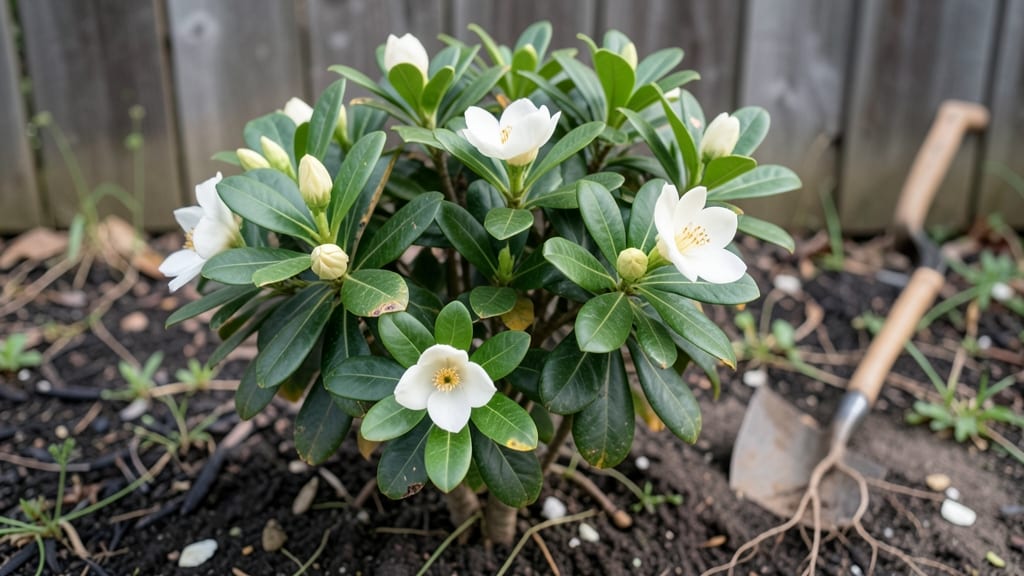
Planting a gardenia tree requires well-draining, acidic soil, partial shade to full sun, and spring or early fall timing for optimal root establishment and fragrant blooms. Space saplings 6-10 feet apart and water deeply after transplanting.
Gardenias thrive when their soil stays consistently moist but never soggy—think of it like a sponge that wrings out excess water. 🌿 The right soil mix (equal parts peat moss, pine bark, and compost) mimics their natural tropical habitat, while the acidic pH (4.5-6.0) prevents nutrient deficiencies that cause yellowing leaves.
I've found that even a few hours of afternoon shade in hot climates can prevent sunburned foliage while still encouraging abundant blooms.
Timing matters just as much as technique. Spring planting gives roots time to establish before summer heat, while fall planting avoids winter dormancy stress. For container growers, I recommend using a well-draining potting mix with added perlite and repotting every 2-3 years to prevent root-bound stress.
The key is patience—gardenias often take 1-2 years to reward you with their signature intoxicating fragrance.
💡 In This Article
- Ideal Soil and Sunlight Conditions for Gardenia Trees
- Step-by-Step Gardenia Planting Guide by Season
Ideal soil and sunlight conditions for gardenia trees
Gardenia trees originate from tropical Asia and Africa, where they thrive in acidic, well-draining soils with a pH range of 4.5-6.0. This acidity isn't just preference—it's survival.
At lower pH levels, iron and other micronutrients become more available to the plant's roots, preventing the yellowing leaves (chlorosis) that occur when soil pH rises above 7.0.
The ideal soil mix mimics their natural habitat: 50% peat moss or coconut coir (for moisture retention), 30% pine bark fines (for aeration), and 20% compost (for nutrients). This combination holds moisture while preventing waterlogging, which can suffocate roots. 🌱
The organic matter in this mix does more than just feed the plant—it creates a sponge-like structure that maintains consistent moisture without becoming compacted.
In regions with heavy clay soils (like the Southeast U.S.), amending with sulfur-based amendments can help maintain the proper pH, while in sandy soils (common in Florida or California), adding 2-3 inches of organic mulch annually helps retain moisture and cool roots.
The texture should resemble a well-draining cake batter—light enough to allow oxygen to roots but moist enough to prevent desiccation.
Sunlight needs are equally precise: gardenias crave bright, indirect light, ideally with morning sun exposure (when UV intensity is lower) and afternoon shade (to prevent leaf scorch).
In hot climates (Zones 8-10), direct afternoon sun can raise leaf temperatures above 90°F, causing crispy brown edges—a condition called "sunburn" that's irreversible.
In cooler climates (Zones 7 and below), gardenias can tolerate more sun, but their blooms will be more abundant with 4-6 hours of filtered light daily. 🌞 The secret is mimicking their natural understory habitat, where they grow beneath taller trees that filter harsh midday rays.
Regional adjustments are crucial. In humid subtropical climates (like Georgia or South Carolina), gardenias appreciate afternoon shade from structures or taller plants, while in Mediterranean climates (like coastal California), they can handle more sun if given afternoon shade during summer months.
Container growers in urban areas often place their gardenias near east-facing windows or under 30-50% shade cloth to replicate these conditions.
The key is observing your plant's leaves—if they develop yellow patches between veins, it's a sign of too much sun; if they wilt or droop, it may indicate insufficient light.
One often-overlooked factor is root temperature. Gardenias prefer soil temperatures between 65-75°F. In cooler climates, mulching with 3-4 inches of pine straw or wood chips insulates roots and maintains consistent temperatures.
In contrast, in hot desert climates (like Arizona), gardenias may need drip irrigation with shade cloth to prevent soil from overheating. The goal is to keep roots cool enough to absorb nutrients efficiently but warm enough to encourage blooming—typically 5-10°F warmer than air temperature in ideal conditions. 🌡️
Here's what happens when conditions go wrong: Soil pH above 6.5 locks out essential nutrients, causing stunted growth; pH below 4.0 becomes toxic to roots. Too much direct sun causes oxidative stress in leaves, while too little light results in leggy growth with few blooms.
The sweet spot is a balance where the plant can photosynthesize efficiently without overheating—like a tropical rainforest's dappled light. For container growers, I recommend testing soil pH every 3-4 months and adjusting with garden lime (to raise pH) or sulfur (to lower pH) as needed.