
Diseases
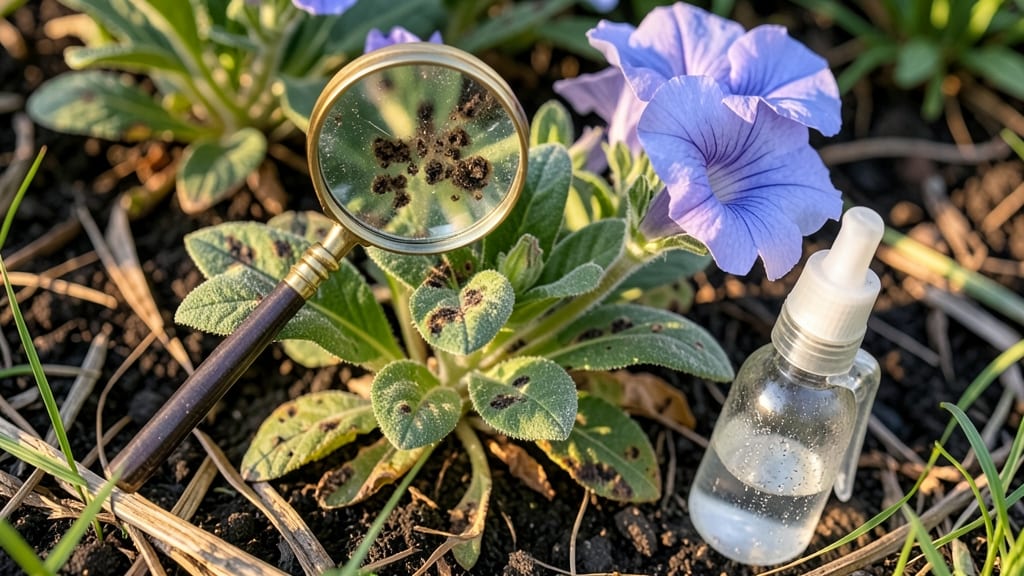
If your petunia plant diseases strike with yellow leaves, gray powder, or drooping stems, don’t panic—simple fixes can save your blooms before they’re gone. ✨ I’ve pulled my own petunias back from the brink, and you can too without losing the season’s color.
The key is acting fast before spots spread or stems rot completely.
Most petunia diseases—like powdery mildew or fungal leaf spots—love warm, humid weather and crowded plants. Overwatering turns soil into a breeding ground, while poor airflow lets spores hitch rides on every breeze.
My biggest mistake? Ignoring the first signs until half the plant was gone. Now I check plants twice a week for white fuzz, dark spots, or wilting stems.
You’ll stop the spread with a mix of copper fungicide for fungal issues and neem oil for early-stage problems. Prune infected leaves immediately (don’t compost them!) and space plants wider to improve airflow.
Within 3–5 days, you’ll see new growth pushing through—just like my own petunias did after that first panic-pruning session.
This works for container gardens, hanging baskets, or in-ground beds—just adjust watering slightly for each setup. The goal isn’t perfection; it’s fast action to keep your petunias blooming like they’re supposed to. Let’s get those plants back to their showstopping best.
Root Causes Of Petunia Struggles
Petunias may seem like low-maintenance superstars, but their vibrant blooms can quickly fade when struck by disease. Understanding why these issues arise is the first step to prevention—and revival. Below, we break down the science behind the most common petunia ailments, so you can tackle them head-on.
Petunias thrive when their roots breathe freely, but overcrowding or dense planting creates a perfect storm for fungal infections like Botrytis blight or powdery mildew. Here’s why:
- Stagnant Air Traps Moisture – When plants grow too close, airflow slows, and humidity lingers.
Fungal spores (which love dampness) multiply rapidly, smothering leaves and stems. - Root Competition – Overcrowded roots struggle to absorb water and nutrients efficiently, weakening the plant’s immune response. - Soil Compaction – Heavy or clay-rich soil doesn’t drain well, leading to waterlogged roots—a fungal buffet.
Actionable Fix: 🔹 Space petunias 12–18 inches apart (or as per variety guidelines). 🔹 Prune crowded stems to improve airflow. 🔹 Amend soil with perlite or compost to boost drainage.
Petunias need water, but too much turns their leaves into a fungal smorgasbord. Diseases like gray mold (Botrytis) and leaf spot flourish when moisture lingers.
- Wet Leaves = Fungal Party – Water droplets on foliage create a microclimate where spores germinate.
Overhead watering (especially in the evening) accelerates this. - Poor Drainage = Root Rot – Phytophthora and Pythium thrive in soggy soil, cutting off oxygen to roots and causing sudden wilting. - High Humidity – Greenhouses or shaded areas trap moisture, giving fungi a 24/7 buffet.
Actionable Fix: 🔹 Water at the base (not overhead) in the morning so leaves dry quickly. 🔹 Use drip irrigation or soaker hoses to avoid wetting foliage. 🔹 Ensure pots have drainage holes and raise containers to prevent waterlogging.
A stressed petunia is like an open door for diseases. Nutrient deficiencies, pests, or environmental shocks lower its defenses, making it vulnerable to infections.
- Nitrogen Deficiency – Yellowing leaves (chlorosis) signal weak growth, making plants more susceptible to bacterial wilt or downy mildew.
- Pest Damage – Aphids, spider mites, and whiteflies pierce plant tissues, creating entry points for secondary infections.
- Temperature Stress – Sudden cold snaps or heatwaves shock petunias, suppressing immunity and inviting fungal attacks.
Actionable Fix: 🔹 Fertilize regularly with a balanced 10-10-10 or tomato/vegetable feed (high in potassium for disease resistance). 🔹 Inspect leaves weekly for pests—spray with neem oil or insecticidal soap at the first sign. 🔹 Hardening off young plants prevents shock from temperature swings.
Soil and gardening tools can be silent disease carriers, introducing pathogens like Fusarium wilt or Alternaria leaf spot to your petunias.
- Old Soil = Old Problems – Reusing infected soil spreads fungal spores and bacterial colonies to new plants.
- Dirty Pruners – Unsterilized tools can transfer viruses (e.g., Tobacco Mosaic Virus) from diseased to healthy plants.
- Compost Contamination – Improperly decomposed compost may harbor pathogenic microbes if it contains diseased plant debris.
Actionable Fix: 🔹 Sterilize tools with rubbing alcohol (70%+) or a bleach solution (1:9 ratio) between uses. 🔹 Test soil for pathogens before planting—amend with beneficial microbes (e.g., Trichoderma fungus). 🔹 Rotate crops—avoid planting petunias in the same spot yearly to break disease cycles.
Petunias hate extreme weather shifts—too much rain, hail, or frost can trigger stress-related diseases like powdery mildew or stem rot.
- Heavy Rain – Washes away protective cuticular wax on leaves, making them more permeable to pathogens.
- Hail Damage – Bruised leaves become entry points for bacterial infections.
- Frost or Freeze – Cold snaps disrupt cell membranes, weakening the plant’s ability to fight off infections.
Actionable Fix: 🔹 Mulch heavily (2–3 inches) to insulate roots and moderate soil temperature. 🔹 Use row covers in early spring/fall to protect from frost. 🔹 Choose disease-resistant varieties (e.g., ‘Wave’ or ‘Supertunia’) for tougher blooms.
Too much of a good thing can backfire. Chemical burns, salt buildup, or imbalanced nutrients create stress, inviting diseases.
- Excessive Nitrogen – Promotes soft, sappy growth that’s more prone to fungal infections.
- Salt Burn – Over-fertilizing with synthetic salts (e.g., too much Miracle-Gro) disrupts root function, making plants vulnerable.
- Herbicide Drift – Residual glyphosate or other chemicals can weaken petunias, making them susceptible to secondary infections.
Actionable Fix: 🔹 Follow fertilizer labels—petunias need moderate feeding, not heavy doses. 🔹 Flush soil occasionally with water to prevent salt buildup. 🔹 Avoid herbicides near petunias—opt for organic mulch (straw, wood chips) to suppress weeds.
Healthy petunias = disease-resistant petunias. Focus on proper spacing, airflow, and stress reduction—these are your best defenses against most issues. Once you identify why your plants are struggling, you can target the fix before diseases take hold!
Fixing Petunia Problems Fast
When your petunias start showing signs of distress, quick action can mean the difference between saving your plants and losing them. Below are targeted solutions for the most common petunia diseases, along with prevention tips to keep your blooms healthy and vibrant.
🔥 How to Treat It
Fungal diseases like powdery mildew (white powdery spots) and botrytis blight (brown, mushy stems) thrive in damp, humid conditions. Here’s how to tackle them:
- 🍳 Prune Infected Parts
- Use clean, sharp scissors to remove affected leaves, stems, or flowers. Dispose of them in the trash (not compost) to prevent spreading spores.
- 👨🍳 Apply Fungicide
- Spray with a copper-based fungicide or a neem oil solution (1 tsp neem oil + 1 tsp mild soap per quart of water). Reapply every 7–10 days until the problem clears.
- 🥘 Improve Airflow
- Space plants 12–18 inches apart to reduce humidity. If growing in containers, ensure pots have drainage holes.
- ⏰ Water Wisely
- Water early in the day so foliage dries quickly. Avoid overhead watering—use drip irrigation or a watering can with a narrow spout.
💡 Prevention Tips
- 🌡️ Space plants properly to minimize crowding.
- ✨ Avoid wetting leaves when watering.
- 🎯 Choose resistant varieties like ‘Wave’ or ‘Supertunia’ petunias, which are bred to fight fungal diseases.
🔥 How to Treat It
Bacterial infections (small water-soaked spots or sudden wilting) spread rapidly. Act fast to stop them:
- 🔪 Remove Severely Infected Plants
- If a plant is more than 50% affected, pull it out immediately to prevent spread. Bag and discard it.
- 🍳 Sterilize Tools
- Clean pruners with rubbing alcohol (70% isopropyl) between cuts to avoid transferring bacteria.
- 👨🍳 Use Copper or Antibacterial Spray
- Apply a copper fungicide or a bacterial spray (like a diluted hydrogen peroxide solution: 1 part 3% H₂O₂ to 9 parts water). Spray in the early morning for best results.
- 🥘 Boost Plant Health
- Strengthen petunias with a balanced fertilizer (10-10-10) to help them fight infections.
💡 Prevention Tips
- 🌡️ Rotate crops—don’t plant petunias in the same spot year after year.
- ✨ Water at the base—never let leaves stay wet.
- 🎯 Practice good garden hygiene—clean up debris and fallen leaves regularly.
🔥 How to Treat It
Pests weaken petunias, making them susceptible to diseases. Here’s how to evict them:
- 🍳 Blast Them Off
- Spray plants with a strong stream of water to dislodge aphids and spider mites. Do this early in the day so plants dry quickly.
- 👨🍳 Use Insecticidal Soap
- Mix 1.5 tbsp mild castile soap + 1 quart water. Spray directly on pests (avoid flowers if possible). Reapply every 3–5 days.
- 🥘 Introduce Beneficial Insects
- Release ladybugs, lacewings, or predatory mites to naturally control pests.
- 🔪 Severe Cases? Try Neem Oil
- Spray a neem oil solution (2 tbsp neem oil + 1 tsp soap per gallon of water) to suffocate pests and deter future infestations.
💡 Prevention Tips
- 🌡️ Inspect new plants before bringing them home.
- ✨ Use reflective mulch (like aluminum foil) to confuse whiteflies.
- 🎯 Encourage diversity—plant marigolds or basil nearby to repel pests.
🔥 How to Revive Them
If petunias look droopy, bleached, or crispy, they’re likely suffering from environmental stress:
- 🍳 Provide Shade
- Move potted petunias to a shadier spot (morning sun is best for most varieties). Use shade cloth (30–50%) if outdoors.
- 👨🍳 Water Deeply & Often
- Soak the soil until water drains from the bottom of pots. In extreme heat, water twice daily (early morning + late evening).
- 🥘 Trim Damaged Leaves
- Snip off sunburned or crispy leaves to help the plant focus energy on recovery.
- ⏰ Mulch to Retain Moisture
- Add 2–3 inches of mulch (straw or shredded bark) to keep roots cool and hydrated.
💡 Prevention Tips
- 🌡️ Choose heat-tolerant varieties like ‘Heatwave’ or ‘Superbells Heatwave’ petunias.
- ✨ Avoid afternoon watering—it can scorch leaves.
- 🎯 Monitor soil moisture—stick your finger in the soil; if it’s dry past 1 inch, water immediately.
Final Pro Tip: 💡 Act fast! The sooner you address issues, the easier it is to save your petunias. A little prevention goes a long way—healthy plants are resilient ones!
Frequently asked questions
What are the first signs my petunias have a fungal disease?
Look for white powdery patches (powdery mildew) or dark, irregular spots with yellow halos (leaf spot). Fungal issues often start on lower leaves first, then spread upward. Check stems for gray mold or mushy rot—these are clear signs of botrytis blight.
Can I use household items to treat petunia diseases?
Yes! For mild fungal issues, mix 1 teaspoon baking soda + 1 teaspoon mild soap + 1 quart water and spray leaves. Hydrogen peroxide (3%) diluted 1:9 with water can help bacterial spots. Always test on a small area first to avoid leaf burn.
Why do my petunias get diseases even with good care?
Diseases thrive when humidity and temperature combine—like summer afternoons with no breeze. Even healthy plants can succumb if airflow is poor or water sits on leaves. Consider spacing plants 18 inches apart and watering at morning to reduce risk.
How do I know if my petunia problem is disease or just stress?
Stress causes wilting, yellowing, or crispy edges without visible spots or mold. Check soil moisture—overwatering or underwatering can mimic disease. If leaves show dark spots or powdery growth, it's likely a pathogen. Prune affected areas and adjust care.
Are some petunia varieties more disease-resistant?
Look for ‘Wave’ or ‘Supertunia’ series—they’re bred to resist common fungal issues. These varieties also handle heat and humidity better. Always check seed packets for disease resistance ratings before planting.