Watering
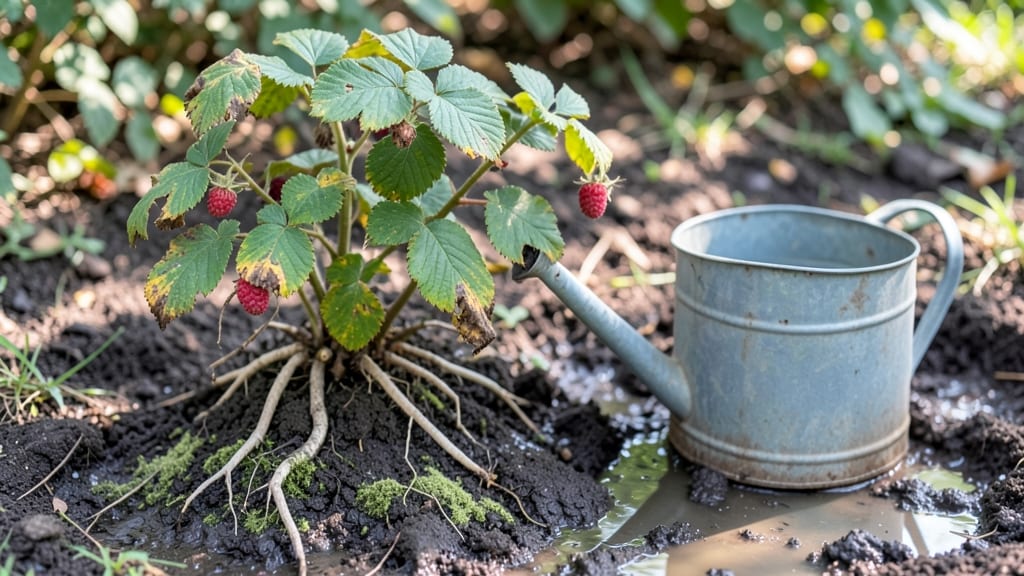
This overwatered raspberry plant might look like a soggy mess, but don’t panic—it’s fixable. 🌱 I’ve pulled more drowned canes back from the brink than I’d like to admit, and the key always starts with stopping the water torture.
The moment you notice yellowing leaves or mushy stems, action is your best friend. Between you and me, I’ve lost entire harvests to this very mistake, but now I check soil moisture with my finger before any watering decision—it’s the simplest habit that saves plants.
The first step is easy: halt all watering immediately and let the roots breathe. If the soil feels like a swamp, grab a trowel and loosen it around the base to help air circulate. For containers, check drainage holes—if they’re clogged, that’s your problem.
Raspberry roots need room to dry out between drinks, and once you’ve got the watering schedule right, you’ll see new green growth within 10-14 days. Trust me, your plants will thank you.
What you’ll end up with is a revived plant that’s finally getting the care it deserves—no more sad, wilting canes. The leaves will turn a vibrant green again, and you’ll watch those berries form like clockwork.
The secret is consistency: water deeply but infrequently, and always in the morning so foliage dries quickly. Mulch helps too, keeping moisture where it belongs while preventing compaction.
This works for backyard gardens, raised beds, or even containers—just adjust for your setup. Next time, your raspberries will thrive instead of turning into a science experiment. Let’s get those roots breathing again!
Root Causes Of Excess Moisture
Overwatering your raspberry plants can feel like a mystery—one day your bushes are thriving, and the next, their leaves are yellowing, stems are mushy, and roots are gasping for air. But why does this happen?
The truth lies in a mix of soil science, plant biology, and environmental factors. Let’s break down the key reasons your raspberries might be drowning in their own care.
Raspberries hate soggy feet, and if your soil or containers don’t drain properly, water pools around the roots instead of flowing away. Here’s the science:
- Clay-heavy soil acts like a sponge, holding water tightly and suffocating roots. Even after watering, it stays damp for days, cutting off oxygen.
- Compacted soil from foot traffic or poor cultivation creates tiny air pockets, but not enough to let excess water escape. Roots suffocate in a waterlogged environment.
- Containers without drainage holes turn into bowls of standing water. Without escape routes, water sits at the bottom, promoting root rot (a fungal infection that gobbles up living tissue).
Pro Tip: 💡 Test your soil’s drainage by filling a jar with soil, adding water, and timing how long it takes to drain. If it’s slower than 30 minutes, amend with perlite, sand, or compost to loosen it up.
Raspberries need consistent moisture, but frequency matters more than volume. Here’s how good intentions go wrong:
- Watering on a strict schedule (e.g., every morning) ignores weather conditions. If it rained the night before, your plants are already hydrated—and extra water just adds to the problem.
- Light, frequent watering keeps the topsoil damp but doesn’t encourage deep root growth. Shallow roots become dependent on surface moisture, making them vulnerable to rot when water sits.
- Ignoring plant maturity: Young raspberry plants need less water than established bushes. Overwatering seedlings can drown their delicate roots before they’ve had a chance to spread.
Pro Tip: ✨ Stick your finger 2 inches into the soil—if it’s damp, wait. If it’s dry, water deeply until it’s moist 4–6 inches down. Adjust based on rain and temperature.
Not all water comes from your hose. Humidity, rain, and even wind can turn your garden into a swamp. Here’s how:
- High humidity slows evaporation, so soil stays wet longer. In tropical or rainy climates, raspberries need less frequent watering because the air is already saturated.
- Poor airflow around plants (like dense mulch or overcrowded bushes) traps moisture against leaves and stems, creating the perfect conditions for fungal diseases like botrytis.
- Heavy rainfall can overwhelm soil’s ability to absorb water quickly. If your garden is on a slope or has poor drainage, water pools in low spots, drowning roots.
Pro Tip: 🌡️ Monitor humidity with a hygrometer. If levels stay above 70% for days, reduce watering and improve airflow with pruning or spacing.
Mulch is a gardener’s best friend—unless you use the wrong type or apply it too thickly. Here’s how it backfires:
- Organic mulch (like grass clippings or fresh wood chips) breaks down and can mat against the soil, blocking water absorption and trapping heat (which speeds up evaporation but also creates anaerobic zones where roots suffocate).
- Too-thick mulch layers (4+ inches) act like a blanket, preventing water from draining into the soil and encouraging rot at the stem base.
- Mulching too close to the stem (within 2 inches) creates a moist, dark environment where pathogens thrive.
Pro Tip: 🎯 Use 3 inches of shredded bark or straw instead, keeping it 3–4 inches away from the stem. Invert mulch occasionally to prevent compaction.
Understanding these causes is the first step to fixing an overwatered raspberry plant. Once you know why the problem started, you can tackle the how in the next steps—like adjusting your watering routine or amending your soil. Stay tuned!
Reviving Your Drowning Berries
An overwatered raspberry plant can feel like a lost cause, but with the right steps, you can nurse it back to health—even if it’s already wilting or turning yellow. The key is acting fast, diagnosing the root cause (literally), and adjusting your care routine.
Below are practical, step-by-step solutions tailored to the most common signs of overwatering, plus proactive tips to keep your plants thriving.
The first rule of saving an overwatered plant? Cut it off at the source. 🚰 - Pause all watering for at least 3–5 days to let the soil dry out.
This prevents root rot from worsening. - If your plant is in a pot, check the drainage holes—if they’re clogged, unplug them or repot into a container with better drainage. - Pro Tip: 💡 If the soil feels soggy even 2–3 inches down, it’s still too wet.
Stick your finger in—if water drips out, hold off on watering.
Before diving into fixes, determine how severe the overwatering is. Here’s what to look for:
| Symptom | What It Means | Action Needed |
|---|---|---|
| Yellowing leaves (bottom-up) | Root rot or oxygen deprivation | Trim affected leaves, improve drainage |
| Mushy, black stems | Fungal infection from excess moisture | Prune infected parts, apply fungicide |
| Wilting despite wet soil | Roots suffocating; unable to absorb water | Repot in fresh, dry soil + perlite |
| Leaf curl or brown edges | Nutrient leaching from over-saturated soil | Flush soil with water, fertilize lightly |
If your plant’s roots are already compromised, it’s time for a soil rescue mission. Here’s how:
🔥 For Root Rot: Act Fast 1. Remove the plant gently from its pot or soil.
- Rinse the roots with water to wash away excess soil, then trim any black, mushy roots with sterilized scissors. 🔪
- Disinfect the pot (if repotting) with a 1:10 bleach-water mix or hydrogen peroxide.
- Repot in fresh, well-draining soil.
Mix in perlite or sand (20–30%) to improve aeration. - Example mix: 60% potting soil + 30% perlite + 10% compost. 5. Water lightly only after the top 1–2 inches of soil feel dry.
🍳 For Compacted or Waterlogged Soil
If the roots look healthy but the soil is a swamp, loosen it up: 1. Fork the soil gently to create air pockets (use a garden fork or your fingers).
- Add organic matter: Mix in coconut coir, compost, or worm castings to improve structure.
- Raise the pot: If in-ground, consider mounding soil around the base to encourage drainage.
Overwatering often goes hand-in-hand with poor light or humidity. Balance these factors to prevent recurrence: - Water only when the top 2–3 inches of soil are dry. Stick your finger in—if it’s damp, wait. - Move to brighter light (raspberries need 6–8 hours of sun/day).
A south- or west-facing spot is ideal. - Reduce humidity if possible: Avoid placing plants near sprinklers or in enclosed spaces. - Pro Tip: 🌡️ Use a moisture meter ($10–$15) to avoid guesswork—it tells you exactly when to water.
A stressed raspberry plant needs help focusing its energy on recovery:
- Trim dead or yellow leaves to redirect nutrients to healthy growth.
- Prune canes that look weak or diseased—cut them back to 1/3 of their size if necessary.
- Avoid fertilizing for 2–3 weeks to let the plant recover. Once stable, use a balanced, low-nitrogen fertilizer (e.g., 10-10-10).
Once your raspberry plant is back on track, lock in these habits to prevent future drowning:
✅ Upgrade your pots: Use containers with multiple drainage holes and elevate them on feet or saucers. ✅ Mulch wisely: Apply 2–3 inches of organic mulch (straw, wood chips) to retain just enough moisture—not too much. ✅ Water deeply but infrequently: Soak the soil until water runs out the bottom, then wait until it’s dry before repeating. ✅ Monitor weather: Adjust watering during rainy seasons or high humidity—your plant may need less water than you think. ✅ Choose the right soil: Raspberry plants thrive in loamy, slightly acidic soil (pH 5.5–6.5).
Amend heavy clay with sand or peat moss.
With proper care, most raspberry plants show signs of improvement in 1–2 weeks:
- Week 1: New growth at the tips of canes; leaves stop yellowing.
- Week 2–3: Roots establish in fresh soil; plant regains vigor.
- Month 1: Ready to resume normal care (including light fertilizing).
If your plant doesn’t improve after 2 weeks, it may be beyond saving—but don’t give up! Start fresh with a new cutting from a healthy cane. 🌱
Frequently asked questions
How do I tell if my raspberry plant is truly overwatered?
Check for these key signs: yellowing leaves starting from the bottom, mushy stems that feel soft to the touch, or soil that stays soggy even 2-3 days after watering. If the leaves wilt despite wet soil, that’s a classic overwatering red flag—roots can’t absorb water when they’re drowning.
Can I save a raspberry plant with black, mushy roots?
Yes, but act fast! Trim away all black, mushy roots with clean scissors, then repot in fresh, well-draining soil mixed with perlite or sand. Keep the soil barely moist for 10-14 days while new roots establish. If most roots are healthy, the plant can recover.
What’s the best way to fix waterlogged soil in my raspberry bed?
Loosen compacted soil with a garden fork, then mix in 2-3 inches of compost or coconut coir to improve drainage. For containers, ensure they have drainage holes and elevate them on pot feet. Mulch with straw (not thick layers) to regulate moisture without smothering roots.
How often should I water raspberries after fixing overwatering?
Water deeply once a week (or less in rainy climates) when the top 2-3 inches of soil feel dry. Morning watering prevents fungal issues, and always let excess water drain away—raspberries hate soggy feet but love consistent moisture.
Will my raspberries still produce fruit if they’ve been overwatered?
With proper recovery, yes! Once the plant regains vigor (2-3 weeks of healthy growth), it can still bear fruit that season. Focus on removing damaged canes and fertilizing lightly with a balanced 10-10-10 mix once new growth appears.