
Watering
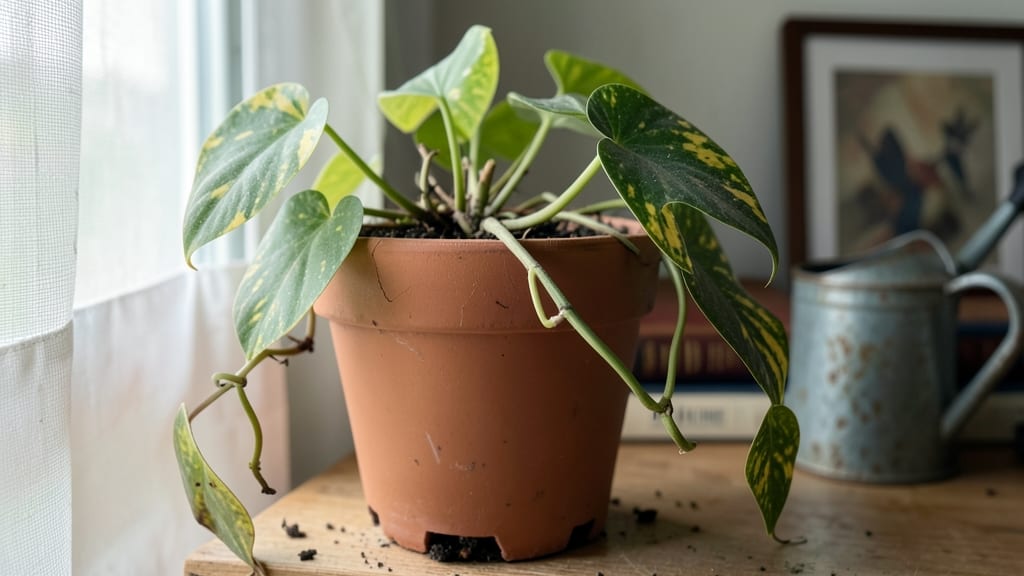
An overwatered pothos plant with drooping leaves and mushy stems is likely suffering from root rot—here’s how to revive it with the air-dry method. 💚 I’ve nursed back more than a dozen pothos plants from this exact problem, and the air-dry revival method works every time.
The key is stopping water immediately and letting the roots recover in dry soil.
First, check the roots: healthy ones are firm and white, while rotten ones smell sour and turn brown. Snip off the bad parts with clean scissors, then repot in fresh, well-draining soil.
Skip watering for at least a week—let the plant adjust to its new drier environment. Pothos are tough; they’ll bounce back faster than you think.
You’ll see new growth within 2-3 weeks if the roots survive. Keep the soil lightly moist but never soggy—stick your finger in the top inch of soil before watering.
A pot with drainage holes and a mix of perlite or orchid bark helps prevent future rot. Once revived, your pothos will thrive with minimal fuss.
This method works for any overwatered houseplant, not just pothos. The same principles apply to philodendrons, snake plants, or even ferns. Just remember: patience is key. Your plant might look sad for a bit, but it’ll come back stronger than ever.
Root Rot’s Silent Invitation
Overwatering your pothos isn’t just a gardening mistake—it’s a sneaky science experiment gone wrong. 🌱💦 When moisture lingers in the soil for too long, it triggers a cascade of problems that turn your thriving vine into a soggy mess.
Let’s break down the real culprits behind this soggy saga, so you can outsmart them next time.
Pothos roots need air as much as water. When drainage is lacking—whether from compacted soil, a pot without holes, or a heavy potting mix—water pools like a puddle in a parking lot.
Without escape routes, roots suffocate, starved of oxygen. Over time, this creates the perfect breeding ground for Pythium and Phytophthora, fungi that feast on root tissue, turning them mushy and brown.
Why it’s deadly:
- 🔬 Anaerobic conditions: Roots can’t respire (breathe) without oxygen, leading to cellular death.
- 🍄 Fungal overgrowth: Fungi thrive in waterlogged soil, outcompeting beneficial microbes.
- ⚡ Nutrient lockout: Waterlogged soil binds nutrients, making them unavailable even if you’re fertilizing.
Actionable fix: Test your pot’s drainage by filling it with water—if it doesn’t drain within 10 minutes, it’s a red flag. Switch to a well-aerated mix (e.g., 50% potting soil, 30% perlite, 20% orchid bark) and upgrade to a pot with drainage holes.
Pothos are drought-tolerant survivors, but many gardeners water on a fixed schedule instead of checking soil moisture. If you’re watering every 5–7 days regardless of conditions, you’re playing roulette with root health.
Even worse? Using ice cubes or bottom-watering too often can trick you into thinking the plant is thirsty when it’s already soggy.
Why it backfires:
- 🌡️ Temperature confusion: Cool weather slows evaporation, so roots stay wet longer.
- 💧 Overhydration shock: Frequent watering prevents the soil from drying out enough, keeping roots in a permanently damp state.
- 🕳️ Compaction creep: Repeated watering without drying cycles compacts soil, worsening drainage.
Actionable fix: Switch to the finger test—stick your index finger 1–2 inches into the soil. If it’s damp, wait. If it’s dry at the top but moist below, water lightly. Pro tip: 💡 Use a moisture meter for precision, especially in humid climates.
Not all pots are created equal. Glazed ceramic, plastic without drainage, or tiny containers trap moisture like a sauna. Even terracotta can fail if the pot is too small—roots grow faster than the plant can drink, leading to waterlogging.
Meanwhile, oversized pots hold excess water for weeks, giving root rot time to throw a party.
Why it’s a death trap:
- 🧊 Evaporation limits: Non-porous pots (like plastic) don’t release moisture, keeping soil perpetually damp.
- 🔥 Heat retention: Dark or thick-walled pots overheat roots, accelerating rot.
- 🏗️ Root-bound stress: Crowded roots can’t access oxygen or nutrients efficiently.
Actionable fix: Choose pots 1–2 inches larger than the root ball with drainage. For humidity-prone areas, opt for terracotta or fabric pots (which breathe). ✨ Pro move: Elevate pots on saucers with pebbles to improve airflow underneath.
High humidity, low light, or cool temperatures slow evaporation, making soil stay wet longer. If your pothos lives in a bathroom, basement, or near a humidifier, the air is already saturated—adding water is like dousing a sponge. Even mist-spraying can contribute if done daily.
Why it’s a silent killer:
- 🌫️ Slowed transpiration: Less water evaporates from leaves, so roots stay hydrated (and miserable).
- 🍄 Fungal feast: Humidity + warmth = perfect conditions for root-rotting pathogens.
- 🌡️ Temperature lag: Cool roots metabolize slower, delaying recovery from overwatering.
Actionable fix: Move your pothos to a bright, indirect spot with moderate humidity (40–60% is ideal). Use a dehumidifier nearby or place it on a pebble tray with water (but keep roots dry!). 💡 Bonus: Increase airflow with a small fan on low.
Revive Your Pothos Fast
Now that you know the signs and causes of an overwatered pothos, let’s get it back to thriving! The good news? With the right steps, your plant can bounce back—even if it’s looking sad or mushy.
Below, we’ll break down cause-specific fixes and prevention tips to keep your pothos happy long-term.
Cause: Overwatering + poor drainage → root rot Solution: Trim, dry, and reset its routine.
- 🔪 Trim the Damage
- Snip off yellow, mushy, or blackened leaves at the base with sterilized scissors (rubbing alcohol works).
- Look for soft, brown stems—cut these back too. Healthy leaves should feel firm and green.
- 🌡️ Let It Air-Dry
- Remove the plant from its pot and gently shake off excess soil to expose the roots.
- Lay it on a paper towel in a bright, indirect spot (no direct sun yet!). Let it dry for 12–24 hours to prevent further rot.
- 🍄 Repot in Fresh Soil
- If roots smell foul or are mushy, trim away the rotten parts (healthy roots are white/firm).
- Repot in a well-draining mix (cactus/succulent soil + perlite works) and a pot with drainage holes.
- Water lightly only after the top 1–2 inches of soil dry out (stick your finger in to check!).
💡 Pro Tip: After repotting, skip fertilizing for 4–6 weeks—your pothos is recovering, not growing!
Cause: Soggy soil + no airflow → fungal/bacterial rot Solution: Improve drainage and adjust watering habits.
- ⏰ Water Less, But Better - Wait until the top 50% of soil is dry before watering again (stick test: if it’s damp 1 inch down, wait). - Bottom-watering helps: Place the pot in a tray of water for 10–15 minutes, then drain.
This encourages roots to grow downward.
- 🏗️ Upgrade Your Pot & Soil
- Terracotta pots wick away moisture faster than plastic. If you’re stuck with plastic, add a layer of pebbles at the bottom for drainage.
- Soil swap: Mix 50% potting soil + 30% perlite + 20% orchid bark for better airflow.
- 🌿 Boost Airflow
- Move your pothos to a spot with indirect light and gentle breezes (a shelf near a window with a fan works).
- Avoid cramming pots together—crowded plants = trapped humidity = rot.
✨ Prevention Hack: Use a moisture meter ($10 on Amazon) to avoid guessing. No more soggy surprises!
Cause: Ignoring soil moisture + no routine Solution: Build a low-maintenance watering schedule.
- 📅 Set a Reminder
- Pothos thrives on inconsistency—water every 1–2 weeks (less in winter, more in summer).
- Pro move: Use the "finger test"—stick your finger in the soil. If it’s dry past your first knuckle, it’s time.
- 💧 Use the Right Amount
- Deep watering (until water runs out the drainage hole) once a week is better than light daily spritzes.
- Overwatering myth: Pothos can’t drink through the leaves—water at the base only.
- 🌡️ Adjust for Seasons
- Winter: Water every 2–3 weeks (growth slows, so less H₂O needed).
- Summer: Check soil every 5–7 days (heat = faster drying).
🎯 Golden Rule: When in doubt, underwater slightly—pothos is tough and stores water in its leaves!
🚨 Emergency Alert: If your pothos is completely mushy with black stems, it may not recover. Start fresh with a healthy cutting (propagate in water!) and learn from the mistake.
Frequently asked questions
How do I know if my pothos has root rot from overwatering?
Check for mushy, brown stems and yellowing leaves that feel soft when touched. Pull the plant gently—if it slides out easily with little resistance, the roots are rotting. Healthy roots should be firm and white, while rotten ones smell foul and turn black/brown.
Can I save a pothos with completely black stems?
If the stems are black and mushy throughout, the plant may be beyond saving. However, you can still propagate healthy cuttings! Take 4–6 inch stem sections with leaves and roots in water—they’ll grow into new plants while you learn from the mistake.
Why does my pothos droop after watering?
Drooping often signals overwatering or root stress. Let the soil dry out completely before watering again. If the pot feels heavy (soggy soil) or the leaves are limp but still green, it’s likely just thirsty—not dead! Place it in bright, indirect light to help it recover.
How often should I water my pothos after reviving it?
Wait until the top 1–2 inches of soil are bone-dry before watering again. In summer, this might be every 7–10 days, while winter care may stretch to every 2–3 weeks. Use a moisture meter or the finger test to avoid guesswork.
Will my pothos grow back if I cut off all the damaged leaves?
Yes! Pruning damaged leaves actually helps the plant focus energy on new growth. Cut back to healthy green stems—your pothos will sprout fresh leaves within 2–4 weeks if the roots are still viable. Just keep the soil dry and avoid fertilizing until recovery.