
Watering
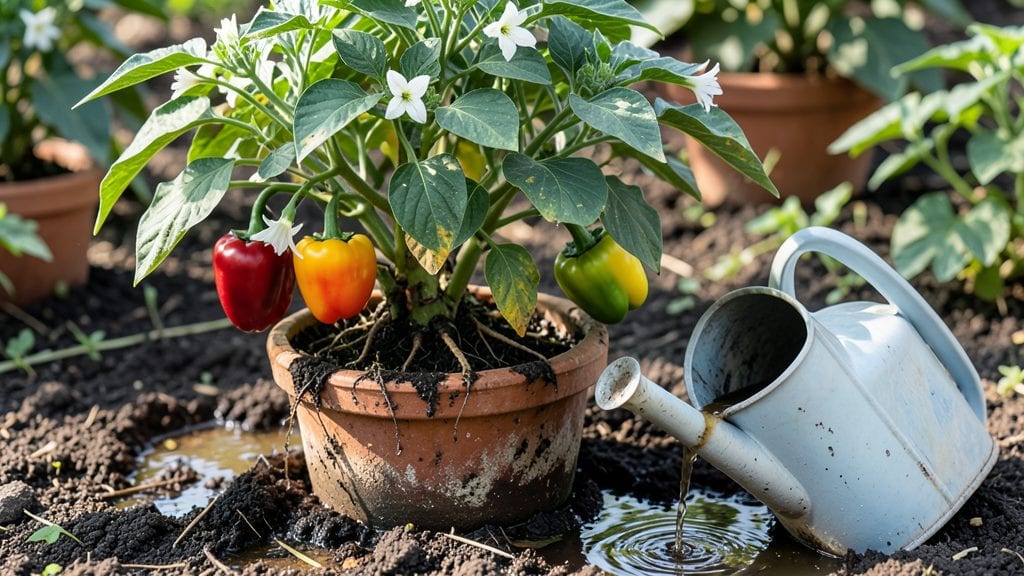
Giving your pepper plants too much water turns their leaves yellow faster than you can say "harvest season." 🌱 I’ve drowned more peppers than I’d like to admit—until I learned the subtle signs of soggy soil and how to fix them before it’s too late. late.
The first clue? Leaves that start yellowing at the edges or drooping like a sad balloon, even when the soil feels damp.
Most gardeners overdo it because they assume peppers need constant moisture, but these plants prefer their roots to dry out slightly between waterings. The real fix starts with checking soil moisture with your finger—if the top inch feels damp, wait another day.
Drainage matters too: amending heavy soil with compost or using raised beds prevents water from pooling around roots where rot thrives.
Within a week of adjusting your routine, you’ll see the difference—firm stems, deep green leaves, and plants that bounce back like they’ve been given a second chance.
The key is consistency: stick to a schedule that matches your climate, and your peppers will reward you with glossy foliage and plump, flavorful pods by summer’s end.
This works for backyard gardens, containers, or raised beds—just adapt the watering frequency to your setup. Once you master the balance, you’ll never overwater again (well, almost never). Let’s get those plants thriving!
Root Causes Of Overwatering
When your pepper plants start wilting, developing yellow leaves, or even rotting at the roots, the culprit is often too much water. But why does this happen?
Overwatering isn’t just about pouring too much H2O into the soil—it’s a chain reaction triggered by poor drainage, environmental factors, or even human error. Let’s break down the science behind why your peppers are drowning in their own pot.
Pepper plants thrive in well-draining soil, but if the mix is too dense (like heavy clay or compacted garden soil), water pools around the roots instead of draining away. This creates an anaerobic environment—meaning oxygen is depleted—where harmful bacteria and fungi flourish. Over time, this leads to:
- Root rot: Fungal pathogens like Phytophthora or Pythium attack weakened roots, cutting off nutrient and water uptake.
- Yellowing leaves: Chlorosis (loss of chlorophyll) occurs when roots can’t absorb iron or nitrogen due to waterlogged conditions.
- Stunted growth: Without oxygen, roots suffocate, slowing or halting plant development.
💡 Pro Tip: Test your soil’s drainage by filling a pot with water, then timing how long it takes to drain. If it takes more than 30 minutes, amend the soil with perlite, sand, or coconut coir to improve aeration.
Even with perfect soil, external conditions can force excess water into your pepper plants’ roots. Humidity, rain, and temperature swings all play a role:
- High humidity: Air saturated with moisture slows evaporation, keeping soil damp longer. In tropical climates or greenhouses, this can turn a single watering into a week-long soggy situation.
- Heavy rainfall or overhead watering: If you’re growing peppers outdoors, sudden downpours or splashing water from sprinklers can double the moisture in the root zone.
- Cold soil temperatures: Cool weather (below 60°F/15°C) reduces microbial activity in the soil, slowing water absorption and increasing runoff.
🌡️ Actionable Fix: Use mulch (straw, wood chips) to regulate soil temperature and reduce evaporation. For potted peppers, move them to a covered area during rain or use self-watering pots with drainage holes to control intake.
Most gardeners overwater because they don’t follow the plant’s needs—not because they’re being reckless. Common timing and technique errors include:
| Mistake | Why It Causes Overwatering | Solution |
|---|---|---|
| Watering on a schedule (not by soil moisture) | Pepper plants need 1–1.5 inches of water per week, but clay soil or shade may require less. Stick-to-itiveness leads to soggy roots. | Use the finger test: Stick your index finger 1–2 inches into the soil. Water only if it’s dry. |
| Using small pots without drainage | Tiny containers dry out fast, but if they lack holes, water sits at the bottom, causing root rot in days. | Upgrade to pots at least 12 inches deep with drainage holes. Terracotta (unglazed) wicks moisture away faster than plastic. |
| Watering leaves instead of soil | Overhead watering (like from a hose) encourages fungal diseases (e.g., Alternaria) and keeps foliage damp, trapping moisture in the soil. | Water at the base of the plant early in the day so leaves dry quickly. |
Pepper plants can’t tell you they’re thirsty or drowning, so growers often misread their cues. For example:
- Wilting leaves: Usually a sign of underwatering, but in heavy soil, it can mean overwatering because roots are suffocating.
- Dropping flowers/fruit: Stress from waterlogged roots forces the plant to abort blooms to conserve energy.
- Black or mushy stems: A late-stage sign of root rot, meaning the plant has been overwatered for weeks.
🔍 Diagnostic Tip: Gently tug on a leaf. If it pulls away easily, the roots are rotting. If it resists, the plant is likely underwatered.
Understanding these root causes is the first step to saving your peppers. Once you identify why the overwatering is happening, you can adjust your care routine—whether it’s upgrading pots, testing soil, or simply watering less often. Next up: How to Revive Overwatered Pepper Plants.
Revive Your Overwatered Peppers Now
Overwatering can turn your thriving pepper plants into a sad, soggy mess—but don’t panic! With the right steps, you can nurse them back to health and prevent future disasters.
Below, we’ve mapped out practical fixes for the most common overwatering symptoms, along with prevention tips to keep your plants happy and productive.
If your pepper leaves are turning yellow (especially the lower ones), they’re likely drowning in excess moisture. Act fast to save the roots and foliage.
1️⃣ Stop Watering Immediately
🔥 H3: Pause the Hose or Watering Can
- Cut off all water for at least 3–5 days to let the soil dry out.
- If the pot feels heavy or water pools at the bottom, skip watering entirely until the top 2 inches of soil are dry.
- Pro Tip: 💡 Use a moisture meter or stick your finger in the soil—if it’s damp past 1 inch, wait longer.
2️⃣ Improve Drainage Fast
🍳 H3: Fix the Soil and Pot Setup - Repot if needed: If your pepper is in a container with no drainage holes, transfer it to a pot with holes ASAP. No new pot?
Poke holes in the bottom with a nail or drill. - Add perlite or sand: Mix in 20–30% perlite, vermiculite, or coarse sand to improve airflow and drainage.
This helps water escape instead of pooling. - Raise the pot: Place it on a drip tray or elevated stand to prevent water from sitting against the bottom.
3️⃣ Prune Damaged Foliage
👨🍳 H3: Trim the Problem Areas
- Snip off yellow or mushy leaves with clean scissors to prevent rot from spreading.
- Focus on lower leaves first—they’re most vulnerable to overwatering.
- Pro Tip: ✨ Disinfect your scissors with rubbing alcohol to avoid spreading disease.
If your pepper plant looks limp, droopy, or has soft stems, root rot may have set in. Time is critical—don’t wait!
1️⃣ Check for Root Rot
🔪 H3: Inspect the Roots (Gently!)
- Remove the plant from its pot and shake off excess soil.
- Healthy roots are firm and white. Rotten roots are brown, mushy, or smell foul.
- If more than 30% of roots are rotten, you’ll need to trim them back with sterilized scissors.
2️⃣ Revive with Fresh Soil
🥘 H3: Repot in Well-Draining Mix
- Wash the roots (if possible) with hydrogen peroxide (3%) to kill fungus.
- Repot in fresh, sterile potting mix with perlite or coconut coir for aeration.
- Pro Tip: 🌡️ Avoid garden soil—it compacts and holds too much moisture.
3️⃣ Adjust Your Watering Routine
⏰ H3: Water Only When Necessary
- Water deeply but infrequently: Wait until the top 2–3 inches of soil are bone-dry before watering again.
- Morning is best: Water in the early morning so excess moisture evaporates by night.
- Use the finger test: Stick your finger 1–2 inches into the soil—if it’s dry, water; if damp, wait.
Once your peppers are back on track, lock in healthy habits to avoid future overwatering disasters.
💡 Choose the Right Containers
- Self-watering pots? Use them sparingly—they can still overwater if not monitored.
- Terracotta pots dry out faster than plastic—great for forgetful gardeners!
- Avoid saucers without drainage unless you empty them daily.
🌡️ Monitor Soil Moisture Smartly
- Group plants by water needs—peppers hate soggy roots!
- Use mulch (but not too much): A 1-inch layer of straw or shredded leaves helps retain moisture without suffocating roots.
- Avoid watering on a schedule—check the soil first!
✨ Upgrade Your Soil Mix
- Peppers love loose, airy soil. Mix 50% potting soil + 30% perlite + 20% compost.
- Avoid heavy clay soil—it stays wet for days, inviting root rot.
- Pro Tip: 🎯 Add a handful of worm castings for nutrients and natural drainage boost.
Your peppers will bounce back if you act quickly and adjust your care routine. Drain, dry, and prevent—soon, you’ll be harvesting plump, healthy peppers instead of dealing with waterlogged woes! 🌶️💦
Frequently asked questions about saving overwatered pepper plants
How do I know if my pepper plant has root rot from too much water?
Check the roots by gently removing the plant from its pot. Healthy roots are firm and white, while rotten roots appear brown, mushy, or smell foul. If more than 30% of roots are affected, trim them back with sterilized scissors before repotting in fresh, well-draining soil.
Can I save a pepper plant with completely black stems?
Black or mushy stems indicate advanced root rot, but you can still try saving it. Repot in fresh soil with perlite, reduce watering drastically, and place it in bright, indirect light. If the plant is too far gone, start fresh with a new seedling—prevention is easier than recovery.
Why do my pepper leaves turn yellow after watering?
Yellowing leaves usually signal overwatering, as excess moisture blocks oxygen and nutrients. Focus on drying the soil—wait until the top 2 inches feel bone-dry before watering again. Improve drainage by adding perlite or sand to the soil mix.
How often should I water pepper plants in containers?
Water pepper plants in containers when the top 1–2 inches of soil are dry. In hot weather, this may mean every 2–3 days, while cooler months could stretch it to 5–7 days. Always check soil moisture before watering.
Can I use coffee grounds to help with overwatered peppers?
Coffee grounds can improve soil drainage slightly, but they’re not a fix for overwatering. Instead, focus on repotting with perlite or sand and adjusting your watering routine. If you use coffee grounds, mix them sparingly (10%) with compost to avoid compacting the soil further.