
Neem Oil
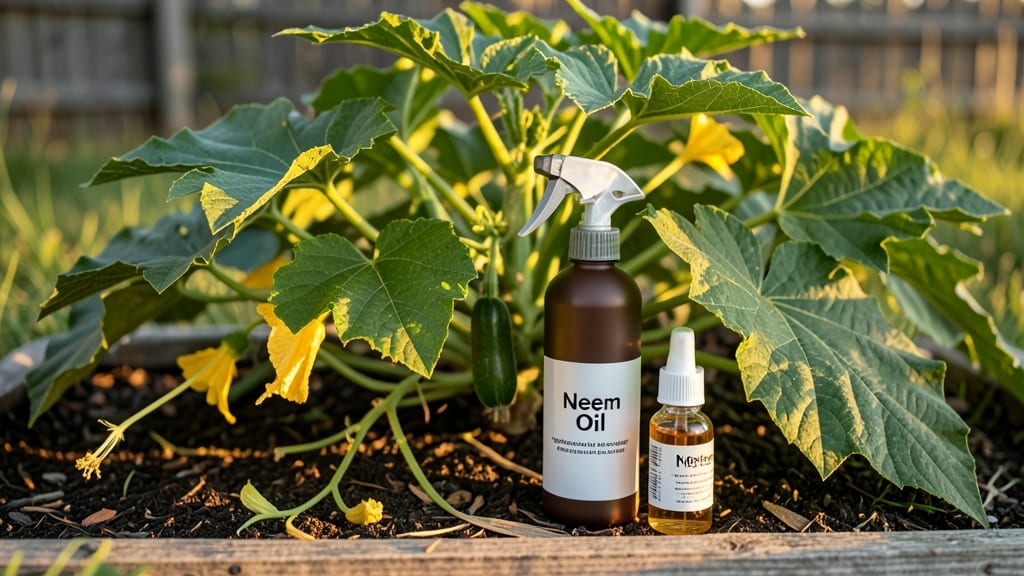
Neem oil on squash plants transforms a struggling garden into a thriving one. ✨ After battling powdery mildew and cucumber beetles in my raised beds, I discovered this one versatile spray that tackles both pests and diseases—without harsh chemicals.
The key lies in proper dilution, timing, and application technique that actually works.
Most gardeners overlook the importance of mixing neem oil with a mild soap or horticultural oil to improve adhesion.
My recipe uses 1 teaspoon neem oil per quart of water with a ½ teaspoon of dish soap, applied at dusk when pests are active but before rain washes it away. This combination sticks to leaves and disrupts the life cycles of powdery mildew spores and beetle eggs.
What you’ll achieve is squash plants that stay lush and productive through the season, with fewer holes in leaves and no white fungal dust on vines. The treatment is safe for beneficial insects when used correctly, and you’ll notice improvements within 3-5 days of consistent applications.
For stubborn infestations, combine with neem cake as a soil amendment.
This method works equally well in backyard gardens, raised beds, and container setups—just adjust the spray volume to match your plant size. The only caveat is avoiding application when temperatures exceed 90°F, as the oil can stress plants. Now let’s get those squash vines back in fighting shape.
Root Causes of Squash Plant Struggles
When squash plants start looking less than their vibrant best—whether it’s wilting leaves, mysterious spots, or pests feasting like an all-you-can-eat buffet—it’s often a sign that something’s off in their environment or health.
Understanding the why behind these issues is the first step to fixing them, especially when organic solutions like neem oil are part of your toolkit. Let’s break down the most common culprits and the science behind them.
Fungal diseases are a top reason squash plants suffer, and they thrive in warm, humid conditions—perfect for many gardeners’ climates. Here’s how they strike:
- Powdery Mildew: This fuzzy white coating isn’t just unsightly—it blocks sunlight, stunting growth. Fungi like Erysiphe cichoracearum release spores that germinate on leaf surfaces, creating a web of hyphae that suck nutrients from the plant. Why it happens: Poor air circulation, overhead watering, or crowded plants create the ideal humid microclimate.
- Downy Mildew: Less visible but equally destructive, this fungus (Pseudoperonospora cubensis) causes yellow spots on the top of leaves and fuzzy gray growth underneath. It spreads via water droplets, often after rain or irrigation. Why it happens: Cool nights (50–75°F) paired with high humidity give spores the perfect launchpad.
- Anthracnose: Dark, sunken lesions on leaves and fruit? Blame Colletotrichum species. These fungi infect through wounds (like insect bites) or natural openings, then multiply in wet conditions. Why it happens: Frequent leaf wetness, especially in high-heat, high-humidity zones, turns squash into a fungal smorgasbord.
Pro Tip: 🌡️ Fungi love moisture—water plants at the base early in the day to let foliage dry before nightfall. Space plants for airflow, and avoid overhead sprinklers.
Squash plants are magnets for pests, and their damage isn’t just cosmetic—it weakens the plant, making it more susceptible to disease. Here’s the breakdown:
- Squash Bugs & Vine Borers: These sap-suckers (Anasa tristis and Melittia cucurbitae) insert their mouthparts into stems and leaves, draining nutrients and injecting toxins. Why it happens: Adult squash bugs overwinter in garden debris and lay eggs on the undersides of leaves. Vine borers, meanwhile, lay eggs in cracks of stems, and larvae burrow in like tiny drills.
- Aphids & Whiteflies: These tiny invaders cluster on new growth, excreting sticky honeydew that fosters sooty mold. Why it happens: They’re drawn to tender, nitrogen-rich growth—think lush, fast-growing squash leaves. Warm weather accelerates their reproduction.
- Cucumber Beetles: Striped or spotted, these beetles (Diabrotica species) chew leaves and spread bacterial wilt via their mouthparts. Why it happens: They’re attracted to squash flowers and feed on pollen, but their real damage comes from transmitting Erwinia tracheiphila, the bacterium behind wilt.
Pro Tip: 🔥 Early detection is key—check leaf undersides daily for eggs or pests. Yellow sticky traps can catch flying adults before they multiply.
Sometimes, the problem isn’t biological—it’s environmental. Squash plants are sensitive to extremes, and when conditions veer too far from their comfort zone, they signal distress:
- Over/Underwatering: Squash plants need consistent moisture, but soggy soil invites root rot (Phytophthora fungi), while drought stress weakens defenses. Why it happens: Clay soils drain poorly, while sandy soils dry out fast. Improper mulching or irrigation timing can tip the balance.
- Nutrient Deficiencies: Yellowing leaves (chlorosis) often mean nitrogen deficiency, while purple stems signal phosphorus lack. Why it happens: Poor soil testing, over-fertilizing with synthetic N (which burns roots), or leaching in sandy soils deplete nutrients faster than plants can absorb them.
- Temperature Swings: Squash thrives in 70–90°F but wilts under heat stress or struggles to germinate below 60°F. Why it happens: Sudden cold snaps or hot spells disrupt photosynthesis and nutrient uptake.
Pro Tip: 🌡️ Use a soil thermometer to monitor root-zone temps. Mulch with straw to regulate soil temperature and retain moisture.
Once you identify the root cause—whether it’s fungal, pest-related, or environmental—you’re armed to tackle it with targeted fixes. And that’s where neem oil steps in as a versatile, organic shield. Stay tuned for how to wield it effectively!
Revitalize Your Squash Plants Naturally
Neem oil isn’t just a preventive tool—it’s a powerful rescue remedy for squash plants battling pests, fungi, or stress. Whether your vines are spotted with powdery mildew, chewed by squash bugs, or wilting from heat, these targeted solutions will bring them back to health.
Below, we map common issues to easy, organic fixes—plus prevention tips to keep your garden thriving.
Cause: High humidity, poor airflow, or wet foliage traps fungal spores.
1️⃣ Spray Neem Oil Directly (The Fast Fix)
- Mix: 1 tbsp neem oil + 1 tsp mild liquid soap + 1 quart water.
- Apply: Spray undersides of leaves (where spores hide) in the early morning or evening (avoid direct sun).
- Frequency: Repeat every 7–10 days until symptoms disappear.
- Why it works: Neem oil smothers spores and disrupts fungal growth.
2️⃣ Improve Air Circulation
- Prune overcrowded vines to let air flow.
- Space plants 3–4 feet apart (if replanting).
- Use row covers if humidity is extreme.
3️⃣ Prevent Future Outbreaks
💡 Pro Tip: Water at the base, never overhead. Use drip irrigation or soaker hoses to keep leaves dry. 🌡️ Heat Hack: If mildew is chronic, reflect sunlight with white mulch or light-colored row covers to reduce leaf moisture.
Cause: Pests suck sap, lay eggs, or transmit diseases like bacterial wilt.
1️⃣ Neem Oil Spray (Knockout Pests & Eggs)
- Mix: 2 tbsp neem oil + 1 tsp soap + 1 gallon water.
- Apply: Spray all leaf surfaces, including stems and soil (eggs hide there!).
- Best time: Early morning (pests are sluggish).
- Repeat: Every 5–7 days until pests vanish.
2️⃣ Manual Removal (For Stubborn Infestations)
- Handpick squash bugs (look for flat, grayish ovals under leaves).
- Drop them in soapy water—they’ll drown instantly.
- Crush cucumber beetles (yellow with black stripes) on sight.
3️⃣ Trap Crops & Barriers
- Plant nasturtiums nearby—beetles prefer them over squash!
- Use row covers (lightweight fabric) to block adults from laying eggs.
- Interplant with basil or marigolds to repel pests naturally.
4️⃣ Soil Drench (For Grubs & Larvae)
- Mix: 1 tbsp neem oil + 1 gallon water.
- Pour around the base of plants to kill hidden larvae.
Cause: Overwatering, underwatering, heat stress, or nutrient deficiency.
1️⃣ Check the Roots (Is It Drought or Rot?)
- Gently dig near the stem:
- Healthy roots = firm, white.
- Rot = mushy, brown (cut away dead roots).
- Dry roots = crispy (water deeply).
2️⃣ Adjust Watering (The Golden Rule)
| Issue | Fix |
|---|---|
| Wilting (Dry Soil) | Water deeply 1–2x/week (1–2 inches per week). Use mulch to retain moisture. |
| Yellow Leaves (Overwatering) | Let soil dry 2–3 inches deep between waterings. Improve drainage with sand or perlite. |
| Heat Stress (Curling Leaves) | Shade cloth (30–50%) or drip irrigation to cool roots. |
3️⃣ Feed Weak Plants (Neem Oil + Fertilizer Boost)
- Mix: 1 tbsp neem oil + 1 tbsp fish emulsion or compost tea + 1 gallon water.
- Spray foliarly (absorbed through leaves) and water into soil.
- Bonus: Add 1 inch of compost around the base.
✅ Rotate crops—don’t plant squash in the same spot yearly (pests/diseases build up). ✅ Clean up debris—remove old vines and leaves after harvest to eliminate hiding spots. ✅ Monitor weekly—check undersides of leaves and new growth for early signs. ✅ Store neem oil properly—keep in a cool, dark place (it degrades in heat/light).
Final Thought: Neem oil is your all-in-one garden superhero, but consistency is key. Start treatments at first sign of trouble, and your squash plants will bounce back—stronger, greener, and pest-free! 🌿💚
Frequently asked questions about using neem oil on squash plants
How often should I apply neem oil to squash plants?
For prevention, spray every 7-10 days during growing season. If treating active fungal issues like powdery mildew, apply every 5-7 days until symptoms disappear. Stop when plants are fully recovered or temperatures exceed 90°F, as heat can stress plants. Always apply in early morning or evening to avoid leaf burn.
Can I use neem oil on squash flowers or fruit?
Yes, but with caution! Neem oil is safe for flowers and fruit when properly diluted, but avoid spraying directly on blooms if bees are active (wait until evening). For edible plants, use the food-grade neem oil and rinse fruit thoroughly before eating. The oil breaks down quickly in sunlight, so no residue remains on mature produce.
What's the best time of day to apply neem oil?
Apply between 6-8 AM or 6-8 PM when temperatures are below 85°F and humidity is moderate. Early morning applications allow leaves to dry before afternoon heat, while evening sprays prevent leaf burn from UV exposure. Avoid spraying when rain is forecast within 24 hours, as it will wash off before working.
Will neem oil harm beneficial insects like ladybugs?
When used correctly, neem oil is selectively toxic and won't kill ladybugs, bees, or other pollinators if applied at the recommended 1% concentration (1 tbsp per gallon). The key is timing: spray after sunset when bees aren't active, and avoid overspraying flowers. For extra safety, apply neem oil 3 days before and after expected pollination periods.
Why did my squash plants look worse after using neem oil?
This usually happens from one of three issues: over-concentration (using more than 1 tbsp per gallon), heat stress (applying in temperatures above 90°F), or existing damage becoming visible as plants recover. Always use 1% solution (1 tbsp per gallon) with ½ tsp soap, and apply when temps are below 85°F. If plants show signs of stress, flush soil with water and wait 3 days before reapplying.