Diseases
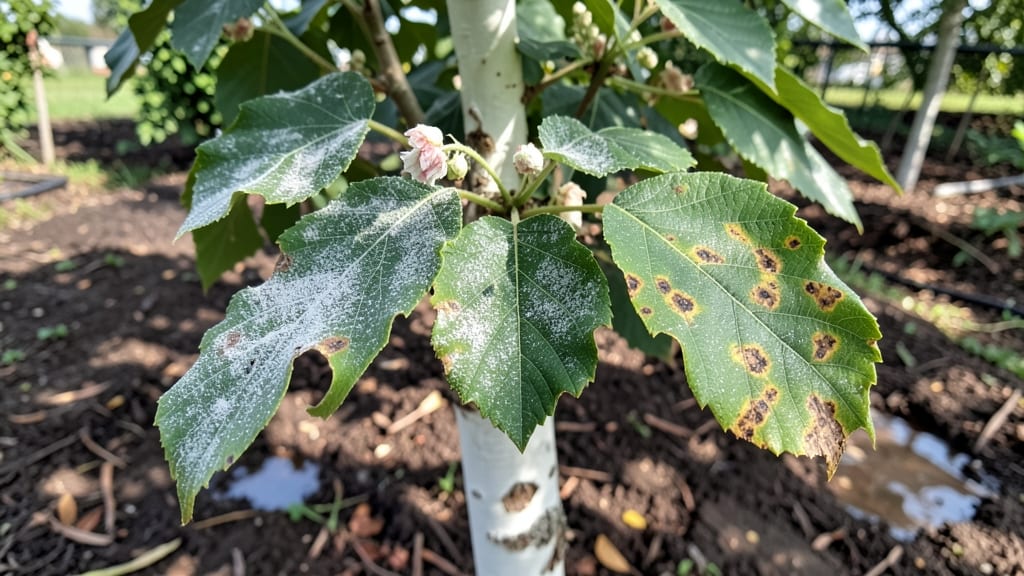
Mulberry plant diseases can turn your thriving tree into a sad, spotted mess—unless you catch them early. 🌿 I’ve seen anthracnose blacken leaves overnight and powdery mildew smother branches like cotton, but the right moves save the day every time.
The key is knowing what to look for before it’s too late.
Most mulberry diseases start with water—too much rain, poor drainage, or overhead watering. Anthracnose thrives in damp, shady spots, while powdery mildew loves warm, humid air. Root rot sneaks in when soil stays soggy for weeks.
The good news? All three respond to pruning, better airflow, and targeted sprays—no heavy chemicals needed if you act fast.
You’ll spot the damage first as yellow spots, white powder, or wilting leaves—don’t ignore them. A quick cleanup of fallen debris and a fungicide spray (neem oil or copper-based) can stop the spread. With consistent care, your mulberry stays lush, productive, and disease-free for years.
This works for both young trees and mature ones, whether you’re dealing with a backyard mulberry or a small orchard. Let’s get your tree back to healthy in no time—here’s how to diagnose and fix it for good.
Root Causes of Mulberry Plant Struggles
Mulberry trees, with their lush foliage and sweet berries, can quickly become a gardener’s pride—until disease strikes. Understanding why these issues arise is the first step to prevention and recovery.
Below, we break down the key factors that make mulberry plants vulnerable to fungal and bacterial infections, so you can address the problem at its source.
---
🍄 Fungi thrive in specific conditions, and mulberry trees often become their unwitting hosts when these factors align:
- High Humidity & Poor Airflow Fungal spores (like those causing anthracnose or powdery mildew) spread rapidly in damp, stagnant air. Mulberry leaves trap moisture, creating a perfect breeding ground. Actionable fix: Prune for better airflow and avoid overhead watering.
- Wet Foliar Surfaces Water droplets lingering on leaves (from rain or irrigation) allow fungal hyphae to penetrate tissues. Diseases like leaf spot exploit this weakness. Pro tip: Water at the base in the morning to allow foliage to dry quickly.
- Old or Damaged Leaves Senescent (aging) or physically injured leaves lose their protective cuticle, making them easy targets for rust fungi or sooty mold. Solution: Regularly remove dead leaves and prune for vigor.
---
🦠 Bacteria don’t just appear—they hitch rides on tools, insects, or even wind. Mulberry trees fall victim when:
- Contaminated Pruning Tools Knives or shears carrying bacterial leaf scorch or canker bacteria can introduce infections during trimming. Critical step: Sterilize tools with rubbing alcohol (70%+) between cuts.
- Wounds from Physical Stress Storm damage, hail, or even improper harvesting can create entry points for bacterial blight. Preventative measure: Apply a copper-based fungicide to fresh wounds to deter invasion.
- Overhead Irrigation Splashing water from sprinklers can spread Xanthomonas bacteria (causing leaf spots) from lower to upper leaves. Smart swap: Use drip irrigation to keep foliage dry.
---
🌡️ A mulberry tree under stress is like an open door for pathogens—here’s what compromises its immunity:
- Nutrient Deficiencies Lack of potassium (K) or phosphorus (P) weakens cell walls, making trees more susceptible to root rot or canker diseases. Fix: Conduct a soil test and amend with balanced fertilizer (e.g., 10-10-10).
- Extreme Temperature Swings Sudden cold snaps or heatwaves shock the plant, reducing its ability to fend off alternaria leaf spot. Buffer tip: Mulch heavily in winter and provide shade cloth during heatwaves.
- Compacted or Waterlogged Soil Poor drainage restricts root growth and invites phytothora (a water mold). Solution: Amend soil with compost and ensure proper drainage—mulberry roots hate soggy feet.
--- 🐜 Some insects aren’t just nuisances—they’re disease delivery systems. Mulberry trees often suffer when:
- Aphids or Scale Insects Feed These sap-suckers weaken leaves, creating ideal conditions for sooty mold (a secondary fungal growth). Attack plan: Blast off pests with water or use neem oil.
- Japanese Beetles Skewer Leaves Their feeding wounds invite bacterial infections. Quick fix: Handpick beetles or use milky spore bacteria as a long-term deterrent.
- Caterpillars Create Entry Points Larvae chewing through leaves leave gaps for anthracnose spores. Prevention: Install pheromone traps or apply Bt (Bacillus thuringiensis) spray.
--- 🚜 Even well-meaning gardeners can unintentionally fuel disease. Common blunders include:
- Overhead Watering at Night Moisture-laden darkness = fungal party. Rule: Water early in the day and avoid wetting leaves.
- Ignoring Sanitation Leaving infected leaves or debris in the soil spreads spores. Non-negotiable: Clean up fallen foliage and sterilize garden beds.
- Planting Too Close Together Crowded mulberry trees create a humid microclimate, perfect for powdery mildew. Spacing tip: Allow 15–20 feet between trees for airflow.
--- Key Takeaway: Most mulberry diseases don’t strike out of nowhere—they exploit specific weaknesses. By addressing moisture, stress, pests, and sanitation, you can starve pathogens before they take hold. 🛡️
Quick Fixes for Mulberry Plant Woes
When your mulberry tree shows signs of distress, acting fast can mean the difference between a full recovery and losing your plant. Below are practical, step-by-step solutions tailored to the most common mulberry plant diseases, along with prevention tips to keep your tree thriving.
Let’s get your mulberry back to its healthy, leafy self!
---
#### 1.
Powdery Mildew: The Fluffy White Threat **🔥 Cause: High humidity, poor airflow, or overcrowded plants. 🍳 Fix It Fast: - Prune immediately 🌿 to improve airflow between branches. - Spray with a fungicide (neem oil, sulfur, or copper-based spray) every 7–10 days until the white powder disappears. - Water at the base (not overhead) to keep leaves dry.
💡 Prevention Pro Tip: Space mulberry trees at least 10 feet apart and mulch properly to reduce humidity near the soil.
---
#### 2.
Root Rot: The Silent Killer 🔥 Cause: Overwatering, compacted soil, or poor drainage. 🍳 Fix It Fast: - Stop watering immediately and let the soil dry out for 2–3 days. - Improve drainage by amending soil with perlite or sand (mix 20% into the top 6 inches). - Apply a fungicide (like mycorrhizal fungi or hydrogen peroxide spray) to combat the rot.
💡 Prevention Pro Tip: Plant mulberries in well-draining soil and avoid soggy conditions—they hate "wet feet!"
---
#### 3.
Leaf Spot: Brown Spots Ruining Leaves 🔥 Cause: Fungal spores splashing onto leaves from wet soil or overhead watering. 🍳 Fix It Fast: - Remove and destroy infected leaves (don’t compost them!). - Apply a fungicide (baking soda spray: 1 tsp baking soda + 1 quart water + a drop of dish soap) every 2 weeks. - Space out watering—only water deeply 2–3 times per week instead of daily light sprinkles.
💡 Prevention Pro Tip: Water in the morning so leaves dry quickly—fungi love dampness!
---
#### 4.
Bacterial Leaf Spot: Yellowing & Oozing 🔥 Cause: Bacteria spreading via rain, tools, or contaminated water. 🍳 Fix It Fast: - Prune infected branches (sterilize tools with rubbing alcohol between cuts). - Spray with copper fungicide (follow label instructions) every 10 days. - Avoid overhead watering—use drip irrigation instead.
💡 Prevention Pro Tip: Disinfect pruning tools with bleach (1 part bleach to 9 parts water) before and after use.
---
#### 5.
Canker Disease: Sunken, Oozing Wounds 🔥 Cause: Open wounds from pruning or storms, then bacterial/fungal invasion. 🍳 Fix It Fast: - Cut out infected areas (at least 6 inches below the canker) with sterilized tools. - Apply a wound sealant (like pruning paint with copper) to prevent further spread. - Keep the tree stress-free—avoid over-fertilizing or drought stress.
💡 Prevention Pro Tip: Prune during dry weather and avoid heavy pruning in late summer/fall when diseases spread faster.
---
#### 6.
Mulberry Leaf Miner: Worms Inside Leaves 🔥 Cause: Larvae burrow into leaves, causing white trails and wilting. 🍳 Fix It Fast: - Handpick infested leaves and drop them in soapy water. - Spray with neem oil (repeat every 5–7 days until no new mines appear). - Encourage natural predators like parasitic wasps by planting dill or fennel nearby.
💡 Prevention Pro Tip: Check leaves weekly in spring/summer—early action stops outbreaks!
---
A healthy mulberry resists diseases better. Boost its defenses with: ✅ Balanced fertilization (10-10-10 in early spring). ✅ Proper pruning (remove dead wood in late winter/early spring). ✅ Mulching (2–3 inches of wood chips or straw to retain moisture and block weeds).
🎯 Final Tip: Monitor your tree regularly—catching issues early means less work and a happier plant! 🌿✨
--- Need a quick reference? Bookmark this guide and check symptoms before treating**—misdiagnosing can worsen problems! 🚑💚
Frequently asked questions
What are the first signs of mulberry plant diseases?
Watch for yellowing leaves, white powdery coatings (powdery mildew), or brown spots with dark centers (anthracnose). Bacterial infections often show up as oozing cankers or water-soaked patches. Check undersides of leaves first—many diseases start there.
Can I use home remedies to treat mulberry diseases?
Yes! For fungal issues, mix 1 tablespoon baking soda with 1 quart water and a drop of dish soap as a spray. Neem oil (2 teaspoons per quart of water) works well too. For bacterial problems, copper fungicides are more effective than homemade solutions.
How often should I prune mulberries to prevent diseases?
Prune once a year in late winter to remove dead/diseased branches and improve airflow. Thin out crowded areas and sterilize tools between cuts. Avoid heavy pruning in summer when diseases spread fastest.
Why does my mulberry tree get diseases even with good care?
Diseases often come from hidden stressors like compacted soil, overwatering, or insect damage creating entry points. Even healthy trees get infected during rainy seasons—prevention requires consistent monitoring and proper spacing between plants.
Are chemical treatments safe for mulberry fruit production?
Most copper-based fungicides are safe when used 2-3 weeks before harvest. Organic options like neem oil or potassium bicarbonate are fruit-safe. Always follow label instructions and avoid spraying during flowering to protect pollinators.