
Companion Plants
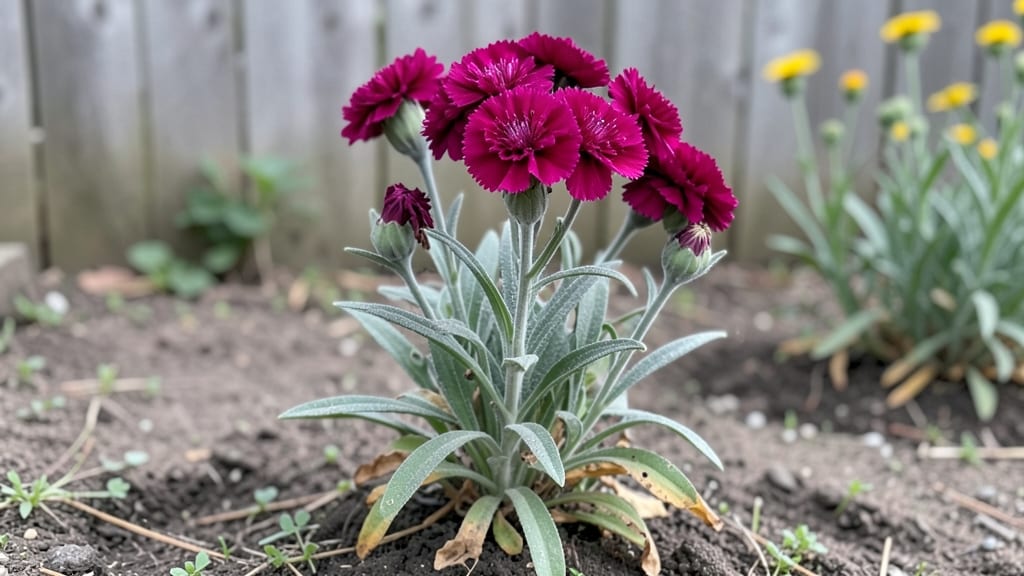
Growing large carnation plants means turning your sunniest spot into a parade of bold, ruffled blooms that last all summer. 🌻 I've learned the hard way that these showstoppers demand heat, good drainage, and a little extra coddling—but when they thrive, they're worth every effort.
My first batch of 'Champagne' carnations reached nearly 3 feet tall with blooms the size of dinner plates, and the neighbors kept asking where I bought them.
The secret starts with well-draining soil mixed with compost, and a location where they get at least 6 hours of direct sun daily. Too much shade, and you'll get leggy stems and small flowers.
Water deeply once a week rather than daily—carnations hate soggy roots but love consistent moisture. A balanced fertilizer every 4-6 weeks keeps them pushing out those dramatic blooms, and deadheading spent flowers extends the season.
By midsummer, you'll have a towering display of colors that attract butterflies and turn heads at the fence line. The foliage stays lush and glossy when you prune back leggy growth in early spring, and the blooms keep coming if you remove faded flowers regularly.
These aren't just pretty—they're the kind of plants that make gardening feel like a grand production.
Works best in zones 5-10, though they'll tolerate a light frost if planted in spring. For larger blooms, choose varieties labeled 'giant' or 'spray' types—just be ready to stake them if your summer winds get wild. Here's how to keep them looking their best all season long.
📚 In This Guide
- What you need
- Instructions
- Tips and common mistakes
- Wrapping up and next steps
What you need
- ● Large carnation seeds or seedlings: Choose Dianthus caryophyllus varieties like ‘William Simpson’ or ‘Chabaud’ for big blooms. Start with 3–5 plants for a striking display.
- ● Well-draining potting mix or garden soil: A blend of 60% topsoil, 30% perlite, and 10% compost works best. For containers, use a 10–12 inch pot per plant.
- ● Slow-release fertilizer (10-10-10 or 14-14-14): 2–3 tablespoons per plant mixed into the soil at planting.
- ● Organic mulch (straw or shredded bark): 2–3 inches to retain moisture and suppress weeds.
- ● Garden trowel or hand shovel for planting.
- ● Pruning shears (sterilized with rubbing alcohol) for deadheading and shaping.
- ● Watering can with a fine rose nozzle (or hose with adjustable spray) for gentle hydration.
- ○ Gloves (optional but recommended—carnations can have thorny stems!).
- ● Epsom salt (magnesium sulfate): 1 tablespoon per gallon of water monthly for vibrant blooms.
- ● Stakes or plant supports if your variety grows tall (e.g., spider carnations).
- ● Companion plants: Marigolds or basil to deter pests naturally.
- ● Shade cloth (30–50%) for afternoon sun protection in extreme heat zones.
Step-by-Step guide for growing bold, heat-loving carnations
Here’s how to coax those dramatic, long-stemmed blooms from seed to showstopper—even in hot climates.
🌱 Step 1: Start Seeds Indoors for Strong Stems
Fill 4-inch seed trays with sterile seed-starting mix and press it down lightly—just firm enough to hold shape when tapped. Carnations germinate best at 65-70°F, so place trays on a seedling heat mat if your home runs cooler. Sow seeds ¼ inch deep, spacing them ½ inch apart in rows. Real talk: these seeds are tiny, so don’t rush—use a toothpick to place each one precisely.
Cover the tray with a clear plastic dome to retain moisture, then mist the soil until evenly damp. Place the tray in bright, indirect light (no direct sun yet—it’ll bake the seeds). Germination takes 10-14 days, but don’t peek daily—condensation can smother sprouts. Wait until 50% of seeds have sprouted before removing the dome to prevent damping-off.
☀️ Step 2: Harden Off and Transplant to Full Sun
Once seedlings have 2-3 true leaves, start hardening them off by moving them outside for 1 hour daily in a sheltered spot. Gradually increase exposure over 10-14 days until they’re in full sun 6+ hours daily. Carnations love heat but hate sudden shocks—if leaves yellow or wilt, they’re not ready yet.
Transplant seedlings into 6-inch pots filled with well-draining potting mix (mix in 20% perlite to prevent root rot). Bury stems ½ inch deeper than in the tray—this encourages stronger root systems. Water deeply at the base, avoiding the foliage to prevent fungal spots. Space plants 12-18 inches apart in the garden for airflow and bold stems.
💧 Step 3: Feed and Water for Long-Stemmed Blooms
Carnations are heavy feeders—fertilize every 2 weeks with a balanced 10-10-10 formula once they’re established. Stop fertilizing 6 weeks before first frost to let blooms mature. Water deeply 1-2 times weekly, soaking the soil 6 inches down—shallow watering leads to weak stems and floppy blooms. You’ll know it’s right when the top 2 inches feel dry to the touch.
Deadhead spent blooms weekly to encourage nonstop flowering. Pinch back leggy stems to 4-6 inches tall in early spring—this triggers bushier growth and thicker stems. Mulch with 2 inches of shredded bark to retain moisture and keep roots cool in peak summer heat. If stems bend toward the light, rotate pots quarter-turn weekly for straight, sturdy growth.
✂️ Step 4: Harvest and Extend the Season
Cut stems when buds open halfway—this extends vase life by 1-2 weeks. Use clean, sharp shears and angle cuts ¼ inch above a leaf node to encourage branching. Bundle stems in wet newspaper for transport to prevent wilting. For fall blooms, cover plants with frost cloth when temps dip below 30°F—carnations are hardy to Zone 5 but need protection in colder climates.
In warm zones, carnations often self-seed prolifically. Let a few plants go to seed, then thin seedlings next spring—these volunteers are often hardier than store-bought varieties. Save seeds from your favorite colors for next year’s boldest displays.
Tips & tricks for growing extra-large carnations
Here's what I've learned after growing these showstopper blooms for years—these tricks make all the difference between garden flowers and cut-flower quality stems.
Germination Secret: The 10-14 day germination window can feel like forever, but patience pays off. I've found that placing the seed trays on a seedling heat mat at exactly 65-70°F speeds up the process by 2-3 days. If your home is cooler, consider using a small greenhouse or placing the tray on top of your fridge (not inside) to maintain consistent warmth. Once you see those first sprouts, resist the urge to remove the dome immediately—wait until at least 50% of seeds have sprouted to prevent damping-off.
Harden Off Gradually: The 1-hour daily hardening off period in Step 2 is crucial, but I've learned to extend this to 2 hours on the first day if your climate is particularly mild. Watch for leaves that yellow or wilt—they're telling you to slow down. I also recommend hardening off in the afternoon rather than morning, as afternoon sun is less intense and gives your seedlings a gentler introduction to outdoor conditions. This gradual approach prevents shock and sets your plants up for success.
Root Boost Technique: When transplanting into 6-inch pots, burying stems ½ inch deeper than in the tray isn't just about root systems—it's about creating stronger stems from the start. I like to make a small indentation in the soil with my finger before placing each seedling, then gently firm the soil around it. This creates a natural support system that helps prevent leggy growth. For garden planting, I recommend using a dibble or pencil to make holes just the right size for each seedling.
Watering Wisdom: The deep watering technique in Step 3 is non-negotiable for long stems, but here's the pro move: water in the morning so the soil has all day to dry out. I check moisture by sticking my finger 2 inches down—if it feels dry, that's your cue. For container plants, I've found that adding a layer of hydrogel crystals to the bottom of pots before adding soil helps maintain consistent moisture without overwatering. This is especially helpful in hot climates where evaporation happens quickly.
Pro Tips for Large Carnation Plants
- Here's what I've learned after growing these showstopper blooms for years—these tricks make all the difference between garden flowers and cut-flower quality stems.
- Germination Secret: The 10-14 day germination window can feel like forever, but patience pays off.
- Harden Off Gradually: The 1-hour daily hardening off period in Step 2 is crucial, but I've learned to extend this to 2 hours on the first day if your climate is particularly mild.
Frequently asked questions
How do I know if my large carnation plant is getting enough sun?
Large carnation plants love full sun—aim for 6 to 8 hours of direct sunlight daily. If leaves turn pale or stems stretch thin, it’s a sign of insufficient light. Conversely, yellowing leaves or brown spots may indicate sunburn (especially in hot climates). Adjust placement gradually to avoid shock.
When is the best time to plant large carnations for continuous blooms?
For year-round color, plant early spring (after frost risk passes) or late summer (6–8 weeks before first frost). In warm climates, fall planting ensures winter blooms. Deadhead spent flowers regularly to encourage new growth and prolong the blooming season.
Can I grow large carnations in containers? If so, what size pot do I need?
Yes! Large carnations thrive in containers but need space to spread. Use pots at least 12–15 inches wide and deep with drainage holes. Choose lightweight, well-draining soil mix, and fertilize every 2–3 weeks during the growing season for robust blooms.
What pests commonly attack large carnation plants, and how do I treat them?
Watch for aphids, spider mites, and whiteflies, which thrive in dry conditions. Neem oil or insecticidal soap works well for mild infestations. For severe cases, introduce beneficial insects like ladybugs or use pyrethrin-based sprays. Preventively, mulch to retain moisture and deter pests.
Are large carnations deer-resistant? What alternatives should I consider if deer are a problem?
Unfortunately, deer love carnations—they’re rarely deer-resistant. For a bold, heat-loving alternative, try dahlias, snapdragons, or Russian sage. These plants offer similar dramatic blooms while deterring deer. Fencing or repellents can also help protect your carnations.
Wrapping up and next steps
Growing large carnation plants is a rewarding way to add vibrant, fragrant blooms to your garden—especially in sunny, heat-loving spaces! 🌸 With the right soil, sunlight, and care, these bold beauties will flourish and bring years of color.
Whether you're a seasoned gardener or just starting, their resilience and striking appearance make them a must-have for any outdoor space.
Ready to dive in? Start by selecting your favorite varieties, gathering your supplies, and planting with confidence! Your garden will thank you with show-stopping blooms that turn heads—and maybe even earn you a few compliments. Happy gardening! 🌿