
Transplanting
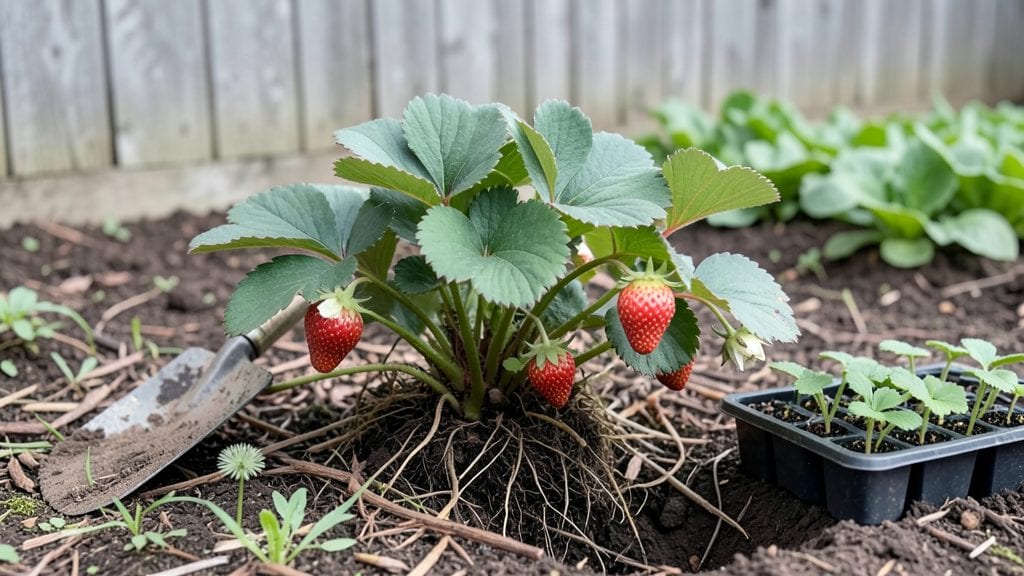
Transplanting strawberry plants transforms a weak patch into a berry-producing powerhouse—and the best time to move them is either early spring or late summer, when roots establish before winter or summer stress sets in.
I learned this the hard way after moving plants in July and watching them wilt under the heat. The key is timing: cool soil and mild weather mean less shock for your plants.
Start by digging a hole twice as wide as the root ball, then loosen the soil around the edges so roots can spread without fighting compacted earth. Space plants 18–24 inches apart in rows 3–4 feet apart—this gives them room to grow and prevents disease.
After planting, water deeply to settle the soil and keep moisture consistent for the first two weeks, which is when roots need the most support.
📚 In This Guide
- What you need
- Instructions
- Tips and common mistakes
- Wrapping up and next steps
What you need
- ● Strawberry plants: Healthy, disease-free runners or bare-root plants (6-12 plants, depending on your garden size).
- ● Garden trowel or small shovel: For digging holes (6-8 inches deep).
- ● Well-draining soil mix: A blend of garden soil, compost, and perlite (or sand) for aeration. Aim for 3-5 gallons per plant.
- ● Organic mulch: Straw, pine needles, or shredded leaves (2-3 inches thick) to retain moisture and suppress weeds.
- ● Balanced fertilizer: 10-10-10 or organic options like composted manure (1-2 tablespoons per plant).
- ● Watering can or hose with a gentle spray nozzle: For hydrating plants without disturbing roots.
- ● Gloves: To protect your hands from thorns and soil.
- ○ Pruning shears (optional but helpful): To trim long runners or leaves if needed.
- ● Plant markers: To label varieties if growing multiple types.
- ● Epsom salt: A spoonful dissolved in water for magnesium boost (great for yellowing leaves).
- ● Row covers or netting: To protect plants from pests like birds or slugs.
- ● Soil pH test kit: Strawberries thrive in slightly acidic soil (5.5-6.5 pH)—adjust with lime or sulfur if needed.
Step-by-Step instructions for transplanting strawberry plants
Moving strawberries takes patience but pays off with bigger harvests—here's how to do it right.
Prepare the New Planting Site
Choose a location with 6-8 hours of sunlight daily and well-draining soil—strawberries hate soggy roots. Work 2-3 inches of compost into the top 12 inches of soil using a garden fork. This improves drainage and provides nutrients for strong root growth. I like to add a 1-inch layer of coarse sand if my soil is heavy clay, as strawberries need good airflow at their roots.
Space rows 3-4 feet apart to allow airflow between plants, which reduces fungal diseases. If transplanting in containers, use at least 1-gallon pots with drainage holes. The key is mimicking their natural habitat: loose, fertile soil that warms quickly in spring. Test your soil's pH—strawberries thrive in slightly acidic soil (5.5-6.5). If your soil is too alkaline, mix in sulfur according to package directions before planting.
Dig and Handle the Plants Carefully
Dig around each strawberry plant with a trowel or spade, keeping the root ball intact. Strawberries have shallow roots, so aim to lift the entire plant with 6-8 inches of soil still attached. Gently loosen any tangled roots with your fingers—never pull or force them. If the roots dry out during transplanting, soak them in lukewarm water for 10-15 minutes before replanting.
Trim any damaged or excessively long roots with clean pruning shears, but leave the majority intact. This minimizes shock while encouraging new root growth. I always remove any old, brown leaves or runners before transplanting—fresh foliage means the plant can focus energy on establishing roots rather than maintaining dead tissue. Handle plants by the leaves, never the stems, to avoid crushing the delicate crown.
Plant and Establish the Strawberries
Dig a hole slightly wider than the root ball but no deeper—strawberries should sit at the same depth they were growing before. Position the plant so the crown (where leaves meet roots) sits just above soil level. Press the surrounding soil firmly around the roots to eliminate air pockets, then water deeply until moisture reaches 6 inches down. This settles the soil and encourages roots to spread quickly.
Apply 2-3 inches of mulch (straw or pine needles work best) around the base, keeping it 2 inches away from the crown to prevent rot. Mulch conserves moisture and keeps berries clean. Water every other day for the first two weeks, then taper to once weekly once new growth appears. You'll know it's working when you see bright green leaves within 7-10 days—that's your signal the roots have taken hold.
Tips & tricks for thriving strawberry transplants
Don't let transplanting stress overwhelm you—these essential techniques will help your strawberries establish roots and thrive.
Soil Preparation Secret: Before adding compost in Step 1, consider testing your soil's moisture retention. Strawberries prefer soil that drains quickly but holds moisture well. If your soil feels gritty when squeezed, mix in an extra 1/2 inch of organic matter like coconut coir or peat moss to improve water retention without compacting the soil. This balance is crucial for preventing both root rot and drought stress during the critical first two weeks after transplanting.
Root Handling Technique: In Step 2, when loosening tangled roots, I've found that gently teasing them apart with your fingers works best—never use tools that might damage the delicate root tips. If you notice any white, fuzzy growth on the roots (a sign of fungal infection), soak the roots in a solution of 1 tablespoon hydrogen peroxide per gallon of lukewarm water for 5 minutes before replanting. This natural disinfectant helps prevent disease transmission to your new planting site.
Planting Depth Cue: The crown should sit just above soil level during Step 3—this means the topmost part of the root system should be visible above the surrounding soil. Think of it like a strawberry wearing a tiny hat: the crown is the hat's brim, and it should peek out slightly. Burying the crown too deeply can cause rot, while exposing it too much stresses the plant. Use your finger to create a small dimple in the soil to position the crown precisely.
Post-Transplant Care Timeline: The first two weeks are critical for root establishment, so maintain consistent moisture by watering every other day as instructed. To check if your watering is adequate, insert a screwdriver into the soil 3 inches deep—if it comes out clean, you need more water; if it's damp but not soggy, you're doing it right. After two weeks, reduce to weekly watering only if you notice new growth, which indicates successful root establishment.
Pro Tips for Transplant Strawberry Plants
- Don't let transplanting stress overwhelm you—these essential techniques will help your strawberries establish roots and thrive.
- Soil Preparation Secret: Before adding compost in Step 1, consider testing your soil's moisture retention.
- Root Handling Technique: In Step 2, when loosening tangled roots, I've found that gently teasing them apart with your fingers works best—never use tools that might damage the delicate root tips.
Frequently asked questions
Got questions about transplanting strawberry plants? You’re not alone! Here are some common concerns—answered simply to help your berries grow like a pro.
When’s the best time to transplant strawberry plants?
The ideal window is early spring (after the last frost) or late summer (before fall frost). Avoid mid-summer heat—it stresses plants. Everbearing varieties can handle fall transplants too!
Can I transplant strawberries in winter?
Only if you’re in a mild climate (Zones 7-10). Otherwise, wait until spring—cold soil slows root growth. If you must, protect plants with mulch or row covers!
How deep should I plant strawberry runners?
Runners should sit just above soil level—their roots will anchor naturally. Burying them too deep risks rot; leaving them too high may dry them out. Aim for a snug, cozy fit!
What if my transplanted strawberries don’t produce fruit?
Give them time—first-year transplants focus on roots. Prune yellow leaves, ensure 6+ hours of sun, and water deeply (1 inch/week). Patience pays off with juicy berries next season!
Can I use container-grown strawberries for transplanting?
Gently loosen roots before planting to prevent shock. Choose pots with drainage holes and repot in spring. Just avoid overcrowding—space plants 12 inches apart.
Wrapping up and next steps
Transplanting strawberry plants is a rewarding way to expand your garden and enjoy a bountiful harvest! 🌱 With the right timing, tools, and care, you’ll give your berries the best start for thriving growth.
Remember to choose healthy runners, prepare the soil, and provide ongoing support—your patience will pay off in sweet, juicy rewards.
Now that you’re ready to take action, pick a sunny day and get your hands dirty! Whether you’re a seasoned gardener or just starting out, every little effort brings you closer to a garden full of delicious strawberries. Happy planting! 🍓✨