
Pruning
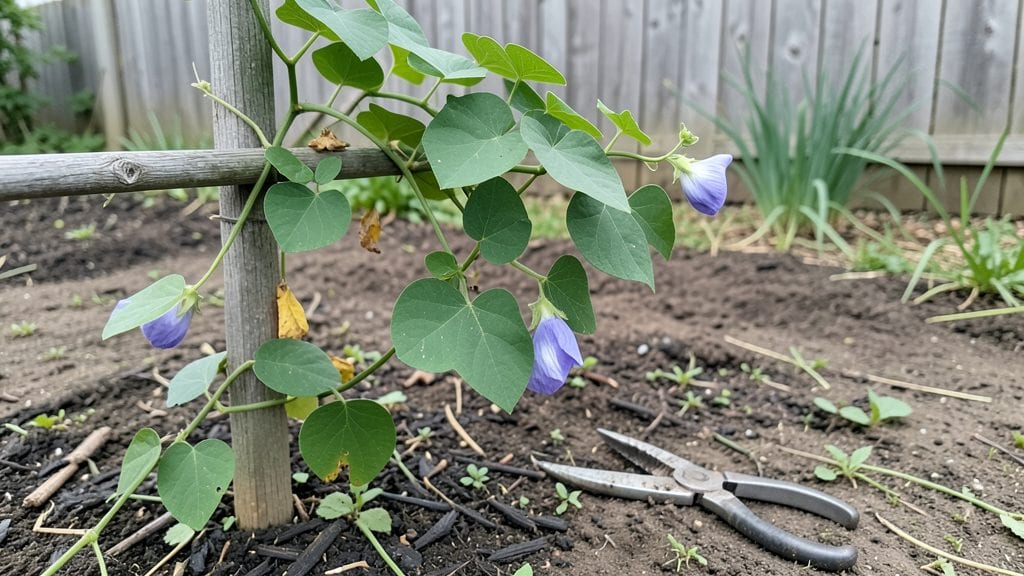
Pruning butterfly pea plants transforms them from one-season wonders into blooming machines that last all year. 🌿 I’ve learned that skipping these three strategic cuts means missing out on vibrant blue-purple flowers from spring through frost—because the plant keeps rebounding when you give it the right signal.
The secret isn’t complicated: you’ll need sharp pruners, clean cuts, and timing that matches the plant’s growth cycles. Deadhead spent blooms in early summer to encourage more flowers, shape the plant in late summer to control sprawl, and do a rejuvenation trim in early spring to wake up fresh growth.
Even a beginner can nail this in under 20 minutes per plant.
After pruning, give your butterfly peas a drink to help them recover, and feed with a light organic fertilizer to fuel that next flush of blooms. Within weeks, you’ll see new shoots pushing out, and the plant will look fuller than ever.
The key is consistency—don’t wait until the plant looks ragged to prune.
This method works for both container-grown plants and in-ground gardens, and it’s especially effective in warm climates where butterfly peas thrive year-round. The payoff? A plant that keeps blooming instead of fading out after its first flush. Let’s get those shears out!
📚 In This Guide
- What you need
- Instructions
- Tips and common mistakes
- Wrapping up and next steps
What you need
- ● Pruning shears or scissors: Sharp, sterilized bypass pruners (avoid dull tools—they crush stems!). A pair with 5-6 inch blades works best for most butterfly pea plants.
- ○ Gloves (optional but recommended): Lightweight gardening gloves to protect your hands from thorns or sap.
- ● Disinfectant (rubbing alcohol or bleach solution): Clean your tools with 70% isopropyl alcohol or a 1:9 bleach-water mix before and after pruning to prevent disease spread.
- ● Compost bin or bag: A small container to collect pruned stems for composting.
- ○ Water spray bottle (optional): A 16 oz misting bottle to dampen leaves slightly if working in dry conditions.
- ● Hand lens or magnifying glass: For inspecting stems or buds up close (especially useful for spotting pests or diseases).
- ○ Plant growth regulator (optional): A diluted seaweed extract or hormone-free rooting powder if you plan to propagate cuttings.
- ● Pruning saw (for large plants): A folding pruning saw with 7-8 inch blades if your butterfly pea has thick, woody stems.
- ● Notebook or app: To log pruning dates, weather, and plant responses (e.g., Gardenate or a simple journal).
Step-by-Step instructions for pruning butterfly pea plants
Here’s how to keep your butterfly pea plants flowering beautifully all season long.
✂️ Step 1: First Trim After Initial Blooms
Once your butterfly pea plants produce their first flush of flowers, they’ll start to look tired and leggy. That’s your cue to give them a light trim. Using clean, sharp pruning shears, cut back the stems just above a set of leaves where new growth will emerge. This encourages bushier growth and more flowers.
Focus on removing about one-third of the plant’s height—this prevents over-pruning, which can stress the plant. Watch for the first signs of wilting or fewer blooms; that’s when you know it’s time for this first trim. I always do this in early spring or after the first big bloom cycle, usually around late April or early May in most climates.
✂️ Step 2: Mid-Season Maintenance Trim
About 6-8 weeks after the first trim, your butterfly pea plant will likely have grown significantly and may start to look unruly. This is the time for a mid-season maintenance trim. Cut back any overly long or leggy stems to about half their length, again just above a leaf node.
This step is all about shaping the plant and encouraging more compact, bushier growth. Remove any dead, damaged, or crossing branches too—they compete for resources and can reduce flowering. You’ll notice new shoots emerging from the trimmed areas within 2-3 weeks, signaling that the plant is responding well.
✂️ Step 3: Late-Season Pruning for Winter Prep
As temperatures drop and the plant begins to slow down in late fall, give it one final trim to prepare for winter. Cut back all stems to about 4-6 inches tall, leaving a few strong stems if you want to overwinter the plant. This helps protect the roots and encourages fresh growth in spring.
If you’re in a colder climate, you can also cut the plant back almost to the ground. Just be sure to leave a few inches of stem to protect the crown from frost damage. Mulch around the base with 2-3 inches of organic mulch to insulate the roots. This final trim should happen around late October or early November, depending on your frost date.
⏰ Step 4: Post-Bloom Deadheading for Continuous Flowers
Throughout the growing season, don’t forget to deadhead spent blooms regularly. Simply pinch or snip off the faded flowers just above the next set of leaves. This encourages the plant to produce more blooms instead of setting seed.
I do this every 2-3 days during peak bloom time—it only takes a minute but makes a huge difference in how long your plant keeps flowering. You’ll see new buds forming within 5-7 days of deadheading, and the plant will stay vibrant and full of color all season.
Tips & tricks for pruning butterfly pea plants
These simple tricks will help you keep your butterfly pea plants thriving and blooming all season long.
Timing Tip: The first trim in Step 1 should happen right after you notice the first signs of wilting or fewer blooms—this is when the plant is telling you it's ready. I've found that waiting too long can stress the plant, so don't hesitate once you see those early signs. In most climates, this falls around late April or early May, but always go by the plant's condition rather than the calendar.
Tool Tip: Using clean, sharp pruning shears is absolutely critical. Dull shears can crush stems and create entry points for disease. I always sterilize my shears with rubbing alcohol between plants to prevent any potential cross-contamination. For the mid-season trim in Step 2, make sure your cuts are clean and precise just above a leaf node—this is where new growth will emerge.
Growth Observation: After your mid-season trim in Step 2, you should notice new shoots emerging within 2-3 weeks. If you don't see new growth after this time, your plant might need more sunlight or nutrients. This is also a good time to remove any crossing branches—they compete for resources and can reduce overall flowering. Think of it as giving your plant a haircut to encourage healthier growth patterns.
Winter Prep Strategy: For the late-season trim in Step 3, the goal is protection. In colder climates, cutting back to just a few inches above ground helps protect the crown from frost damage. I always add an extra 2-3 inches of organic mulch around the base—this creates an insulating layer that keeps roots warm through winter. The mulch also helps retain moisture, which is crucial for spring regrowth.
Pro Tips for Prune Butterfly Pea Plant
- These simple tricks will help you keep your butterfly pea plants thriving and blooming all season long.
- Timing Tip: The first trim in Step 1 should happen right after you notice the first signs of wilting or fewer blooms—this is when the plant is telling you it's ready.
- Tool Tip: Using clean, sharp pruning shears is absolutely critical.
Frequently asked questions
Got questions about pruning butterfly pea plants? You’re not alone! Here are answers to the most common concerns—so you can keep your plant thriving and blooming like a pro.
When is the best time to prune butterfly pea plants?
Prune butterfly pea plants three times a year: after the first flush of flowers (spring), mid-summer (to encourage reblooming), and lightly in fall (to shape and prep for winter). Avoid heavy pruning in late fall if you’re in a cold climate—wait until spring to avoid frost damage. Pro tip: Always prune on a dry, sunny day to help wounds heal faster!
How much can I trim off without harming the plant?
You can safely remove up to one-third of the plant’s growth in a single session, but avoid cutting into old, woody stems. Focus on leggy or overcrowded branches—trim just above a leaf node or set of leaves (about ¼ inch above). Warning: Never prune more than 30% of the plant at once, or you risk stressing it beyond recovery.
Will pruning make my butterfly pea stop flowering?
Not at all! Pruning actually stimulates more blooms by encouraging new growth and airflow. The key is timing: prune after a flower flush to redirect energy into fresh buds. If you notice fewer flowers post-prune, you may have cut too late in the season—stick to the spring/summer schedule for best results.
Can I prune butterfly pea plants in winter?
Light pruning (like removing dead or damaged stems) is fine in winter, but avoid heavy cuts. If you’re in a cold climate, wait until spring to prune. In warmer zones, a gentle shape-up trim can keep the plant tidy. Hot tip: Use sterilized shears to prevent disease, especially in damp winter conditions.
What should I do if my butterfly pea looks sad after pruning?
Don’t panic! A little post-prune TLC helps: water deeply, fertilize lightly with a balanced formula (like 10-10-10), and place the plant in bright, indirect light. If leaves yellow or wilt, you may have over-pruned—trim back only new growth next time. Most plants bounce back within 2–4 weeks with proper care.
Wrapping up and next steps
Pruning your butterfly pea plant is a simple yet rewarding task that keeps it thriving and blooming beautifully year-round! 🌸 By mastering the three key trims—spring cleanup, mid-season shaping, and fall maintenance—you’ll encourage lush growth, vibrant flowers, and even longer harvests if you’re growing for tea or culinary use.
Remember, patience and consistency are key, so don’t hesitate to roll up your sleeves and give your plant the care it deserves.
Now that you’re armed with the know-how, grab those shears and get pruning! 🌿 Observe your plant regularly, and soon, you’ll have a stunning, well-maintained butterfly pea that’s the envy of the garden. Happy trimming!