
Pests
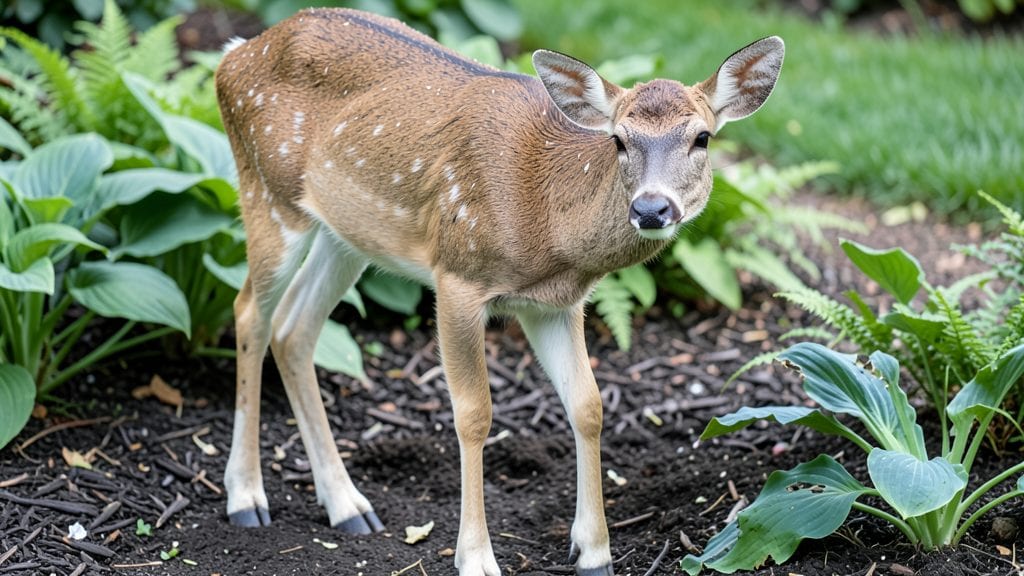
Learn how to protect your hosta plants from deer with these fence-free tricks that actually work—before your prized foliage turns into a midnight snack. 🌿 plants. The good news? You don't need an expensive fence to keep deer away.
A few strategic barriers, some clever plant pairings, and a little landscape savvy can make your hostas deer-proof without breaking the bank.
First, think vertical: tall stakes wrapped in hardware cloth or even sturdy bamboo poles create physical barriers deer won't bother jumping. For a softer approach, try planting deer-resistant companions like ferns, astilbe, or alliums around your hostas—their strong scents confuse deer and make your garden less appealing.
I've also had success with commercial repellents sprayed directly on leaves, though you'll need to reapply after rain. The key is layering these methods so deer have zero reason to linger.
What you'll end up with is hostas that stay lush and undamaged all season long, their deep green leaves and striking variegation exactly as you envisioned. The best part?
These solutions work whether you're dealing with occasional deer visitors or a full-blown herd that treats your yard like a grazing ground. Once you see those deer turn away from your garden, you'll wonder why you didn't try this sooner.
These strategies adapt easily to different yard sizes and climates—urban backyards, suburban borders, or rural gardens all benefit. The only real challenge is consistency: deer are persistent, but with these methods working together, they'll eventually give up and move on to easier targets. Let's get those hostas protected for good.
📚 In This Guide
- What you need
- Instructions
- Tips and common mistakes
- Wrapping up and next steps
What you need
- ● Deer repellent sprays: Choose one or more of these options (check for deer-specific formulas): Hot pepper wax (e.g., Deer Out! or Liquid Fence) – 1–2 gallons (covers ~2,500 sq ft)
- ● Garlic-based repellents (e.g., Bonide Deer & Rabbit Repellent) – 1 quart
- ● Commercial deer repellent granules (e.g., Bobbie Green’s Deer Out!) – 10–20 lbs (depending on garden size)
- ● Physical barriers: Plastic tree guards (e.g., Tree Tangle Foot) – 5–10 units (size: 12–18" diameter)
- ● Chicken wire or hardware cloth – 10–20 ft (1/2" mesh, 4–6 ft tall)
- ● Flexible fencing (e.g., Deer Netting) – 1 roll (50 ft)
- ● Natural deterrents: Freshly clipped human hair (from salons) – 1–2 handfuls per plant
- ● Marigolds or foxglove plants – 3–5 plants (deer dislike their scent)
- ● Predator urine (e.g., coyote or fox urine) – 1–2 bottles (reapply every 2–4 weeks)
- ● Tools for installation: Garden shears or scissors – for trimming barriers
- ● Stakes or tent pegs – 5–10 units (for securing fencing)
- ● Spray bottle – for applying liquid repellents
- ● Gloves – to handle spicy or smelly repellents
- ● Motion-activated sprinklers (e.g., ScareCrow) – 1 unit (for larger gardens)
- ● Ultrasonic repellents – 1 device (battery-operated, covers ~1 acre)
- ● Reflective tape or old CDs – to create visual distractions
- ● Plant collars (metal or plastic) – 5–10 units (for young hostas)
Step-by-Step guide to deer-proofing hostas without a fence
Here’s how to keep your hostas lush and deer-free using barriers that blend into your garden.
🌿 Step 1: Assess Your Hostas’ Vulnerability
Start by identifying the deer’s favorite spots—usually near the garden’s edge or along pathways where they feel safe. Hostas are most tempting when new growth emerges in spring or after rain, when leaves are tender and moist. I like to mark high-risk plants with small stakes so I remember where to focus efforts.
Observe deer activity patterns: tracks, droppings, or chewed plants. If you spot these near your hostas, that’s your first clue where to install barriers. Deer typically browse at dawn and dusk, so check for fresh damage during those times. This step ensures you’re not wasting materials on plants deer already ignore.
🪴 Step 2: Install Physical Barriers Around Plants
Use plastic tree guards (6–12 inches tall) around individual hostas—these are nearly invisible once planted. Push them 2–3 inches into the soil so they don’t topple. For clusters, create a chicken wire cage (18–24 inches tall) secured with stakes. Deer can’t push through the gaps, but air and rain still reach your plants.
For a low-profile look, try landscape fabric wrapped around the base of hostas, buried 1–2 inches deep at the edges. This blocks deer while letting water and nutrients through. Avoid metal barriers—they heat up in sun and can scorch leaves. Test the barrier’s height: deer can jump 3–4 feet, so taller is always better.
🌱 Step 3: Apply Deer-Repellent Plants as a Living Barrier
Plant deer-resistant perennials like lamb’s ear, Russian sage, or catmint around your hostas. These act as a natural deterrent because deer avoid their strong scents or fuzzy textures. Space them 12–18 inches apart to create a dense border. I’ve found that a 2–3 foot wide band of these plants around hosta beds works best.
Add alliums or garlic chives near hostas—their pungent aroma confuses deer. Even a few strategically placed bulbs can make a difference. Mulch with cedar chips (not the 3 gallons of mulch from your list, but a separate purchase) around hostas; deer dislike the scent. Refresh mulch every 6–8 weeks to maintain effectiveness.
✂️ Step 4: Use Scents and Motion Deterrents
Soak cotton balls in apple cider vinegar and place them near hostas. The strong smell masks hosta fragrances deer seek out. Replace every 3–4 days or after rain. For larger areas, try commercial deer repellent sprays (like those with putrescent egg or predator urine scents)—reapply every 7–10 days or after heavy rain.
Hang old CDs or aluminum pie pans from tree branches above hostas. The reflective surfaces and noise spook deer when they approach. Move these every few weeks so deer don’t get used to them. Pair this with a motion-activated sprinkler (set to 5–10 second bursts) near high-risk areas—deer hate unexpected water.
💧 Step 5: Maintain and Monitor for Gaps
Check barriers weekly in spring and fall—deer get bolder when food is scarce. Replace damaged chicken wire or refill mulch as needed. If you notice new chew marks, reinforce that spot immediately. I keep a small toolkit (scissors, stakes, extra fabric) handy for quick fixes.
Rotate repellent strategies seasonally: use scents in spring when new growth tempts deer, and physical barriers in late summer when deer forage more aggressively. Keep a journal of what works—note which barriers deer ignore and which they avoid. Over time, you’ll refine your approach to what’s most effective for your specific deer population.
Tips & tricks for protecting hostas without a fence
Here's what I've learned after years of battling deer in my own garden—these tricks make all the difference between a ruined hosta bed and lush, thriving plants.
Visual Cues for Step 1: When assessing deer vulnerability in Step 1, look for fresh chew marks that show clean, jagged edges—not the ragged tears from insects. Deer also tend to start browsing from the outer leaves and work inward, so check those first. I mark high-risk plants with bright orange stakes (they blend in surprisingly well) so I can quickly spot them from a distance during my weekly garden walks.
Barrier Height Strategy: In Step 2, don't skimp on height—deer can easily jump over anything under 3 feet. I've found that plastic tree guards work best when placed in a staggered pattern around individual plants, creating an invisible barrier that deer can't see through. For landscape fabric, bury it at least 2 inches deep to prevent deer from digging underneath. Remember, deer can push through flimsy materials, so choose sturdy chicken wire with gaps no wider than 1 inch.
Seasonal Planting Tip: When creating your living barrier in Step 3, plant deer-resistant perennials in early spring before deer become active. I've noticed that lamb's ear, in particular, spreads quickly and creates a dense ground cover that deer avoid. For maximum effectiveness, create a 2-3 foot wide band around your hosta beds—this gives deer enough visual deterrent to avoid the area entirely. The key is density; deer are more likely to browse through sparse plantings.
Repellent Rotation: In Step 4, don't rely on just one repellent method. I rotate between scents (apple cider vinegar cotton balls) and motion deterrents (reflective objects) every 2-3 weeks to prevent deer from becoming accustomed to them. For commercial sprays, I've found that products containing putrescent egg scent work best when applied in the evening—deer are most active then and the smell lingers through the night. Always reapply after rain, as water washes away the effectiveness.
Pro Tips for Protect Hosta Plants From Deer
- Here's what I've learned after years of battling deer in my own garden—these tricks make all the difference between a ruined hosta bed and lush, thriving plants.
- Visual Cues for Step 1: When assessing deer vulnerability in Step 1, look for fresh chew marks that show clean, jagged edges—not the ragged tears from insects.
- Barrier Height Strategy: In Step 2, don't skimp on height—deer can easily jump over anything under 3 feet.
Frequently asked questions
Got questions about keeping deer from munching on your hostas? You’re not alone—here are some of the most common concerns and straightforward solutions to tackle them head-on!
What’s the fastest way to protect hostas from deer if they’re already eating them?
If deer are actively feasting, act fast! Commercial deer repellents (like Liquid Fence or Deer Out) or physical barriers (like wire mesh or fencing) are your best bets. For immediate results, try spraying hot pepper wax or hanging soapy water-soaked rags—deer hate the smell!
Do deer-proof fences need to be tall? How high should they be?
Yes, but not as tall as you’d think! Deer can jump 6–8 feet, so a 7–8 foot fence is ideal. For a lower fence (4–5 feet), add an outward angle on the top (like a "V" shape) to deter climbers. Wire mesh (buried 12 inches deep) is another great option!
Are there natural deer repellents that actually work without chemicals?
Try these DIY-friendly options:
- Garlic or rotten eggs (mix with water, spray on plants)
- Human hair or wool (scatter around hostas—deer avoid the scent)
- Plants deer dislike (like lavender, daffodils, or marigolds nearby)
When is the best time to install deer deterrents?
Install barriers before deer start browsing (early spring or late winter). If you’re retrofitting, do it immediately—deer are opportunistic! For repellents, apply every 2–4 weeks or after heavy rain. Pro tip: Check for damage in dawn/dusk when deer are most active.
What if deer keep coming back even after I’ve tried everything?
If deer persist, they may be desperate for food (common in droughts) or your deterrent isn’t strong enough. Try:
- Motion-activated sprinklers (startles them)
- Ultrasonic devices (high-frequency sounds they hate)
- Remove attractants (like fallen fruit or pet food)
Wrapping up and next steps
Protecting your hosta plants from deer doesn’t have to be a losing battle—with the right creative, fence-free barriers, you can keep those leafy beauties thriving! 🌿 From repellent sprays to strategic plant pairings, there’s a solution that fits your garden’s style and budget.
The key is consistency and layering methods for the best defense.
Now that you’re armed with these effective strategies, take action this weekend! Start with one or two methods that resonate most with you, monitor their success, and adjust as needed. Your hostas (and your sanity) will thank you! 🌱✨