
Propagation
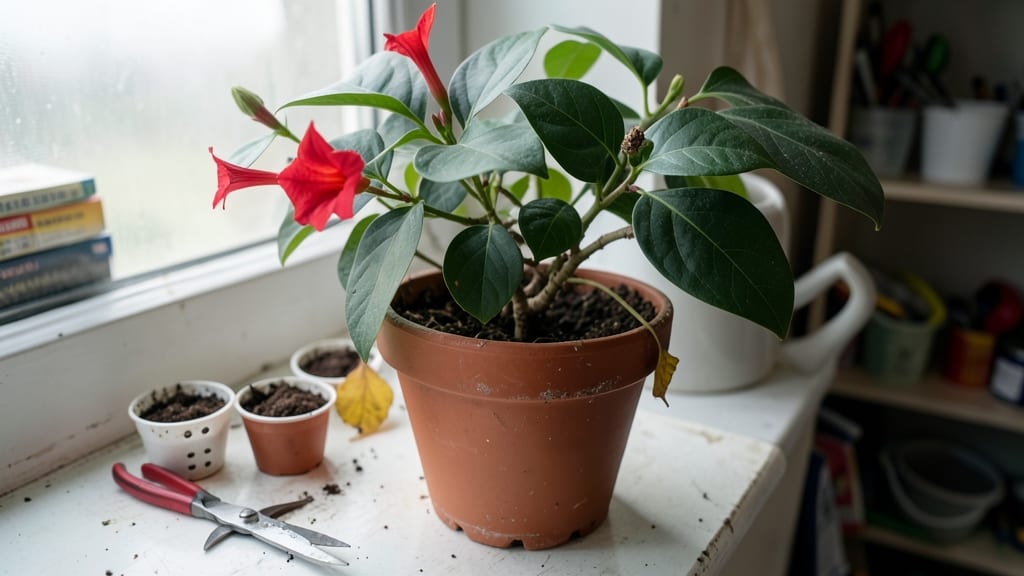
Propagating mandevilla plants from stem cuttings is the easiest way to multiply these tropical vines—no fancy tools or green thumb required. 🌱 I’ve doubled my collection every year using this method, and the best part? You can do it with just a few household items and a little patience.
The secret lies in timing and a simple rooting setup. Snip healthy stems in early summer when growth is vigorous, and place them in water or moist perlite. Within 2-4 weeks, you’ll see roots forming—proof that mandevillas are some of the most forgiving plants to propagate.
Even if you’ve never tried it before, this method works reliably.
By the time fall arrives, your cuttings will be thriving in pots, ready to overwinter indoors or grow into full-size vines next season. The results are stunning: glossy, dark green leaves and clusters of trumpet-shaped blooms that transform any space into a tropical paradise.
Works for both indoor and outdoor mandevillas, and the same steps apply whether you’re starting with a single cutting or expanding a whole collection. Let’s get those vines multiplying!
📚 In This Guide
- What you need
- Instructions
- Tips and common mistakes
- Wrapping up and next steps
What you need
- ● Healthy Mandevilla stem cuttings: 4–6 inches long, with at least 2–3 leaf nodes (preferably semi-hardwood or mature wood).
- ● Sharp, clean pruning shears or knife: Sterilized with rubbing alcohol to prevent disease.
- ○ Rooting hormone (optional but recommended): A powder or gel (e.g., Rootone or Clonex).
- ● Well-draining potting mix: A blend of perlite, vermiculite, or sand mixed with peat or coconut coir (e.g., 50/50 perlite/peat).
- ● Small pots or propagation trays: 3–4 inches in diameter, with drainage holes.
- ● Clear plastic bag or propagation dome: To create a humid environment (e.g., a ziplock bag with holes punched in it).
- ● Spray bottle with water: For misting cuttings to maintain humidity.
- ● Watering can or spray nozzle: For gentle hydration post-rooting.
- ● Heat mat: Keeps cuttings warm (70–75°F) to encourage faster rooting.
- ● Grow lights: Provides consistent light if natural sunlight is limited.
- ● Fungicide (e.g., neem oil or hydrogen peroxide): Prevents bacterial/fungal issues.
- ● Labels & markers: Track cutting types and dates!
Step-by-step instructions for propagating mandevilla plants
Here’s the simple, foolproof method I’ve used to double my mandevilla collection—no green thumb required.
🌿 Step 1: Select and Prepare Healthy Stem Cuttings
Choose a 4-6 inch section of new growth from a healthy mandevilla vine—look for stems with at least 2-3 leaf nodes (those little bumps where leaves attach). Use clean, sharp pruning shears to make a diagonal cut just below a node. This angled cut increases surface area for better root formation.
Remove the lower leaves, leaving only the top 1-2 leaves intact. Too many leaves mean more water loss before roots form. Strip any flowers or buds too—they’ll drain energy from the cutting. Dip the cut end in rooting hormone powder (optional but helpful) to encourage faster root growth.
💧 Step 2: Root in Water or Moist Medium
Place the prepared cutting in a clean glass or jar filled with room-temperature water—just enough to cover the bottom 1 inch of the stem. Change the water every 3-4 days to prevent bacterial growth. Set the jar in a bright, indirect light spot (like an east-facing window) where temps stay between 65-75°F. Avoid direct sun, which can overheat the water and stress the cutting.
You’ll see tiny white roots emerge in 2-4 weeks. Once roots reach 1-2 inches long, they’re ready to transplant. If you prefer soil propagation, use the 2 gallons of moist perlite instead—insert the cutting into the perlite and keep it lightly damp until roots form.
☀️ Step 3: Transplant and Care for New Plants
Gently transfer the rooted cutting to a 4-inch pot filled with 2 gallons of well-draining potting mix. Bury the stem up to the first set of leaves—this encourages stronger root development. Water lightly until you see moisture drain from the bottom, then let it sit for 10 minutes to settle.
Place the new pot in bright, indirect light for the first 2 weeks to help it adjust. After that, gradually introduce morning sun (up to 2-3 hours daily). Avoid fertilizing for 4-6 weeks—new roots are still fragile. Once you see new growth on the top leaves, it’s thriving and ready for regular care.
Here’s the thing—if your mandevilla cuttings yellow or wilt, don’t panic. It usually means the roots need more time or the light is too harsh. Adjust and watch them bounce back.
Tips & tricks for perfect mandevilla propagation
Here's what nobody tells you—these little details make all the difference between struggling and succeeding with your mandevilla cuttings.
Cutting Selection: The 4-6 inch length matters more than you think. Shorter stems (under 4 inches) often don't have enough energy reserves to root properly, while longer ones (over 6 inches) can be top-heavy in water. Look for stems that are about pencil-thick—thinner stems may not root as reliably. I've found that cuttings from the current season's growth (not last year's wood) always perform best.
Light Position: That bright, indirect light spot is crucial—direct sun can overheat the water and cause the cutting to wilt before roots form. If you only have south-facing windows, place your cuttings 2-3 feet back from the glass. I keep mine on a rotating tray so each cutting gets equal light exposure as they grow. The 65-75°F temperature range is ideal, but if your home runs cooler, consider using a small plant heat mat under the jar.
Root Development: When you see those tiny white roots emerge in 2-4 weeks, don't rush to transplant! Wait until they reach 1-2 inches long for maximum stability. I've seen cuttings with just ½-inch roots fail during transplanting. For water propagation, change that water every 3-4 days religiously—stagnant water breeds bacteria that can rot your cuttings before they root.
Transplanting Secret: Burying the stem up to the first set of leaves isn't just about root development—it's about creating a stronger plant. This buried section will develop additional roots, making your new mandevilla more resilient. After transplanting, let that 10-minute settling period work its magic—it helps the soil compact around the roots and prevents air pockets that can cause rot.
Pro Tips for Propagate Mandevilla Plants
- Here's what nobody tells you—these little details make all the difference between struggling and succeeding with your mandevilla cuttings.
- Cutting Selection: The 4-6 inch length matters more than you think.
- Light Position: That bright, indirect light spot is crucial—direct sun can overheat the water and cause the cutting to wilt before roots form.
Frequently asked questions
Got questions about propagating Mandevilla? You’re not alone! Here are some of the most common concerns—plus quick, no-fuss answers to keep your plants thriving.
When is the best time to take Mandevilla cuttings?
The ideal window is late spring to early summer (May–June in most zones), when new growth is vigorous and temperatures are warm. Avoid winter—cold snaps slow rooting. If you miss the season, indoor propagation under grow lights works year-round!
How long does it take for Mandevilla cuttings to root?
With patience and the right conditions, you’ll see roots in 2–4 weeks. Keep humidity high (like a greenhouse or plastic bag) and check for tiny white roots peeking from the cut end. Pro tip: Dip in rooting hormone to speed things up!
Why won’t my Mandevilla cutting root?
Common culprits:
- Overwatering (soggy soil = rot). Let the cutting sit in moist but not wet medium.
- Low humidity. Use a humidity dome or mist daily.
- Poor lighting. Bright, indirect light is key—no dark corners!
If all else fails, try water propagation (place the cutting in water + rooting hormone) as a backup!
Can I propagate Mandevilla from seeds instead of cuttings?
Technically yes, but cuttings are the way to go! Seeds take months to germinate and often don’t match the parent plant’s traits. Save seeds for experimental fun—stick with cuttings for reliable, fast results.
What’s the best temperature for rooting Mandevilla?
Aim for 70–75°F (21–24°C)—warmth mimics tropical conditions and boosts root growth. If your home runs cooler, use a heat mat or place cuttings near a sunny window. Avoid drafts or sudden temp drops!
Wrapping up and next steps
Propagating Mandevilla plants is a rewarding way to expand your garden or share these stunning vines with fellow plant lovers! With just a few simple steps—stem cuttings, rooting hormone, and patience—you can grow lush, flowering vines in no time. 🌱✨
Now that you’re armed with the know-how, give it a try! Start with healthy cuttings, keep them cozy in a humid environment, and watch your new Mandevillas thrive. Once rooted, pot them up and enjoy the beauty of these tropical gems in your space.