
Trees
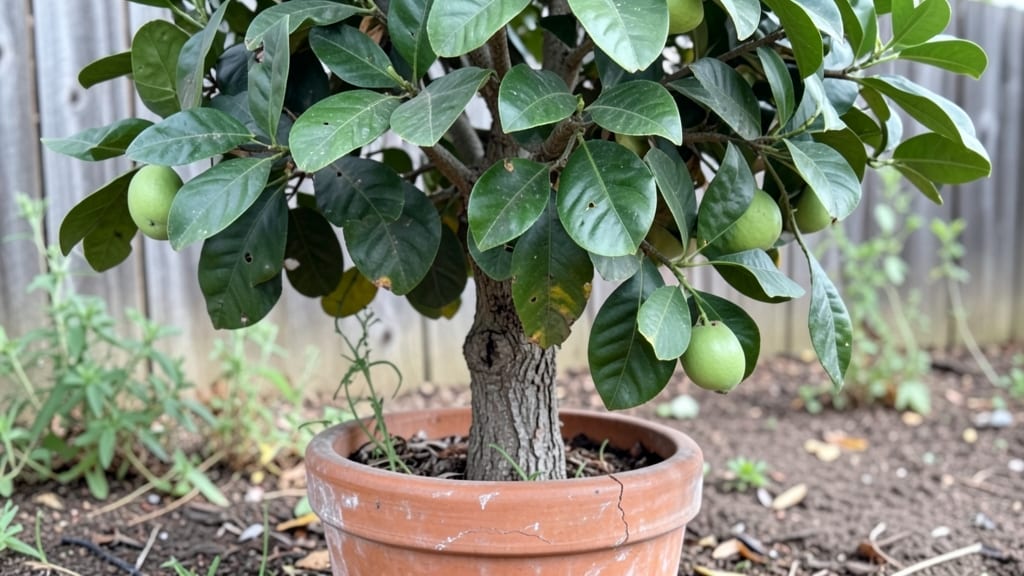
When your grapefruit plant leaves start turning yellow 🍊, it’s your tree’s way of screaming for help—whether from overwatering, nutrient starvation, or something sneaking in unseen.
Picture this: You’ve poured love into your citrus tree, only to wake up one morning and find the once-vibrant green leaves now streaked with yellow. That’s not just a bad hair day for your plant—it’s a warning sign that could tank your harvest if ignored.
The good news? Most yellowing fixes are faster than you think, and I’ll walk you through the exact steps to revive your tree.
Citrus trees like yours in Zone 9b (think Phoenix or coastal California) thrive on routine, but even the hardiest grapefruit can fall prey to common mistakes. We’re talking soil that’s too wet, missing nutrients like iron or magnesium, or pests feasting unseen.
The key is spotting the problem early—before it spreads to every leaf—and knowing which fix to apply first.
In this guide, I’ll break down the top 5 reasons your grapefruit leaves are turning, how to diagnose them fast, and the step-by-step remedies that work—whether you’re dealing with soggy roots, hungry soil, or a silent pest invasion. Let’s get your tree back to its lush, fruiting best.
Why grapefruit plant leaves turn yellow: 5 root causes and how to diagnose them
When your grapefruit tree leaves start turning yellow, it’s rarely just a sign of aging—it’s a red flag your plant is struggling. The good news? Most yellowing issues are fixable if you catch them early.
The challenge is narrowing down the exact cause, since overwatering, nutrient deficiencies, and pests can all mimic each other at first glance. I’ll walk you through the 5 most common causes and how to spot them using simple visual clues.
Start by examining the pattern of yellowing. Is it on older leaves first? New growth? Or scattered randomly? The location and progression of yellowing can reveal whether your grapefruit tree is thirsty, starving, or under attack.
For example, nitrogen deficiency often starts with older leaves, while overwatering causes yellowing that spreads upward. Let’s break it down step by step.
🌱
- 1. Overwatering: Yellowing starts on newest leaves and spreads upward. Soil feels soggy to the touch, and roots may smell rotten. Check for mushy stems or drooping branches—classic signs of root rot.
- 2. Nitrogen deficiency: Yellowing appears on older leaves first, often with green veins still visible. New growth is stunted or purplish. This is your tree’s way of saying, “I need more leafy greens nutrients!”
- 3. Magnesium (Epsom salt deficiency): Yellowing appears as interveinal chlorosis (yellow between veins) on older leaves). Leaves may also develop brown edges. This is common in alkaline soils where magnesium isn’t available.
- 4. Iron deficiency: Young leaves turn pale yellow while veins stay green. This is called lime-induced chlorosis and happens when soil pH is too high (above 6.5). Common in calcareous soils like those in Florida or California.
- 5. Pest damage (e.g., citrus leaf miners or scale insects): Look for tiny white trails on leaves (leaf miners) or sticky residue (honeydew from scale). Yellowing is often uneven and accompanied by webbing or black sooty mold.
Now that you’ve identified the visual patterns, let’s dig deeper. For overwatering, stick your finger 2 inches into the soil. If it’s damp, your grapefruit tree is getting too much H₂O.
For nutrient deficiencies, gently scratch the soil surface—if it’s clay-heavy or alkaline, that explains the magnesium or iron issues. And for pests, flip a few leaves over to check for tiny eggs or bugs hiding underneath.
Here’s a quick diagnostic flowchart to simplify the process:
- Yellowing on newest leaves? → Likely overwatering or pests.
- Yellowing on oldest leaves? → Check for nitrogen, magnesium, or iron.
- Yellow between veins? → Magnesium deficiency (time for Epsom salt).
- Pale yellow all over? → Iron deficiency (lower soil pH with sulfur).
- Sticky leaves + black mold? → Scale insects or aphids.
Don’t panic if you’re not sure which issue is plaguing your grapefruit tree. The next section will guide you through step-by-step fixes for each of these problems, so you can revive your tree’s health and bring back those vibrant green leaves.
The key is acting fast—once yellowing spreads to more than 30% of the foliage, recovery becomes much harder.
🪴
Step-by-step fixes for yellow grapefruit leaves: overwatering vs. nutrient deficiency solutions
Yellowing grapefruit leaves often stem from two common issues: overwatering or nutrient deficiencies. The first step is diagnosing which problem your tree faces. Overwatered leaves feel soggy and may wilt, while nutrient-deficient leaves show yellowing between veins (chlorosis). Both require different fixes, but acting fast can save your tree.
For overwatering, the solution starts with adjusting your watering schedule. Grapefruit trees need well-draining soil and prefer deep watering every 7-10 days rather than frequent shallow watering.
If your soil feels compacted or stays damp for more than 24 hours, it’s time to improve drainage with organic matter like compost or perlite.
When it comes to nutrient deficiencies, a simple DIY soil test can reveal what’s missing. Grab a handful of soil from the root zone and mix it with water. If the mixture smells sour or looks grayish, it may lack nitrogen.
For a quick fix, use fish emulsion fertilizer (diluted to half-strength) or a balanced citrus-specific fertilizer like 6-6-6 NPK ratio.
Here’s how to tackle each issue with a side-by-side comparison of quick fixes versus long-term solutions:
| Issue | Quick Fix | Long-Term Solution |
|---|---|---|
| Overwatering | Reduce watering to every 10-14 days; improve drainage with compost or perlite. | Install a drip irrigation system with timers; amend soil with sand or gravel. |
| Nitrogen Deficiency | Apply fish emulsion (1 tbsp/gallon) or blood meal around the root zone. | Use slow-release organic fertilizer (e.g., alfalfa pellets) every 3 months. |
| Magnesium Deficiency | Sprinkle Epsom salt (1 tbsp/gal water) on soil; water deeply. | Add dolomitic lime to soil annually to maintain pH 5.5-6.5. |
| Iron Deficiency | Apply chelated iron spray to leaves; repeat every 2 weeks. | Mulch with well-rotted manure to improve soil microbial activity. |
Pruning is another key step to revive your grapefruit tree. Remove yellowed or dead leaves using sterilized pruning shears to encourage new growth. Focus on outer branches to improve airflow and sunlight penetration, which helps prevent fungal issues that worsen yellowing.
To prevent future problems, monitor your grapefruit tree’s soil moisture and leaf color monthly. Use a moisture meter to check soil depth (aim for 60% moisture at 3 inches deep). If you notice yellowing again, act quickly—citrus trees recover faster when issues are caught early.
With these fixes, your grapefruit tree’s leaves should regain their vibrant green color within 4-6 weeks. Keep an eye on your tree’s progress, and don’t hesitate to adjust your care routine as needed. A healthy tree means sweet, juicy fruit in the future! 🍊