Flowers
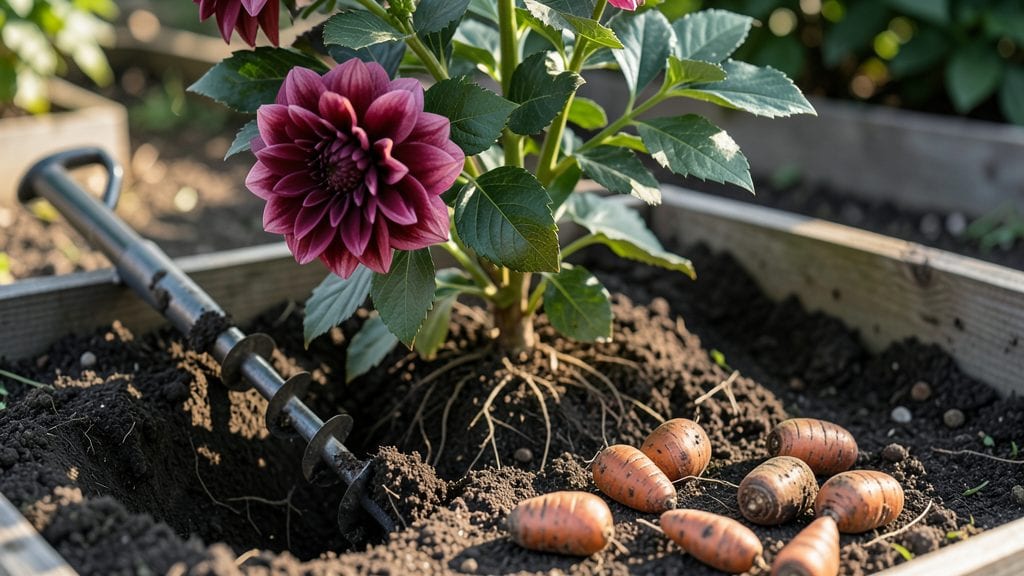
A flower planting auger creates precise planting holes for seeds and bulbs, with adjustable sizes from 1/4-inch for small perennials up to 3-inches for large shrubs. Selecting a sturdy, ergonomic model with depth control ensures cleaner planting and healthier root growth.
A flower planting auger isn't just a tool—it's your secret weapon for stress-free planting.
The right size prevents root damage while improving drainage, especially in heavy clay soils where roots need room to expand. 🌱 I've found that spiral augers work best for compacted soil, while screw-style models handle rocky terrain with less effort.
The depth adjustment feature alone can cut your planting time in half by eliminating guesswork about bulb placement.
For gardeners working with different soil types, material matters just as much as design. Stainless steel augers resist rust in wet climates, while lightweight aluminum models reduce arm fatigue during long sessions.
Pro tip: Look for models with non-slip grips—they make a huge difference when digging dozens of holes in succession.
💡 In This Article
- How Auger Size Affects Root Development in Flowers
- Top Auger Features for Different Soil Types
How auger size affects root development in flowers
The diameter of your planting hole directly impacts how roots establish and spread. For annuals like marigolds or petunias, a 1/4-inch to 1/2-inch hole creates minimal soil disturbance while allowing roots to penetrate naturally. The key here is aeration—roots need oxygen, and compacted soil around the hole restricts this.
A slightly larger hole than the root ball prevents circling roots, which is common when roots can't break through dense soil.
Perennials and shrubs require more space, typically 1-2 inches in diameter, to accommodate their deeper root systems. Take daylilies as an example: their fibrous roots spread horizontally, so a 1.5-inch hole lets them expand without competing with surrounding plants.
Woody plants like lilacs need 2-3 inch holes because their taproots grow downward, requiring loose soil for penetration. The depth matters too—planting bulbs like tulips at 6-8 inches deep ensures they develop strong roots before flowering.
Drainage is where hole size becomes critical. Heavy clay soils benefit most from larger holes because they improve water flow. A 3-inch hole in clay allows excess water to drain away from roots, preventing rot in moisture-sensitive plants like lavender.
Sandy soils, however, need shallower holes (1-1.5 inches) to retain moisture near the root zone. This balance between aeration and moisture retention is why adjustable augers are game-changers—they let you customize for your soil type.
Nutrient absorption ties into hole size too. Smaller holes (1/2 inch) work for nutrient-rich compost mixes, while larger holes (2+ inches) allow you to incorporate mycorrhizal fungi or slow-release fertilizers directly into the planting zone.
The root zone's surface area increases with hole size, giving roots more contact with nutrients. For example, a 2-inch hole for a rose bush lets you place fertilizer granules at the base, where new roots will form.
Don't overlook soil compaction when choosing hole sizes. Compacted soil acts like a barrier, forcing roots to grow in tight circles. A 1-inch hole in compacted clay might feel adequate, but it actually restricts root growth by 30-40% compared to a properly loosened 2-inch hole.
The solution? Use a spiral auger to break up compacted layers before planting—this single step can double root spread in the first growing season.
Here's what most gardeners miss: the transition zone between the hole and surrounding soil. A slightly tapered hole (wider at the top, narrower at the bottom) helps roots transition smoothly into native soil. This design mimics natural root growth patterns and reduces transplant shock.
For delicate perennials like hostas, a 3/4-inch tapered hole lets roots establish without stress, while woody plants need 2-inch tapered holes to accommodate their structural roots.