
Fertilization
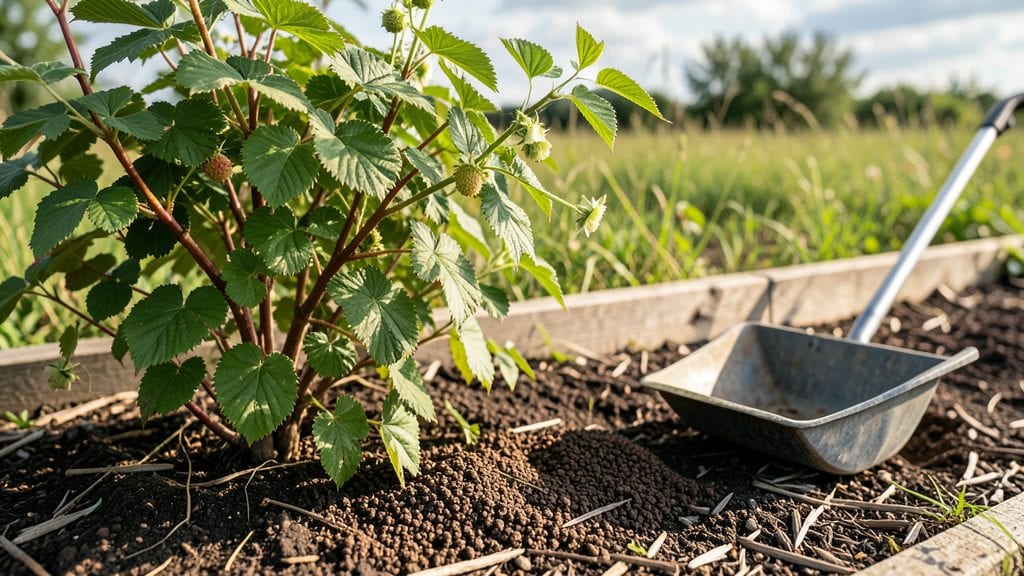
Fertilizing raspberry plants 🍓 is the difference between a handful of berries and a bountiful harvest that feeds your family all summer.
Struggling to get your raspberry bushes to produce juicy, abundant berries? The secret often lies in the soil—and timing your fertilization correctly can double your harvest in just one season.
Most gardeners overlook the fact that raspberries need a balanced approach: too much fertilizer burns roots, while too little starves the plants. I’ll show you exactly when to feed—spring for strong roots, summer for fruit, and how to avoid common mistakes that waste your effort.
Whether you use compost, synthetic blends, or a mix of both, you’ll leave this guide knowing the perfect schedule, the right nutrients, and how to keep your raspberries thriving from March through September.
Optimal soil pH and fertilizer types for raspberry plants
Raspberry plants thrive when their soil pH stays within the 5.5–6.5 range. This slightly acidic environment unlocks nutrient availability, ensuring your bushes grow strong canes and produce juicy, flavorful berries.
If your soil tests outside this range, you’ll likely see stunted growth or poor fruit development, no matter how much you fertilize.
Before reaching for fertilizer, test your soil using a home kit or send a sample to your local extension office. Raspberries are particularly sensitive to low boron and magnesium, which can lead to poor berry set or yellowing leaves.
Adjusting pH with sulfur (to lower pH) or lime (to raise pH) is often the first step toward a bountiful harvest.
| Soil Factor | Ideal Specification | Adjustment Method |
|---|---|---|
| pH Level | 5.5–6.5 (slightly acidic) | Add sulfur (lower pH) or lime (raise pH) |
| Organic Matter | 5–10% compost or aged manure | Work in compost annually |
| Boron | 0.5–1.0 ppm in soil | Use borax (sparingly) or compost tea |
| Magnesium | 1,000–2,000 ppm | Apply Epsom salt (1 tbsp/plant) |
| N-P-K Ratio | 10-10-10 or 5-10-10 | Balanced fertilizer early season |
When it comes to fertilizers, organic options like composted manure, worm castings, or fish emulsion are my top recommendations. These slow-release fertilizers improve soil structure over time while providing a steady supply of nitrogen, phosphorus, and potassium.
For example, a 5-10-10 NPK ratio is perfect for raspberries—promoting leafy growth (nitrogen), root development (phosphorus), and fruit production (potassium).
Synthetic fertilizers can deliver faster results, but they require careful monitoring. A 10-10-10 granular fertilizer works well if applied sparingly—too much can lead to nutrient burn, causing leaf edges to crisp or turn brown.
Always follow package instructions and water deeply after application to prevent salt buildup in the root zone.
Micronutrients like boron and magnesium are non-negotiable for raspberries. A deficiency in boron causes poor berry set or hollow fruit, while magnesium deficiency (often seen as interveinal chlorosis) weakens canes.
To address these, I recommend a borax solution (1 tsp/gallon of water) sprayed on leaves during flowering or applying Epsom salt (1 tbsp per plant) in early spring.
If your raspberries are struggling, yellowing leaves or small, hard berries are red flags. These symptoms often point to pH imbalances or nutrient deficiencies. For instance, low calcium can cause blossom-end rot in berries, while excess nitrogen leads to lush foliage but few fruits.
Always start with a soil test before guessing which amendment to add.
For established bushes, I apply a light feeding of organic fertilizer in early spring (when new canes emerge) and again after harvest to replenish nutrients. Mulching with compost or straw helps retain moisture and slowly releases nutrients, reducing the need for frequent fertilizing.
This approach mimics natural ecosystems and keeps your raspberries thriving year after year.
Remember, less is more when fertilizing raspberries. Overdoing it can harm your plants just as much as underfeeding. Start with a balanced fertilizer, monitor your plants’ response, and adjust based on their growth and fruit production.
With the right pH and nutrients, your raspberry bushes will reward you with vibrant canes and bountiful harvests.
🌱
Best fertilization schedule for raspberry plants by growth stage
Raspberry plants thrive when fertilized at the right times, not just when you remember to feed them. Unlike annuals, these perennial shrubs need a tailored approach based on their growth stages. Skipping steps or overdoing it can lead to weak canes or poor fruit set.
The key is balancing nitrogen for leaves, phosphorus for roots, and potassium for fruit—all timed to match your plant's natural cycle.
First, understand that everbearing varieties (like 'Heritage' or 'Caroline') produce two harvests—spring and fall—while fall-bearing types (like 'Boyne' or 'Nova') focus on one late-season crop. This difference changes when and how you fertilize.
For example, everbearing plants need extra potassium in late summer to support their second flush of berries, while fall-bearing varieties can take a break after their primary harvest.
Here’s how to fertilize raspberries at each critical stage, with adjustments for both types:
- Early Spring (March-April): Root Boost
Apply a balanced 10-10-10 fertilizer or compost when new canes emerge (just after last frost). This kickstarts growth for both everbearing and fall-bearing varieties. Use 1 tbsp per plant, worked into the top 2-3 inches of soil.
- Flowering Stage (May-June): Potassium Focus
Switch to a low-nitrogen, high-potassium (5-10-10) fertilizer or wood ash to prevent blossom end rot. Everbearing varieties need this 6-8 weeks before their fall harvest, while fall-bearing types benefit from it during their primary bloom.
- Fruiting Stage (June-September): Balanced NPK
Use a balanced 10-10-10 or 5-5-5 fertilizer every 4-6 weeks to maintain fruit production. For everbearing types, apply a second potassium-rich feeding in late July to support fall berries. Fall-bearing varieties can taper off after their main harvest.
- Fall (October-November): Wind Down
Stop fertilizing 6-8 weeks before first frost to let plants harden off. Add compost or aged manure instead to improve soil for next year. Everbearing varieties may need a light potassium boost in early fall if their second crop is still developing.
- Winter (December-February): Dormant Rest
No fertilization needed—raspberries are dormant. Focus on mulching (3-4 inches of straw or leaves) to protect roots. This is also the time to test soil pH (ideal: 5.5–6.5) and plan next year’s feedings.
For organic gardeners, swap synthetic fertilizers for compost tea, fish emulsion, or kelp meal. These provide slow-release nutrients without risking burn. For example, fish emulsion (5-1-1) is great for early spring, while kelp meal (0-0-2) adds potassium during fruiting.
Always water deeply after fertilizing to move nutrients into the root zone.
Watch for signs of over-fertilization, like yellow leaves or stunted growth. If this happens, flush the soil with water and reduce future feedings. Remember, raspberries are heavy feeders but prefer consistency over excess. With this schedule, you’ll see stronger canes, bigger berries, and fewer empty blossoms next season.