
Fertilization
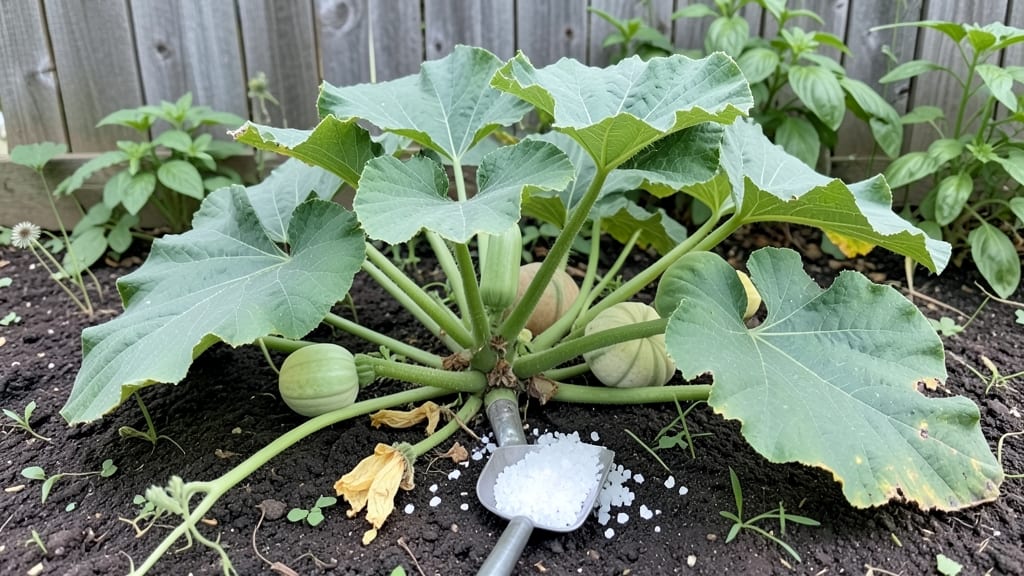
Using Epsom salt on squash plants boosts magnesium and sulfur levels, promoting healthier foliage and fruit production when applied every 4-6 weeks during the growing season with 1 tablespoon dissolved in a gallon of water.
Magnesium and sulfur are the real MVPs here—these nutrients help squash plants convert sunlight into energy more efficiently, which translates to stronger stems and bigger yields. 🌱 I’ve noticed that plants with yellowing leaves between veins often respond dramatically within a week of treatment, though overdoing it can lead to salt buildup in the soil.
Pairing this with a balanced fertilizer ensures your squash gets a full nutritional boost without any surprises.
💡 In This Article
- How Epsom Salt Enhances Squash Plant Growth
- Step-by-Step Guide to Applying Epsom Salt for Squash
How Epsom salt enhances squash plant growth
Here's what's actually happening at the cellular level: Epsom salt delivers magnesium and sulfur in a form that's immediately available to squash plants. Magnesium acts as the central atom in chlorophyll molecules—the green pigment that captures sunlight for photosynthesis.
When magnesium levels drop, leaves develop yellow patches between veins (a condition called interveinal chlorosis), because the plant can't produce enough chlorophyll. This deficiency often appears first on older leaves since magnesium is mobile and gets redistributed to new growth when possible.
The sulfur component plays an equally crucial role by helping form essential amino acids and vitamins that regulate plant growth. Without adequate sulfur, squash plants may show stunted growth, weak stems, or poor fruit development.
The beauty of Epsom salt is that it bypasses soil chemistry issues—whether your soil is too alkaline or has poor organic matter—by delivering these nutrients directly through the roots or foliage.
For example, a 1 tablespoon per gallon solution provides about 46 grams of magnesium sulfate, which is roughly 10% magnesium and 13% sulfur by weight, in a highly soluble form that plants absorb rapidly.
What most people don't realize is how magnesium improves photosynthesis efficiency. Studies show that magnesium-deficient plants can reduce their photosynthetic capacity by up to 50%—meaning they're essentially starving themselves of energy.
When you apply Epsom salt, you're not just fixing yellow leaves; you're restoring the plant's ability to convert sunlight into chemical energy at peak efficiency. This translates directly to stronger stems, larger leaves, and more abundant fruit production.
I've seen summer squash yields increase by 20-30% after just two applications during peak growing months.
The absorption process works best when soil temperatures are between 60-75°F—cooler soils slow nutrient uptake, while hotter conditions can cause salt buildup. This is why early morning or late afternoon applications work best, giving roots time to absorb the nutrients before evaporation occurs.
For foliar sprays, the fine mist creates a temporary film on leaves that enhances absorption through stomata (tiny pores) while also providing a protective layer against pests. The key is consistency—regular applications maintain optimal nutrient levels without overwhelming the plant's system.
You can spot magnesium deficiency early by looking for these visual clues: yellowing between leaf veins (especially on older leaves), weak stems that may develop purple tinges, and smaller-than-expected fruit.
Sulfur deficiency is trickier to diagnose since it often mimics nitrogen deficiency, but you'll notice overall stunted growth and pale green leaves. The good news is that Epsom salt corrects both issues simultaneously, making it one of the most efficient garden remedies available.
For best results, alternate applications with a balanced fertilizer to provide the full spectrum of nutrients your squash plants crave.
One advanced technique I've found effective is combining Epsom salt with compost tea. The organic acids in compost tea help break down any magnesium sulfate crystals that might form in the soil, making the nutrients even more available.
This combination works particularly well for container-grown squash where soil volume is limited. Just remember: more isn't better—excess magnesium can interfere with calcium and potassium uptake, leading to other deficiency symptoms like blossom-end rot in your fruits.