
Container Gardens
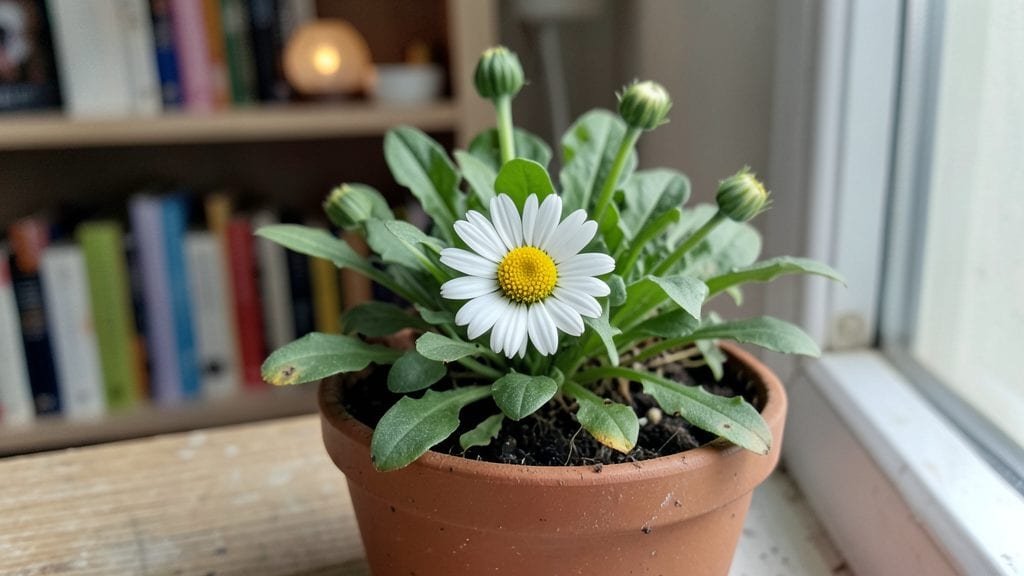
Bringing a cheerful daisy indoor plant into your home means year-round blooms—but only if you master the right light and soil mix.
Picture this: you’ve spent $25 on a vibrant Gerbera Daisy (Indoor) 🌼, only for it to stretch toward the window like a starving plant, then drop its buds before they open. That’s the frustration I’m here to fix.
Most people assume any sunny spot will do, but bright, indirect light (think east or west windows) is non-negotiable. Too much direct sun burns the petals, while too little makes the plant leggy and sad.
And the soil? It needs to drain fast—clay pots with holes are your best friend.
Below, I’ll walk you through exactly how to set up your Gerbera Daisy (Indoor) 🌼 for nonstop blooms, including the one trick that cuts wilting in half. No guesswork, just results.


Optimal sunlight requirements for daisy indoor plants to thrive
Your Gerbera daisy indoor plant thrives on bright, indirect sunlight—the key to those cheerful blooms you adore. Without the right light exposure, you’ll notice yellowing leaves, stunted growth, or worse, no flowers at all.
Think of sunlight as the plant’s energy source—too little and it struggles, too much and it burns. Let’s break down the perfect balance for your indoor daisy.
Most indoor daisies need 4-6 hours of sunlight daily, but the type matters just as much as the duration. Direct midday sun can scorch delicate leaves, while low light leads to leggy, weak stems.
The goal? Mimic the dappled shade of a forest understory—bright but filtered. East or west-facing windows are ideal, while south-facing windows may need sheer curtains to diffuse harsh rays.
If your daisy’s leaves start yellowing near the edges, it’s a cry for more light. Move the pot closer to the window or supplement with a grow light for 6-8 hours daily.
For brown, crispy patches, the opposite is true—your plant is sunburned. Rotate the pot weekly to ensure even growth and prevent leggy stems from stretching toward the light.
Seasonal adjustments are crucial. In winter, when natural light dims, extend exposure with a LED grow light placed 6-12 inches above the plant. During summer, watch for afternoon sun—use sheer curtains to filter intensity.
Pro tip: Rotate your daisy every few days so all sides get equal light, preventing uneven growth or lopsided blooms.
Not all windows are created equal. A west-facing window offers intense afternoon light, perfect for daisies, while an east-facing window provides gentler morning rays. If your space lacks natural light, a south-facing window with a sheer curtain can work—just monitor for heat buildup.
For deep indoor spaces, a full-spectrum grow bulb (12-15 watts) is a game-changer.
Watch for these tell-tale signs of sunlight struggles: Pale, thin leaves mean insufficient light, while curling or bleached spots signal too much. Adjust gradually—sudden light changes can shock your plant.
A healthy daisy should have vibrant green foliage and continuous blooms. If you see bare stems or dropping buds, it’s time to reassess your light strategy.
For maximum blooms, pair optimal light with well-draining soil and moderate watering. A 10-10-10 fertilizer applied every 4-6 weeks during spring and fall will reward you with longer-lasting flowers.
Remember, your daisy’s happiness depends on this light-soil-water trifecta. Start with the right light, and you’re halfway to a thriving indoor garden.
Don’t let seasonal light changes catch you off guard. In fall and winter, supplement with artificial light if blooms start fading. A simple timer-controlled LED light on a 6-hour cycle can mimic daylight and keep your daisy in peak condition.
With these adjustments, your indoor daisy will bloom year-round, turning every room into a sunlit sanctuary.
🌼
Soil composition and drainage secrets for continuous daisy blooms
Your daisy indoor plant thrives when its soil composition mimics its natural habitat—lightweight, airy, and nutrient-rich. The key lies in balancing organic matter, texture, and pH levels to prevent common issues like root rot or nutrient deficiencies.
Start with a mix that drains well but retains enough moisture to keep roots happy without drowning them.
Most Gerbera daisies prefer a slightly acidic to neutral pH range (6.0-7.0). Test your soil with a simple kit to ensure it’s in this range—adjust with lime (to raise pH) or sulfur (to lower it) if needed.
A well-aerated mix with 30% perlite or vermiculite and 70% potting soil works wonders for airflow and drainage.
Soil Factor
Ideal Specification
Why It Matters
Texture
Loamy with 30% perlite
Prevents compaction, improves root oxygen
pH Level
6.0-7.0 (slightly acidic to neutral)
Enhances nutrient uptake for blooms
Organic Matter
20% compost or worm castings
Feeds roots slowly, boosts microbial life
Drainage
Fast-draining with saucer tray
Prevents root rot from soggy soil
Drainage is non-negotiable for daisy indoor plants. Always use pots with drainage holes and place them in saucers to catch excess water. After watering, empty the saucer within 15 minutes—sitting water is a fast track to fungal diseases.
If your plant shows yellowing leaves or mushy stems, it’s a cry for help: repot with fresh, dry mix immediately.
For continuous blooms, refresh your soil every 6-12 months by top-dressing with a slow-release fertilizer or mixing in orchid bark for extra aeration. Over time, old soil loses its structure and nutrients, stifling your daisy’s growth.
A quick swap of the top 2 inches of soil can revive waning plants without full repotting stress.
Diagnosing soil issues early saves your daisy. Brown leaf tips often signal underwatering or low humidity, while stunted growth points to nutrient deficiencies. Adjust your care routine: mist leaves lightly for humidity, or feed with a balanced liquid fertilizer (like 10-10-10) every 4-6 weeks during blooming season.
Consistency is key—daisies reward steady care with non-stop color.
Pro tip: Use a terracotta pot for extra breathability—it wicks moisture away from roots, keeping them cool and healthy. Pair it with a wicking system (like a self-watering pot) to automate moisture control, especially if you travel often. Your daisy will thank you with bold blooms that last for months.