Diseases
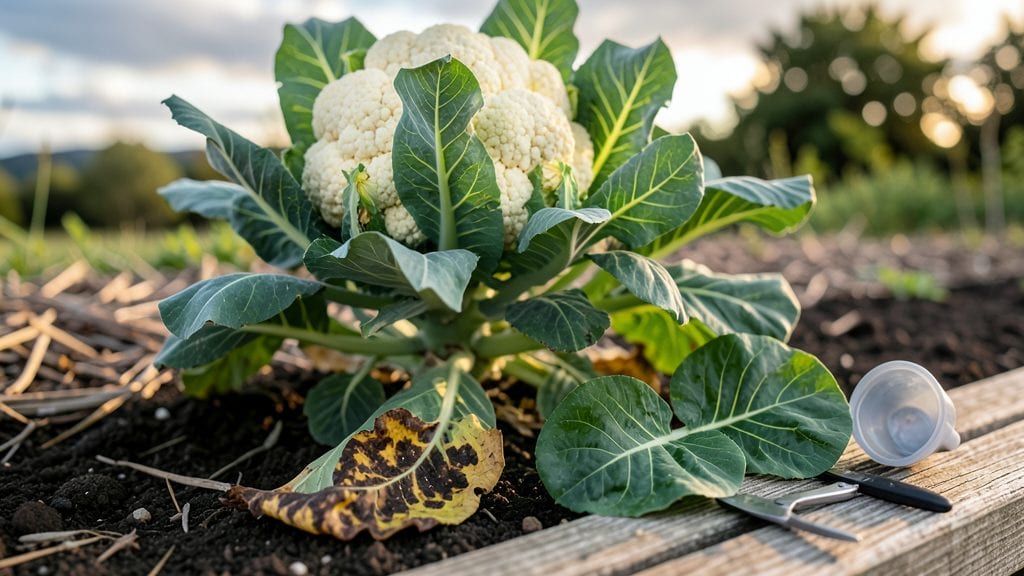
Cauliflower plant diseases can turn your crisp white heads into a sad, yellowing mess—unless you catch them early. I’ve lost entire plants to black rot and downy mildew, but now I know the telltale signs: dark veins, fuzzy gray spots, or stunted growth.
The good news? Organic fixes work if you act fast.
Most diseases start with poor drainage, crowded plants, or old compost. Black rot thrives in wet leaves, while clubroot gnaws at roots if soil pH is off. My biggest breakthrough?
A 3-step defense: copper spray for mildew, sulfur for soil pH, and 12-inch spacing to improve airflow. Even my black thumb can’t mess this up.
You’ll save your harvests by pruning infected leaves immediately and rotating crops every 3 years. The payoff? Firm, healthy heads that stay white and sweet—no more bitter surprises. Let’s get those plants fighting back the right way.
Works for home gardens, raised beds, or even container growing. The key is prevention first, then quick action. Here’s how to spot, stop, and reverse the damage before it spreads.
Understanding Root Causes
Cauliflower plants, like all crops, are vulnerable to diseases due to a mix of environmental, biological, and cultural factors. These issues don’t just appear out of nowhere—they’re often the result of specific conditions that create the perfect storm for pathogens.
Let’s break down the key reasons why cauliflower plants fall prey to diseases, so you can take proactive steps to protect your garden.
Cauliflower thrives in cool, moderate climates, but when temperatures swing too high or humidity stays consistently elevated, diseases like black rot (Xanthomonas campestris) and downy mildew (Hyaloperonospora brassicae) take hold. Here’s why:
- Extreme Heat Stress 🌡️: High temperatures (above 85°F/30°C) weaken the plant’s defenses, making it easier for fungal and bacterial pathogens to invade. Heat also accelerates moisture loss, reducing the plant’s ability to fight off infections.
- High Humidity and Stagnant Air 💧: Humidity above 70% creates a damp environment that fungal spores love. Diseases like clubroot (Plasmodiophora brassicae) thrive in soggy soil and moist foliage, while white rust (Albugo candida) spreads rapidly when leaves stay wet for prolonged periods.
- Cold Stress ❄️: While cauliflower prefers cool weather, sudden cold snaps (below 50°F/10°C) can stunt growth and weaken the plant, making it more susceptible to Alternaria leaf spot (Alternaria brassicae).
Actionable Fix:
- Plant in spring or fall to avoid peak summer heat.
- Use row covers or shade cloth to moderate temperature swings.
- Ensure good airflow between plants to reduce humidity buildup.
Water is essential, but too much of a good thing can drown your cauliflower roots and invite diseases. Here’s how excess moisture plays a role:
- Waterlogged Soil 🌊: Cauliflower roots need oxygen to stay healthy. When soil stays soggy, root rot (Pythium or Phytophthora) sets in, cutting off nutrient uptake and leading to wilting or yellowing leaves.
- Fungal Spores Love Wet Leaves 🍃: Overhead watering (especially in the evening) keeps foliage damp, creating ideal conditions for powdery mildew (Erysiphe cruciferarum) and Alternaria leaf spot. These diseases latch onto wet surfaces and spread quickly.
- Poor Drainage ⚠️: Compacted or clay-heavy soil traps water, preventing roots from breathing. This stress makes plants more vulnerable to clubroot, a soil-borne disease that thrives in waterlogged conditions.
Actionable Fix:
- Water deeply but infrequently (1–1.5 inches per week).
- Use drip irrigation instead of sprinklers to keep leaves dry.
- Amend soil with compost or sand to improve drainage.
Diseases often lurk in the soil, waiting for the right opportunity to strike. If you’ve grown cauliflower (or other brassicas) in the same spot year after year, you’re rolling the dice with pathogens like black rot and clubroot.
- Persistent Pathogens 🦠: Some diseases, like clubroot, survive in soil for years as resting spores. If you replant cauliflower in infected soil without treatment, the cycle repeats.
- Lack of Beneficial Microbes 🦠❌: Healthy soil teems with mycorrhizal fungi and beneficial bacteria that suppress harmful pathogens. Overuse of synthetic fertilizers or tilling can disrupt this balance, leaving plants defenseless.
Actionable Fix:
- Practice 3–4 year crop rotation—avoid planting brassicas (cauliflower, cabbage, broccoli) in the same spot.
- Test soil for pH levels (ideal: 6.0–7.0) and amend with lime or sulfur if needed.
- Add compost or biochar to boost microbial activity.
A malnourished cauliflower is like an open invitation for diseases. When plants lack key nutrients, their cell walls weaken, making them easy targets for invaders.
- Nitrogen Deficiency 🌱💀: Without enough nitrogen, leaves turn yellow (chlorosis), and the plant’s immune response weakens. This opens the door for bacterial soft rot (Erwinia carotovora).
- Calcium and Boron Shortages 🧂: These minerals strengthen cell walls. A deficiency leads to blossom end rot (in heads) and makes plants more susceptible to Alternaria and downy mildew.
- Magnesium Deficiency 🍃: Yellowing between leaf veins (interveinal chlorosis) signals low magnesium, which weakens the plant’s ability to fight off powdery mildew.
Actionable Fix:
- Use a balanced organic fertilizer (e.g., fish emulsion or compost tea).
- Side-dress with calcium-rich amendments (crushed eggshells, bone meal).
- Monitor soil tests for micronutrient imbalances.
Pests don’t just eat your cauliflower—they create wounds that let diseases slip in. Insects like cabbage worms, aphids, and flea beetles chew on leaves, leaving entry points for bacteria and fungi.
- Cabbage Worms and Loopers 🐛: Their feeding creates open wounds, allowing black rot and Alternaria to infect the plant.
- Aphids 🐜: These sap-suckers excrete honeydew, a sticky residue that attracts sooty mold (Capnodium) and weakens the plant’s vigor.
- Flea Beetles 🐞: Their tiny holes in leaves reduce photosynthesis and stress the plant, making it more vulnerable to downy mildew.
Actionable Fix:
- Use row covers to block pests early.
- Introduce beneficial insects (ladybugs, lacewings).
- Apply neem oil or insecticidal soap as a preventive spray.
Unpredictable weather—like heavy rain, hail, or strong winds—can physically damage cauliflower plants, leaving them susceptible to secondary infections.
- Heavy Rain and Wind 🌧️💨: These can bruise leaves, creating entry points for bacterial leaf spot (Pseudomonas syringae). Rain also splashes soil-borne pathogens onto foliage.
- Hail Damage ❄️⚡: Pitted or torn leaves from hail provide direct access for fungi like Alternaria.
Actionable Fix:
- Mulch heavily to protect soil from splashing onto leaves.
- Stake or cage plants in windy areas to prevent physical damage.
- Harvest promptly if heads are exposed to harsh weather to reduce stress.
Quick Fixes for Common Cauliflower Ailments
Cauliflower plants are tough, but even the hardiest crops need a little TLC when diseases strike. The good news? Most issues have simple, organic solutions—no harsh chemicals required.
Below, we’ll match the most common problems to practical fixes, plus prevention tips to keep your plants thriving. Let’s get your cauliflower back in fighting shape!
Cause: Xanthomonas campestris bacteria spreads through water and infected plants. Fix: ✅ Remove infected plants immediately—don’t compost them! Burn or bag them to stop the spread. 🔥 ✅ Apply copper fungicide spray (organic option: copper sulfate or copper soap) every 7–10 days until new growth appears. ✅ Disinfect tools with rubbing alcohol or a 10% bleach solution between uses. 🧼 ✅ Rotate crops—never plant brassicas (like cauliflower, cabbage, or broccoli) in the same spot next year.
💡 Prevention Pro Tip:
- Use drip irrigation instead of overhead watering to keep leaves dry.
- Choose resistant varieties like ‘Purple of Sicily’ or ‘Snowball Y Improved.’
Cause: Plasmodiophora brassicae fungus thrives in acidic, waterlogged soil. Fix: ✅ Raise beds or improve drainage—amend soil with compost, sand, or perlite to create a looser mix. 🏗️ ✅ Adjust pH to 6.5–7.0 using lime (calcium carbonate)—test soil first with a kit. ✅ Solarize the soil (cover with clear plastic for 4–6 weeks in summer) to kill fungus spores. ☀️ ✅ Plant resistant varieties like ‘All Year Round’ or ‘Snowball 80.’
💡 Prevention Pro Tip:
- Avoid wet feet—never let plants sit in soggy soil.
- Crop rotation is key—wait 3–4 years before replanting brassicas in the same spot.
Cause: Hyaloperonospora parasitica thrives in cool, humid conditions. Fix: ✅ Prune infected leaves (wear gloves!) and destroy them. 🪒 ✅ Spray with neem oil or baking soda mix (1 tsp baking soda + 1 quart water + a few drops of soap) every 5–7 days. ✅ Improve airflow—space plants 18–24 inches apart and avoid overcrowding. 🌬️ ✅ Water at the base in the morning to let foliage dry quickly.
💡 Prevention Pro Tip:
- Mulch with straw to reduce soil splashing onto leaves.
- Harvest early—downy mildew spreads faster in mature plants.
Cause: Pests chew leaves, leaving ragged edges and sticky honeydew. Fix: ✅ Handpick larvae (especially at dawn when they’re sluggish). Drop them in soapy water. 🪰 ✅ Spray with BT (Bacillus thuringiensis)—a natural bacterial pesticide safe for humans and pets. ✅ Introduce beneficial insects like ladybugs, lacewings, or parasitic wasps (they love aphids!). 🐞 ✅ Cover young plants with floating row covers to block eggs and adults.
💡 Prevention Pro Tip:
- Plant companion crops like dill, mint, or thyme to repel pests.
- Rotate planting locations yearly to disrupt pest life cycles.
Want to stop problems before they start? Follow this 3-step shield:
- Healthy Soil = Healthy Plants
- Add compost or well-aged manure before planting.
- Test soil for nutrient deficiencies (especially calcium and magnesium).
- Smart Watering
- Water early in the day (before 10 AM) to prevent fungal growth.
- Avoid wet foliage—use a soaker hose or drip system.
- Monitor & Act Fast
- Inspect plants weekly for spots, wilting, or pests.
- Isolate new plants for 2 weeks to spot issues early.
Final Thought: Most cauliflower diseases are manageable with quick action—don’t wait until the plant is beyond saving! With these fixes, your plants will bounce back stronger than ever, and you’ll be feasting on crisp, disease-free heads in no time. 🥬✨
Frequently asked questions
What are the first signs of black rot in cauliflower plants?
Look for yellow V-shaped lesions on older leaves that eventually turn brown and crispy. The disease often starts at leaf edges and spreads inward. If you see these symptoms, remove infected plants immediately and disinfect your tools to prevent spreading.
Can I still harvest cauliflower if it has downy mildew?
Yes, but act fast! Prune the infected leaves and destroy them (don’t compost). The heads themselves are usually safe to eat, but the plant’s overall health will decline. Focus on treating the mildew with neem oil or baking soda spray to prevent further spread.
How do I know if my cauliflower has clubroot disease?
Check the roots for gall-like swellings that look like tiny tumors. Above ground, you might see stunted growth or yellowing leaves. Clubroot thrives in acidic soil, so test your pH and amend with lime if needed.
Is it safe to use copper spray on edible plants?
Yes, copper-based fungicides are organic and safe when used correctly. Follow label instructions—typically 1 application every 7–10 days—and avoid spraying during flowering or harvest to minimize residue. Always wear gloves and protective gear.
Why does my cauliflower keep getting powdery mildew even after treatment?
Powdery mildew thrives in crowded, humid conditions. Improve airflow by spacing plants 18–24 inches apart, remove infected leaves promptly, and water at the base in the morning. Repeat treatments with neem oil or sulfur may be needed.