
Companion Plants
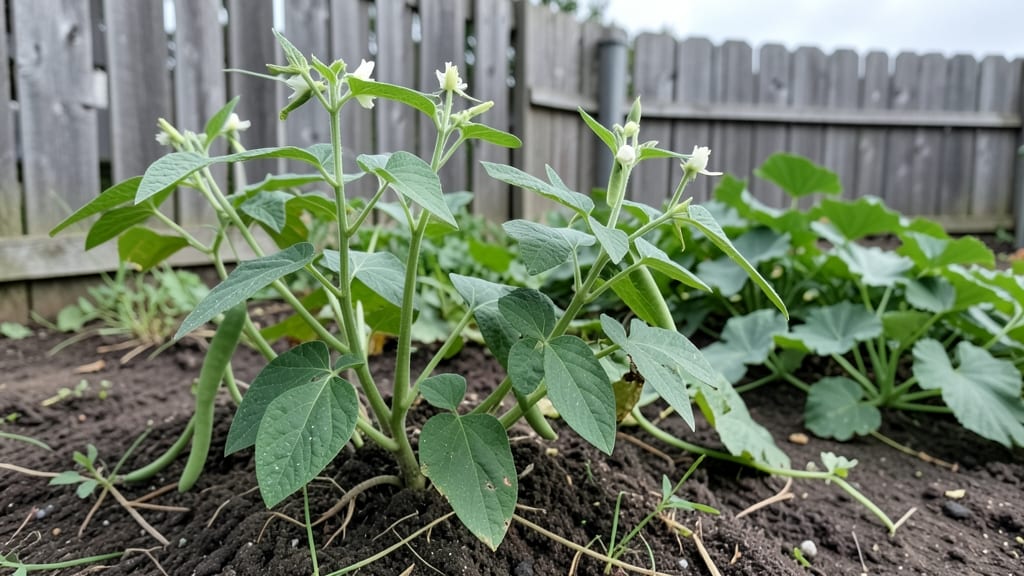
Planting green beans and cucumbers together is possible and beneficial as they thrive in companion planting, with beans fixing nitrogen while cucumbers provide shade for roots, though proper spacing is key to prevent competition.
Green beans and cucumbers make an excellent team in the garden because their needs align perfectly. The beans act as natural soil enrichers by converting atmospheric nitrogen into a form plants can use, while cucumbers spread across the ground, shading the soil to retain moisture and keep roots cool.
This dynamic duo also works well in terms of pest control—cucumbers can mask the scent of beans, confusing pests like Mexican bean beetles that might otherwise target your legumes. 💫
When planning your layout, think vertically: cucumbers thrive on trellises, freeing up ground space for bush beans. I’ve found that spacing beans 12–18 inches apart and cucumbers 24–36 inches apart prevents competition while maximizing yield.
Just avoid planting them too close to each other, or the cucumbers might outcompete the beans for nutrients and sunlight.
💡 In This Article
- Companion Planting Benefits for Green Beans and Cucumbers
- Optimal Spacing and Layout for Mixed Planting
Companion planting benefits for green beans and cucumbers
The real magic happens underground where green beans perform their nitrogen-fixing superpower. These legumes host bacteria called Rhizobia in their root nodules, which convert atmospheric nitrogen (N₂) into ammonia (NH₃) that plants can absorb.
This process adds approximately 50-100 pounds of nitrogen per acre to the soil during a growing season—enough to give cucumbers a significant nutrient boost without synthetic fertilizers.
The cucumbers, in turn, repay the favor by spreading their broad leaves to create a living mulch that shades the soil, reducing moisture loss by up to 30% while keeping roots cooler. 🔥
Above ground, their growth habits create a perfect vertical balance. Bush beans grow compactly (typically 2-3 feet tall) while cucumbers vine aggressively (often 6-12 feet when trellised). This vertical layering maximizes sunlight capture—beans use the lower canopy while cucumbers spread horizontally or climb upward.
The cucumber vines also act as a physical barrier, blocking airborne pests like squash bugs that might target both crops. What's even more fascinating is how cucumbers release volatile organic compounds that mask the scent of beans, confusing beetles that rely on these aromas to locate their hosts. 🌱
The scientific benefits extend to soil structure too. Bean roots loosen compacted soil through their fibrous growth, while cucumber vines prevent erosion by covering bare ground. Together they create a microclimate where soil temperatures stay 5-10°F cooler than exposed areas, which is crucial for cucumber development.
This partnership reduces the need for irrigation by 20-30% while improving overall plant health—beans get better nutrient access while cucumbers enjoy cooler roots and pest protection.
However, this harmony requires precise spacing to prevent competition. Beans need 12-18 inches between plants to develop properly, while cucumbers require 24-36 inches of row space to sprawl or climb.
Planting them too close forces both to compete for the nitrogen the beans are trying to provide, creating a lose-lose scenario. The ideal layout places beans on the north side of cucumber trellises to avoid shading them during peak sunlight hours (10 AM-2 PM). 💛
One often overlooked benefit is disease suppression. The diverse plant types disrupt pest and pathogen cycles—fewer Mexican bean beetles mean less defoliation, while cucumbers' rapid growth outpaces many fungal diseases that thrive in stagnant garden beds.
This natural pest control can reduce chemical treatments by up to 40% in mixed plantings. The key is maintaining this balance: too many beans and cucumbers become nitrogen-deprived; too many cucumbers and beans get crowded out.
For maximum effectiveness, rotate this pairing annually since both are susceptible to similar soil-borne diseases over time. I've seen gardens where this combination produced 25% more cucumbers and 30% heavier beans than when planted separately—proof that sometimes the whole really is greater than the sum of its parts. ✨