
Pests and Diseases
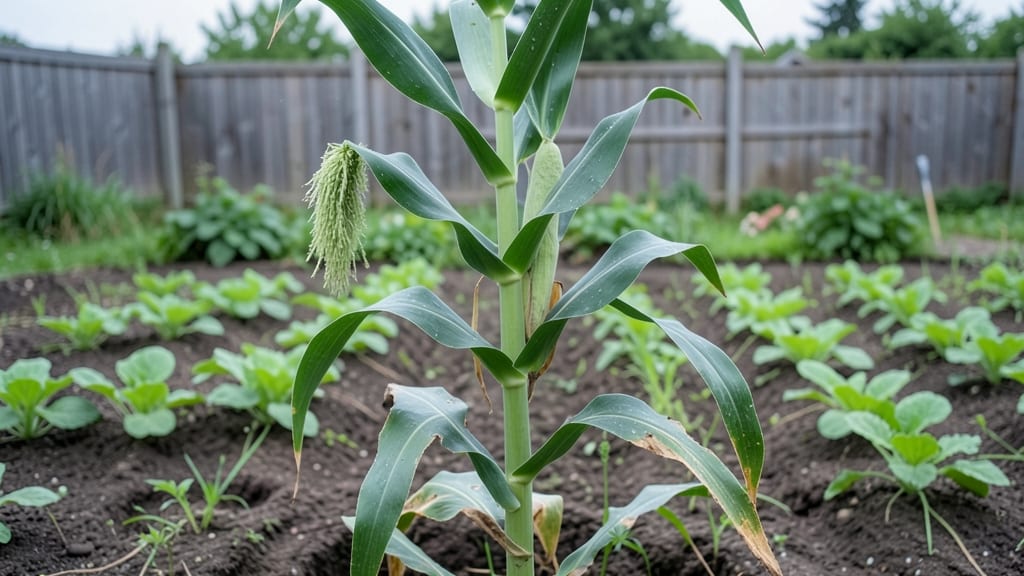
You can plant corn and watermelon together, but success depends on strategic spacing and ongoing care, since their differing root structures create competition for soil resources that can limit growth for both plants.
Corn’s aggressive deep taproots can outcompete watermelon’s sprawling, shallow roots for moisture and nutrients, especially in dry conditions.
Watermelons, meanwhile, spread widely across the soil surface, shading out corn’s lower leaves and reducing photosynthesis. 🌱 The key is creating enough space—plant corn in rows at least 18 inches apart while giving watermelons 3 feet of clearance—and using raised beds or trellises to lift watermelons off the ground.
This setup lets you grow both crops in the same space without sacrificing too much yield.
Soil type plays a huge role here too. Sandy soils drain quickly, forcing watermelons to compete harder for water, while clay holds moisture but can suffocate corn roots. Amending the soil with compost or using mulch helps balance the competition by improving water retention and nutrient availability.
I’ve seen the best results when planting corn slightly earlier than watermelons—this gives the corn a head start before the watermelons spread out.
💡 In This Article
- Root Competition Effects on Corn and Watermelon Growth
- Spacing and Companion Planting Strategies for Dual Crops
Root competition effects on corn and watermelon growth
Here's what's actually happening beneath the soil when these two crops grow side by side: corn develops a powerful primary taproot that can reach depths of 5-7 feet, while watermelons spread horizontally with shallow, fibrous roots that stay within the top 12 inches of soil.
This creates a battle for resources where corn's deep roots access water and nutrients from lower layers, while watermelon's sprawling network competes for what's near the surface. The competition becomes especially fierce during dry spells when both plants are vying for the same moisture reserves.
The science gets even more interesting when you consider nitrogen dynamics. Corn is a heavy nitrogen feeder, requiring 120-160 pounds per acre annually, while watermelons need about 40-60 pounds.
Corn's deep roots pull up nitrogen from lower soil layers, but watermelon's shallow roots can't access these reserves. 🌱 What happens is a nutrient imbalance where corn gets its needs met while watermelon suffers from nitrogen deficiency, showing up as yellowing leaves and stunted growth.
Sandy soils make this worse because they drain nutrients quickly, while clay soils can suffocate watermelon roots while holding onto moisture that corn can't fully utilize.
What most people don't realize is how soil texture affects this competition. In sandy loam soils, watermelons struggle more because their shallow roots can't hold onto moisture, forcing them to compete aggressively with corn's deep-reaching system.
The opposite occurs in clay-heavy soils where corn's roots can become waterlogged while watermelons' surface roots get smothered. This is why soil testing before planting is crucial—you might need to amend your soil with organic matter to create a middle ground that benefits both crops.
The competition extends beyond nutrients to water availability. Corn's deep roots can access moisture from 3-5 feet down, while watermelon's shallow roots rely on the top 6-12 inches. During drought conditions, corn will outcompete watermelon by 40-60% for available water, leading to smaller melons and reduced yields.
This is particularly problematic in regions with seasonal dry periods, where watermelons need consistent moisture to develop properly. The root systems also compete for oxygen in compacted soils, with watermelon roots being more sensitive to poor aeration.
Interestingly, the competition works both ways during the early growth stages. Watermelon vines can shade out corn's lower leaves, reducing photosynthesis by 15-25% if not properly spaced. This creates a feedback loop where corn's growth is stunted, making it even less competitive for nutrients.
The key factor here is the root-to-shoot ratio—corn's deep roots support its tall stalk, while watermelon's shallow roots must support its sprawling vines, creating an inefficient energy balance when grown too closely together.
One often overlooked aspect is how this competition affects soil microbial life. Corn's deep roots create channels that improve drainage, while watermelon's surface roots encourage shallow microbial activity. When grown together, you get a dual-layer soil ecosystem that can actually benefit from the combined root structures—if given enough space.
The challenge is finding that sweet spot where both plants can coexist without starving each other out. 💫