
Planting
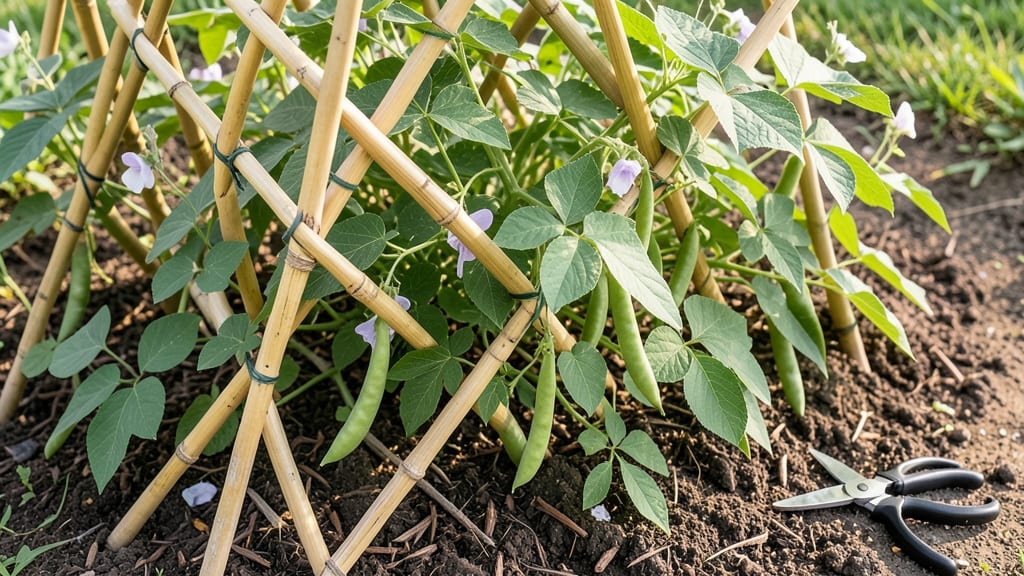
My pole beans were flopping like drunkards last summer until I installed a simple trellis—bean plant support changed everything. 🌱 The difference between tangled vines and neat, upward growth is just a sturdy structure, and it’s easier than you think to set up.
I’ll show you how to choose the right support for your variety and keep it standing through wind and rain.
You don’t need fancy materials—bamboo stakes, chicken wire, or even repurposed fencing work perfectly. The key is matching the support to your bean type: pole beans need vertical space to climb, while bush beans barely need anything at all.
A 5-foot-tall trellis for pole beans costs less than $10 and takes 30 minutes to assemble, yet it doubles your harvest by keeping pods clean and accessible.
With the right support, your beans grow straighter, produce more, and stay off the ground where pests and rot can’t reach. You’ll end up with longer vines, more pods, and fewer broken stems—plus, the vertical growth saves space in even the smallest gardens. Let’s get those beans climbing properly.
Whether you’re growing in a backyard, balcony, or raised bed, these supports adapt easily. I’ll walk you through the best options for your setup, so you can avoid the mistakes I made—like using flimsy stakes that bent under the weight of my harvest. Ready to turn flops into feasts?
📚 In This Guide
- What you need
- Instructions
- Tips and common mistakes
- Wrapping up and next steps
What you need
- ● Main Support Structure: Trellis or A-Frame: 4–6 ft tall (adjust based on bean variety). Opt for metal, wood, or PVC for durability.
- ● Stakes: 4–6 wooden or bamboo stakes (1–2 inches thick, 3–4 ft long).
- ● Twine or Jute String: 1–2 spools (3–4 mm thick) for tying plants.
- ● Fasteners: Zipties or garden staples (for securing trellis to stakes).
- ● Hammer or mallet (for driving stakes into the ground).
- ● Pruning Shears: Small, sharp pair for trimming excess growth.
- ● Cage or Mesh: Pre-made bean cages (5–6 ft tall) for a no-fuss setup.
- ● Decorative Vines: Add climbing flowers (like nasturtiums) for a garden-friendly touch!
- ● Watering Can: Keep plants hydrated without over-saturating the base.
- ● Plant Ties: Velcro or rubber-coated ties (gentler on stems than twine).
How to build bean plant support for climbing varieties
Here’s the straightforward approach I use to keep pole beans growing strong and productive.
🪴 Step 1: Choose the Right Support Structure
For 4 plants, a 5-foot-tall trellis works perfectly. I prefer bamboo stakes (because they’re sturdy and biodegradable) or galvanized wire mesh (for a more permanent setup). Avoid flimsy materials—beans can get heavy with pods, and weak supports snap under the weight.
If you’re using stakes, place 3-4 stakes per plant, spacing them 12 inches apart in a square. For a trellis, position it 1 foot from the plant to allow airflow and prevent disease. The key is stability—wobbling supports stress the plants and can break stems.
☀️ Step 2: Install Supports Early
Set up your supports the same day you plant—beans grow fast, and waiting means you’ll have to wrestle with tangled vines later. For stakes, drive them 6 inches deep into the soil so they don’t lean. If using a trellis, secure it with stakes at each corner and tie it tightly with twine or zip ties.
I like to angle stakes slightly outward (about 10 degrees) so the plant can climb naturally without bending stems. If you’re using a mesh trellis, weave twine or soft string through the top for extra grip—beans love to latch onto something sturdy.
🌱 Step 3: Train Vines as They Grow
Once vines reach 4-6 inches tall, gently guide them toward the support. I use soft plant ties (not wire or anything that can cut) to loosely secure the main stem. Don’t wrap too tightly—beans need room to grow. Let the vines climb naturally, but check weekly to redirect any stray tendrils.
Here’s the thing—don’t rush it. If a vine isn’t reaching the support by the time it’s 1 foot tall, it’s okay to give it a little nudge. Just avoid yanking or bending stems, which can damage the plant. Stronger vines will follow the support on their own once they get started.
✂️ Step 4: Maintain and Reinforce
As pods develop, the weight increases, so check supports every 2 weeks. If you notice leaning or sagging, add extra stakes or ties immediately. I like to loop twine around the main stem and the support in a figure-eight pattern—it’s secure but still allows growth.
Prune any side shoots that aren’t climbing the support (this keeps energy focused on the main vine and pods). If a vine breaks under the weight, trim it back to the last strong node—beans are resilient and will branch out again.
💧 Step 5: Harvest for Long-Term Support
Regular harvesting reduces weight stress on the supports. Pick beans when they’re firm and fully developed (usually 10-14 days after flowering). This encourages more flowers and pods, keeping the plant climbing steadily upward.
At the end of the season, if you’re reusing supports, clean them thoroughly with a 10% bleach solution to prevent disease. Store trellises or stakes in a dry place—rust or rot means you’ll need to replace them next year.
Tips & tricks for perfect bean plant support
These simple tricks will help you create a support system that keeps your climbing beans thriving all season long.
Stability is Everything: In Step 1, when choosing your support structure, don't underestimate the importance of stability. I've seen too many beautiful trellises collapse under the weight of heavy bean pods. For bamboo stakes, hammer them 6 inches deep at a 10-degree outward angle—this creates a strong base that won't lean. For trellises, use stakes at each corner and secure them tightly with twine or zip ties. A wobbling support stresses the plant and can actually break stems.
Timing is Critical: Step 2 emphasizes installing supports the same day you plant, and I can't stress this enough. Beans grow at an incredible rate—some varieties can add 6 inches in a week! Waiting even a few days means you'll end up with tangled vines that are difficult to train. Set up your supports before the plants even sprout if you can. This gives you a head start on guiding those vines in the right direction from day one.
Gentle Guidance Wins: When training vines in Step 3, remember that beans have delicate stems. I learned this the hard way—yanking or bending stems can damage them permanently. Use soft plant ties (never wire) and gently loop them around the main stem, leaving room for growth. Check weekly to redirect any stray tendrils, but avoid pulling or twisting. Think of it like teaching a child to climb—patience and gentle encouragement work best.
Maintenance Prevents Disasters: The key to long-term success is the maintenance routine in Step 4. I can't tell you how many times I've seen beautiful bean plants brought down by neglected supports. Check your structures every 2 weeks as pods develop—the weight increases dramatically. Use the figure-eight twine technique to reinforce any leaning supports. And don't forget to prune those side shoots—they're energy vampires that drain resources from your main climbing vine.
Pro Tips for Bean Plant Support
- These simple tricks will help you create a support system that keeps your climbing beans thriving all season long.
- Stability is Everything: In Step 1, when choosing your support structure, don't underestimate the importance of stability.
- Timing is Critical: Step 2 emphasizes installing supports the same day you plant, and I can't stress this enough.
Frequently asked questions
Got questions about keeping your bean plants happy and climbing strong? Here are answers to the most common ones—so you can grow a thriving, trellis-worthy bean garden with confidence!
What’s the best height for a bean plant support?
Most climbing bean varieties (like pole beans or runner beans) need supports 6–8 feet tall to reach their full potential. Shorter supports (4–5 feet) work for dwarf varieties, but taller structures prevent sprawling and improve air circulation. Pro tip: If growing in containers, opt for a 5-foot trellis to save space!
Can I use bamboo stakes instead of a trellis?
Bamboo stakes are a budget-friendly, eco-conscious alternative to traditional trellises. Bundle 3–5 stakes together (or use a bamboo teepee) for stability. Just ensure they’re buried deep (12–18 inches) or tied to a frame to prevent toppling. Bonus: They’re easy to remove after harvest!
When should I install bean plant support?
Set up supports before planting—ideally 2–3 weeks ahead—so roots can grow near the base without disturbance. For existing plants, install supports as soon as vines reach 6–8 inches tall. Late installation risks broken stems or tangled growth. Quick fix: Use soft ties (like old T-shirts) to gently guide vines upward.
Why are my bean vines falling off the trellis?
This usually happens due to overcrowding, weak ties, or poor support placement. Space plants 4–6 inches apart (depending on variety) and use loose, adjustable ties (never wire, which can damage stems). If vines are heavy, add horizontal crossbars to the trellis for extra grip. Check for pests too! Aphids can weaken vines.
What’s a no-fail DIY bean support for small gardens?
Try a repurposed ladder or A-frame trellis! Lean a sturdy wooden ladder against a fence or wall, or build a simple A-frame with 2x4s and chicken wire. For containers, wrap twine or twigs in a spiral around the pot. Budget hack: Use old hula hoops as circular supports for bushier varieties!
Wrapping up and next steps
Growing climbing bean plants is a rewarding experience—with the right bean plant support, you’ll enjoy lush foliage, higher yields, and healthier vines all season long!
Whether you choose a trellis, teepee, or cage, the key is to start early, secure your structure firmly, and provide gentle guidance as your plants grow. Don’t let a little wind or weight hold you back—your beans will thank you!
Ready to take the next step? Sketch a simple design based on your garden space, gather your materials, and get planting! Your future harvest (and your neighbors’ green envy) will be worth the effort. 👍