
Pests
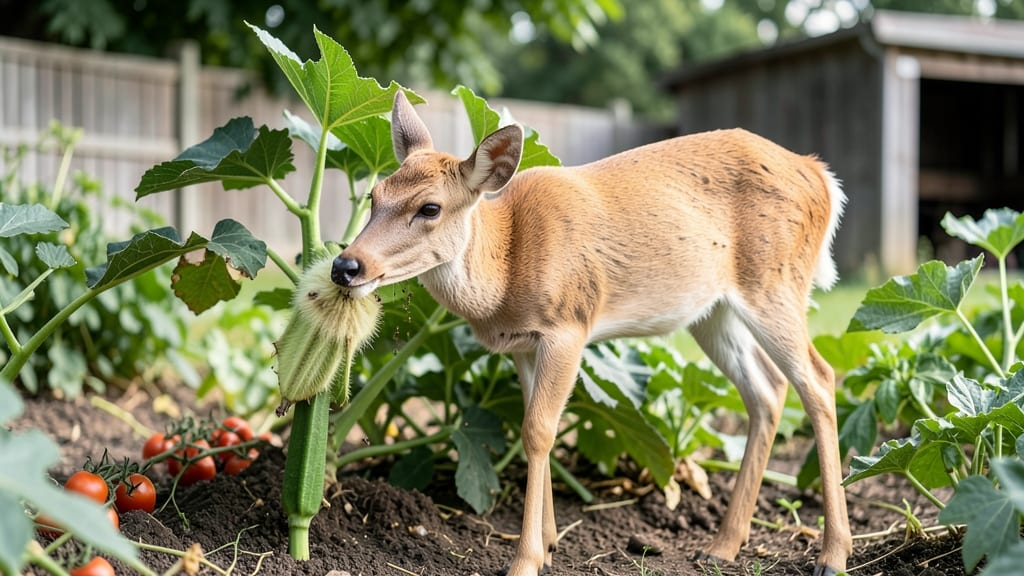
Deer will eat okra plants, especially young leaves and tender shoots, due to their mild flavor and high moisture content. Mature pods are less appealing but can still be nibbled if other food is scarce. Okra’s spiky pods deter some browsers, but hungry deer often target seedlings or stressed plants.
Okra’s appeal to deer comes down to two key factors: its tender growth stages and its moisture-rich composition, which mimics the succulent greens deer naturally seek. 🌱 Young plants are particularly vulnerable because their leaves lack the fibrous protection of mature pods, making them an easy snack.
Even established okra won’t be completely safe during droughts or when deer face food shortages, as they’ll opportunistically browse whatever’s available. The good news? Strategic planting and deterrents can significantly reduce damage by making your okra less accessible or less appealing.
If you’re growing okra in areas with deer activity, focus on protecting seedlings first—these are the most tempting targets. Once plants mature, their spiky texture becomes a natural deterrent, but hungry deer will still test their luck if other food sources dry up.
Understanding this behavior helps you time your protective measures effectively.
💡 In This Article
- Why Deer Target Okra Plants in Gardens
- 3 Effective Deer-Repellent Strategies for Okra
Why deer target okra plants in gardens
Deer prioritize okra's young leaves because they contain 75-80% moisture, making them hydrating and easy to digest. This moisture content mirrors the succulent greens deer naturally seek in late summer and early fall when other vegetation dries out.
The tender shoots also have a mild, slightly sweet flavor that lacks the bitterness deer avoid in many garden plants.
What's fascinating is how this aligns with deer's seasonal feeding patterns - they become more opportunistic browsers during drought conditions, when their usual food sources like clover or alfalfa become scarce.
The protein content in okra leaves (about 2-3% dry weight) also makes them attractive, especially to does and fawns that need extra nutrition. Compare this to mature okra pods which have only 1-2% protein by weight - the difference explains why deer prefer the leaves over the pods.
Interestingly, deer show similar preferences for other high-moisture crops like squash or corn, but okra's unique texture (slightly mucilaginous when raw) doesn't seem to deter them as much as it would some other browsers.
Okra's defense mechanisms become more effective as plants mature. The 1-2 inch long spines on pods create physical barriers that deter casual browsing, much like thorny roses protect their fruit. However, these spines are flexible enough that determined deer can still reach the leaves at the base.
The latex sap in okra stems (which contains compounds like abrin) would be unpleasant for most herbivores, but deer have developed tolerance for similar compounds in plants like milkweed, which they also consume despite its toxic properties.
Seasonal patterns show deer activity peaks in late summer to early fall when okra is typically at its most vulnerable growth stage. This coincides with when deer are preparing for winter and need maximum caloric intake.
The key difference between okra and truly deer-resistant plants like rosemary or lavender is that okra lacks strong aromatic compounds that would repel browsers. While plants like mint have volatile oils that deer avoid, okra's scent profile is neutral enough to go unnoticed.
What most gardeners don't realize is how stress factors make okra even more appealing to deer. Drought-stressed plants produce more sugars in their leaves, creating a sweeter, more attractive snack. Similarly, okra grown in nitrogen-rich soils develops more tender, palatable foliage.
This explains why deer often target recently transplanted seedlings - they're both tender and nutrient-dense, making them the perfect deer snack.
The science behind deer's okra preference involves their rumen fermentation system, which can efficiently break down the fibrous components of young okra leaves. While mature pods would be more difficult to digest, deer have been observed using their tongues to strip leaves from pods without consuming the spines.
This selective feeding behavior demonstrates their ability to adapt their feeding strategies based on plant maturity and available food sources.