
Watering
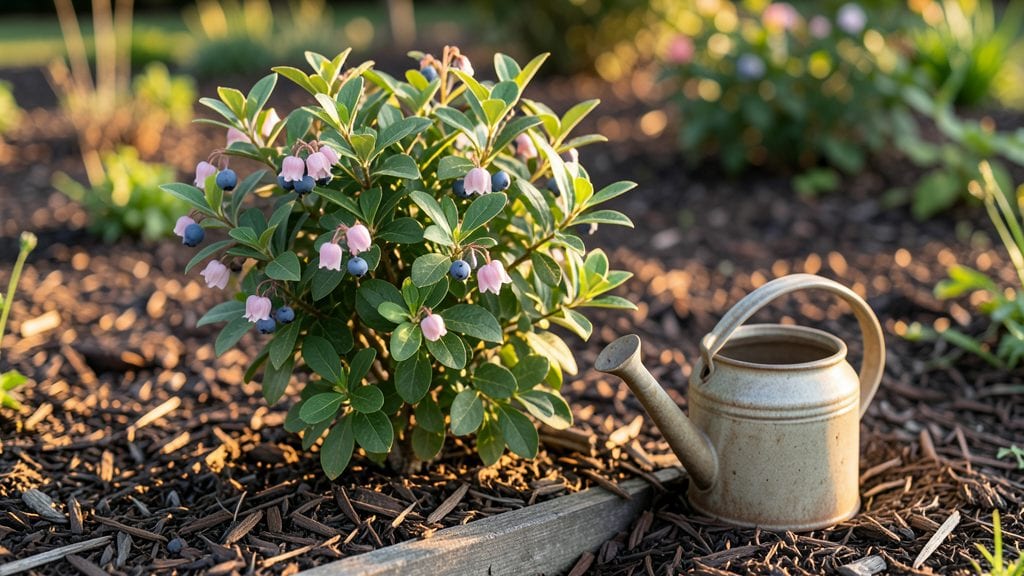
Watering blueberry plants correctly is the single biggest factor in whether your 🫐 bushes produce sweet, plump berries or just stubborn green leaves.
Blueberry plants thrive on consistency—but get the watering wrong, and you’ll watch your bushes struggle despite their acid-loving reputation. Mastering soil moisture is the secret to juicy berries and healthy growth, yet most gardeners overcomplicate it.
Think of it like this: too little water and your plants wilt, but too much creates soggy roots that choke growth. The goal is steady moisture—not soggy soil or bone-dry dirt—especially during the critical June to August harvest window.
In this guide, I’ll break down the exact watering schedule by season, the best methods to keep roots happy, and how to spot the signs of over- or under-watering before it’s too late.
How often to water blueberry plants for optimal berry production
Blueberry bushes demand consistent moisture to produce sweet, plump berries—but too much or too little water stresses them. The key lies in maintaining 1–2 inches of soil moisture while avoiding soggy roots.
Young plants need more frequent watering than mature bushes, and seasonal shifts demand adjustments. Let’s break down the science-backed schedule to keep your blueberries thriving year-round.
First, test your soil moisture by sticking your finger 1–2 inches deep. If it feels dry, it’s time to water. For newly planted blueberries, aim for deep watering every 2–3 days to encourage root growth.
Mature bushes, once established, can handle slightly longer intervals—but never let the soil dry out completely, especially during fruit development. Overwatering is just as harmful as underwatering, leading to root rot and fungal issues.
| Season | Plant Age | Watering Frequency | Soil Moisture Goal | Notes |
|---|---|---|---|---|
| Spring | Newly Planted (1st Year) | Every 2–3 days | 1–2 inches deep | Critical for root establishment |
| Spring | Mature (2+ Years) | Every 3–4 days | 1–2 inches deep | Increase to weekly if rain occurs |
| Summer | Newly Planted | Daily (deep watering) | 1–2 inches deep | Heat increases evaporation; mulch helps |
| Summer | Mature | Every other day | 1–2 inches deep | Prioritize morning watering |
| Fall | All Ages | Weekly (reduce gradually) | Top 1 inch moist | Prep for dormancy; avoid soggy soil |
| Winter | All Ages | Bi-weekly (if no snow) | Minimal moisture | Dormant plants need less water |
During spring, focus on deep, infrequent watering to encourage strong root systems. Young plants may need daily checks in dry spells, while mature bushes can handle every 3–4 days. Use a soaker hose or drip irrigation to deliver water directly to the roots, reducing waste and fungal risks.
Mulch with pine needles or wood chips to retain moisture and mimic their natural habitat.
Summer is the most critical season for blueberry watering. High temperatures and fruit development demand daily or every-other-day watering, especially for newly planted bushes. Water early in the morning to prevent evaporation and fungal diseases like botrytis. If you notice wilting leaves or dry soil cracks, increase frequency immediately. Drought stress causes berries to split or drop prematurely.
As fall arrives, gradually reduce watering to prepare bushes for dormancy. Aim for weekly watering while keeping the top 1 inch of soil lightly moist. Overwatering in fall can lead to weak growth and winter damage. Mulch heavily (3–4 inches) to insulate roots and retain residual moisture.
By late fall, most blueberries enter dormancy and require minimal water unless winter is exceptionally dry.
Winter watering depends on your climate. In snowy regions, natural moisture may suffice, but in dry winters, water bi-weekly to prevent root desiccation. Avoid watering if the ground is frozen. Spring watering should resume as soon as the soil thaws. If you notice yellowing leaves or stunted growth in early spring, it may signal overwatering during dormancy or poor drainage. Adjust your schedule accordingly.
Watch for drought stress signs like curling leaves, dropping berries, or soil pulling away from the pot (for container-grown plants). To recover, water deeply and apply mulch to lock in moisture.
For overwatered plants, improve drainage by amending soil with sand or perlite and reduce future watering. Container blueberries dry out faster—check soil moisture daily in summer and every other day in spring/fall.
Pro tip: Use a moisture meter or the finger test to monitor soil conditions. Aim for consistency—blueberries hate boom-and-bust watering. With the right schedule, your bushes will reward you with bountiful, flavorful berries year after year. 🫐
Best watering methods for blueberry bushes: drip vs. surface irrigation
When it comes to watering blueberry bushes, the method you choose can make or break your harvest. Drip irrigation delivers water directly to roots, while surface irrigation (like sprinklers) wets leaves and soil.
Both have pros and cons for your acid-loving plants, and picking the wrong one can lead to fungal diseases or poor berry development. Let’s break down which method works best for your garden size and climate.
For small gardens or container-grown blueberries, a simple soaker hose or DIY drip system is often the easiest solution. These methods minimize water waste and keep foliage dry, reducing mold risks.
However, they require careful setup to ensure even coverage. Larger gardens benefit from more robust drip irrigation systems, which can be automated and scaled to accommodate multiple bushes.
Here’s a quick comparison to help you decide which method aligns with your blueberry care goals:
Drip Irrigation
Pros
- Consistent moisture for deep roots
- Reduces fungal diseases by keeping leaves dry
- Water-efficient with minimal evaporation
- DIY-friendly for small gardens
Cons
- Initial setup cost for larger systems
- Requires monitoring for clogs or uneven flow
- Not ideal for frost-prone areas (risk of frozen lines)
Surface Irrigation (Sprinklers)
Pros
- Quick and easy for large areas
- Cools foliage in hot climates
- No setup required for existing systems
Cons
- Increases fungal risks by wetting leaves
- Water waste from evaporation and runoff
- Uneven coverage in windy conditions
If you’re new to blueberry watering, start with a soaker hose or a basic drip system. For a 3-foot bush, a single emitter delivering 1 gallon per hour is ideal.
Place emitters near the drip line of the bush to encourage outward root growth. For larger gardens, consider a zone-based drip system with timers to automate watering during peak heat.
For overhead sprinklers, water only in the early morning to allow foliage to dry quickly. Avoid evening watering, as damp leaves create perfect conditions for botrytis blight, a common fungal disease in blueberries.
If you must use sprinklers, pair them with fungicide sprays during humid months to protect your plants.
No matter which method you choose, mulch heavily around your blueberry bushes with pine needles or wood chips to retain moisture and regulate soil temperature. This simple step can reduce your watering needs by up to 30% while keeping roots cool and healthy.
Experiment with both methods in your garden to see what works best for your local climate. Over time, you’ll fine-tune your approach to maximize berry quality and minimize stress on your plants. 💧