
Watering
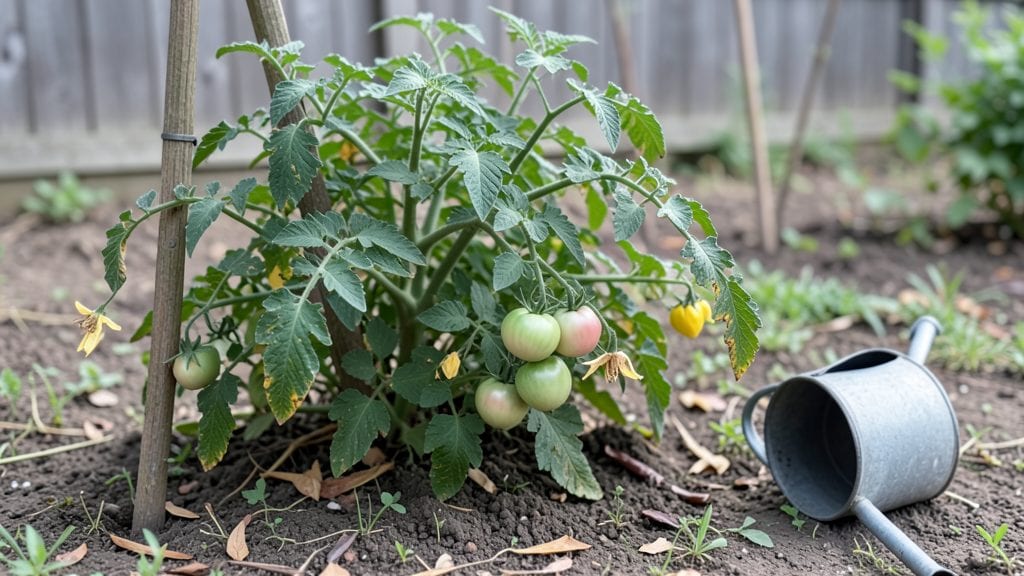
When your tomato plants start wilting midday like they've forgotten how to stand, underwatering is usually the culprit—and it’s easier to fix than you think. 🌱 I’ve watched vines go from lush and green to crispy in just a few hours, and the good news is that once you spot the signs, recovery is simple.
The key is catching it early, before the fruit cracks or the leaves turn yellow.
Tomatoes need 1-2 inches of water per week, but the soil must stay consistently moist—never soggy. Stick your finger an inch deep; if it feels dry, it’s time to water.
Overhead watering can lead to disease, so use a drip system or water at the base early in the morning. I’ve saved entire plants by adjusting my watering routine just once.
Look for three telltale signs: leaves curling upward, fruits splitting, or lower leaves yellowing. These mean your plants are thirsty, but they’ll bounce back fast with deep, steady watering.
Within 24-48 hours, you’ll see new growth, and the fruit will firm up again. The real secret? Mulching to keep moisture in and weeds out—it cuts watering needs by half.
This works for both container and in-ground tomatoes, whether you’re growing heirlooms or hybrids. The same rules apply no matter your setup—just adjust the volume. Let’s get those plants hydrated before the next heatwave hits!
Root Causes Of Water Stress
Underwatering tomato plants isn’t just about forgetting to water—the root causes often stem from environmental, physiological, or even human factors that disrupt the plant’s natural hydration balance. Understanding these triggers helps you prevent stress before it stunts your harvest. Here’s why it happens, broken down by the most common culprits:
Tomatoes thrive in consistently moist (not soggy) soil, but several factors can throw off that balance:
- Drought Conditions 🔥 Prolonged dry spells—whether from heatwaves or poor rainfall—force roots to compete for dwindling water.
Tomato roots, while deep, can’t access moisture if the topsoil dries out faster than they can replenish it. Pro tip: Mulch with straw or wood chips to retain moisture and regulate soil temperature.
- Poor Drainage or Compacted Soil 🏗️ Clay-heavy or overly compacted soil acts like a sponge that releases water too slowly, leaving roots thirsty even if the surface looks damp. Test it: Dig 6 inches deep—if the soil feels hard or clumps tightly when squeezed, it’s time to amend with compost or sand.
- Over-Reliance on Surface Watering 💦 Watering only the top layer encourages shallow root growth, making plants vulnerable to evaporation. Fix it: Use deep watering techniques (like soaker hoses or drip irrigation) to saturate roots 6–12 inches down.
Tomato roots are fragile but adaptable—but their ability to absorb water depends on their health and environment:
- Shallow Root Systems in Containers 🏺 Potted tomatoes develop roots constrained by pot size, leading to rapid moisture loss. Solution: Choose containers with at least 5 gallons of soil per plant and use self-watering pots for consistency.
- Root Damage from Over-Cultivation 🔪 Digging or disturbing roots (even gently) severs tiny feeder roots, reducing the plant’s ability to uptake water. Avoid: Weeding by hand or using broadforks instead of trowels near the base.
- Root Rot or Disease 🦠 Fungal infections (like Phytophthora) or overwatering can kill roots, leaving the plant unable to absorb moisture even if water is present. Prevent it: Space plants for airflow, avoid overhead watering, and use resistant varieties like ‘Mountain Merit’ if your area is prone to rot.
External factors can accelerate water loss, making underwatering a silent killer:
- High Temperatures & Wind 🌞💨 Heat increases transpiration (water loss through leaves), while wind strips moisture from foliage faster than roots can replenish it. Combat it: Water early morning (6–9 AM) to minimize evaporation, and use windbreaks like burlap screens.
- Low Humidity 🌬️ Dry air forces plants to open stomata (leaf pores) wider to absorb CO₂, but this also bleeds water vapor. Fix it: Group plants together to create a microclimate or use a mist system for seedlings.
- Salinity Buildup 🧂 Over-fertilizing or using poor-quality water (high in salts) can clog root cells, preventing water absorption. Check for it: White crust on soil or leaf tips? Flush the soil with rainwater or distilled water to leach out salts.
Key Takeaway: Underwatering is rarely just about how much you water—it’s about when, how, and where the water goes. By addressing these root causes, you’ll give your tomatoes the steady hydration they need to produce juicy, flavorful fruit instead of wilted disappointments. 🍅✨
Fixing Your Thirsty Tomatoes
If your tomato plants are showing signs of underwatering, don’t panic—your harvest isn’t lost yet! With the right adjustments, you can revive wilted leaves, restore fruit growth, and prevent future stress. Below, we’ll match common causes of underwatering to practical fixes, plus prevention tips to keep your plants thriving.
Signs: Crispy leaf edges, dry soil 1–2 inches deep, wilting even after watering.
How to Fix It:
- 🔥 Deep Water Immediately
- Stick your finger 2–3 inches into the soil. If it’s bone-dry, water slowly and deeply until moisture reaches 6–8 inches down. Use a soaker hose or drip irrigation to avoid runoff.
- Pro Tip: 💡 Morning watering (before 10 AM) reduces evaporation and fungal risks.
- 🍳 Mulch to Retain Moisture
- Spread 2–3 inches of organic mulch (straw, wood chips, or grass clippings) around the base (keep it away from the stem to prevent rot).
- Mulch acts like a sponge, locking in moisture and cooling roots.
- 🌡️ Monitor Soil Temperature
- If your soil feels too hot (common in black plastic pots or bare ground), water more frequently but in smaller amounts to prevent shock.
Prevention:
- Water consistently—tomatoes hate feast-or-famine cycles. Aim for 1–1.5 inches of water per week (more in heatwaves).
- Upgrade your soil with compost to improve water retention.
Signs: Yellowing lower leaves, stunted growth, roots clustered near the surface.
How to Fix It:
- 👨🍳 Adjust Your Watering Technique
- Shallow watering (just the top inch) encourages shallow roots. Instead, water until the soil is moist 6–8 inches deep.
- For potted tomatoes, bottom-watering (place the pot in a tray of water for 20–30 mins) encourages deeper roots.
- 🥘 Transplant if Needed
- If roots are circling the pot or soil, repot into a larger container (at least 5 gallons) with fresh, well-draining soil.
- ⏰ Stick to a Schedule
- Drip irrigation on a timer (2–3 times weekly) is better than sporadic hose watering.
Prevention:
- Use raised beds or containers with depth (12+ inches) for better root growth.
- Avoid overhead watering (like sprinklers), which wastes water and spreads disease.
Signs: Drooping leaves that don’t perk up after watering, blossom-end rot, or fruit cracking.
How to Fix It:
- 🔥 Emergency Shade & Water Boost
- Shade cloth (30–50%) or a lightweight row cover can reduce stress. Water early morning and late evening to minimize evaporation.
- For extreme heat, mist leaves lightly (early AM only) to cool them down.
- 🌱 Adjust Fertilizer
- Stop nitrogen-heavy feeds (like fresh manure) during drought—they burn roots. Switch to potassium-rich fertilizer (like banana peel tea) to help plants retain moisture.
- 🎯 Prune Strategically
- Remove lower leaves (within 12 inches of the ground) to improve airflow and reduce water loss through transpiration.
Prevention:
- Plant in late spring (after the last frost but before peak summer heat).
- Choose heat-tolerant varieties like ‘Solar Fire’ or ‘Heatmaster’ tomatoes.
Signs: Dark, sunken spots on the bottom of fruits, even if leaves look okay.
How to Fix It:
- 🍅 Save the Fruit (If Possible)
- Prune affected fruits to redirect the plant’s energy. Healthy tomatoes will still grow!
- Calcium boost: Mix 1 tbsp of crushed eggshells or calcium powder into the soil near roots.
- 💡 Fix Watering Patterns
- Blossom-end rot often starts with inconsistent watering. Aim for even moisture—never let the soil dry out completely between waterings.
- 🌱 Improve Drainage
- If your soil is clay-heavy, amend it with perlite or coconut coir to prevent waterlogging (which also causes calcium uptake issues).
Prevention:
- Mulch heavily to keep soil moisture stable.
- Avoid over-fertilizing with nitrogen—it competes with calcium absorption.
Once you’ve revived your plants, keep these habits to prevent future underwatering: ✅ Check soil moisture daily during heatwaves (stick your finger in—it’s the best tool!). ✅ Group plants together to create a microclimate that retains humidity. ✅ Harvest regularly—overripe tomatoes stress the plant, increasing water needs. ✅ Rotate crops yearly to avoid depleted soil.
With these fixes, your tomato plants should bounce back in 7–14 days, and you’ll be back on track for a bountiful, juicy harvest! 🍅🌿
Frequently asked questions
How often should I water tomato plants to prevent underwatering?
Tomatoes need 1-2 inches of water per week, but check soil moisture daily during heatwaves. Water deeply 2-3 times per week at the base (not leaves) in the early morning. Use a soaker hose or drip irrigation for consistent moisture.
What are the first signs my tomato plants are underwatered?
Watch for wilting leaves that don’t perk up at night, yellowing lower leaves, or cracked fruit. Stick your finger 1-2 inches deep—if the soil feels dry, it’s time to water. Early intervention prevents permanent damage.
Can I fix underwatered tomato plants, or is it too late?
Not too late! Water deeply until the soil is moist 6-8 inches down, then mulch heavily to retain moisture. Most plants recover within 24-48 hours if roots aren’t permanently damaged. For severe cases, prune affected fruit to redirect energy.
Why do my tomato leaves curl up when they’re thirsty?
Tomatoes curl leaves upward (a process called epinasty) as a survival mechanism to reduce water loss. This happens when roots can’t supply enough moisture to meet demand. Deep watering and mulching will restore normal leaf shape within 1-2 days.
What’s the best way to water potted tomato plants?
Use the bottom-watering method: Place the pot in a tray of water for 20-30 minutes to encourage deep root growth. For larger pots, water until it drains from the bottom. Avoid overhead watering—it wastes moisture and spreads disease.