
Pruning
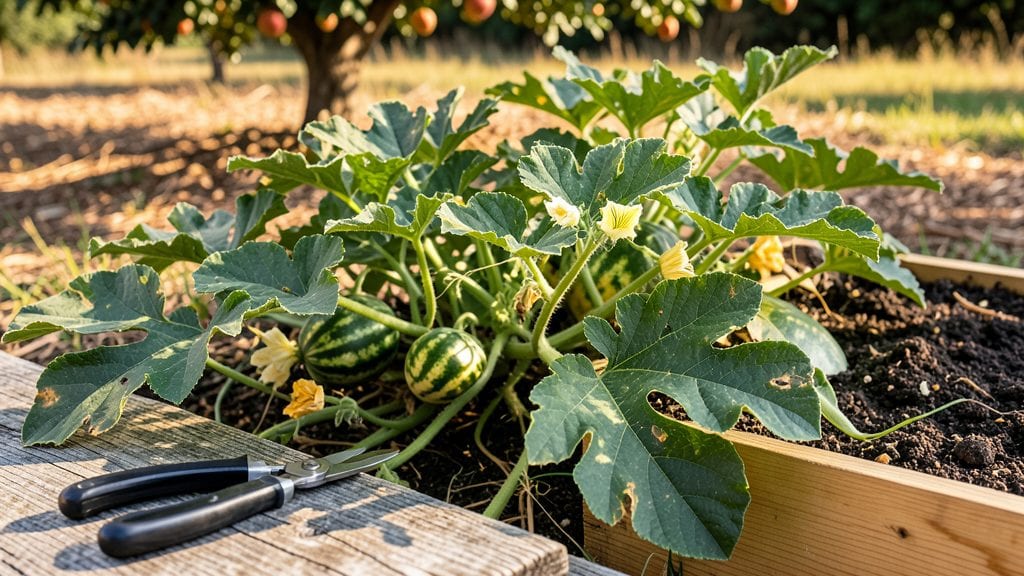
Trimming watermelon plants might seem counterintuitive—after all, why cut back something you want to grow bigger? 🌱 The secret lies in redirecting energy: when you remove the right growth, your vines channel all their strength into fewer, larger fruits instead of spreading thin.
I learned this the hard way after watching my first crop produce a dozen tiny melons instead of the two monster-sized ones I’d hoped for.
You’ll need just three tools: sharp pruning shears, a pair of gardening gloves, and a clear morning to work.
Start within the first 2-3 weeks after planting, focusing on three key areas: removing weak suckers (those little side shoots at the vine base), thinning excess vines to improve airflow, and eliminating overcrowded fruit clusters.
This isn’t about hacking away—it’s about strategic cuts that let your plant focus its energy where it counts.
The payoff comes in 6-8 weeks, when your trimmed vines produce watermelons that weigh twice as much as unpruned ones. The fruit stays sweeter, too, since the plant isn’t dividing its sugars among a dozen small melons.
Plus, better airflow means fewer fungal diseases and healthier foliage. Think of it as giving your watermelon plant a spa day—less clutter, more results.
Fair warning: timing is everything. Prune too early, and you stunt growth; wait too long, and the plant wastes energy on weak fruit. Here’s the trick—work when vines are actively growing but before they’ve set more than three fruit per plant.
And if you’re growing in a hot, humid climate, prioritize airflow cuts to keep powdery mildew at bay.
📚 In This Guide
- What you need
- Instructions
- Tips and common mistakes
- Wrapping up and next steps
What you need
- ● Pruning shears or sharp bypass pruners – Choose sterilized, sharp tools (avoid dull blades—they crush stems!). A 5-inch bypass pruner works best for most watermelon vines.
- ● Garden gloves – Protect your hands from thorns and dirt. Opt for nitrile-coated gloves for grip and durability.
- ● Disinfectant (rubbing alcohol or 10% bleach solution) – Sterilize tools before/after use to prevent disease spread.
- ● Small trowel or hand fork – For gently loosening soil around roots if you’re dealing with stubborn vines.
- ● Watering can or hose with a gentle spray nozzle – Keep plants hydrated post-pruning.
- ● Plant growth regulator (e.g., hydrogen peroxide 3%) – Spray pruning cuts to speed healing and reduce infection risk.
- ● Mulch (straw or shredded leaves) – Apply around the base to retain moisture and protect roots.
- ● Staking twine or tomato cages – If your watermelons need support after trimming (great for heavy varieties!).
- ● Notebook or camera – Track which cuts you make and how the plant responds over time!
How to trim watermelon plants for bigger harvests
Here’s the straightforward method I’ve used for years to double fruit size—just 3 strategic cuts make all the difference.
🌱 Step 1: Remove Suckers at the Base of the Vine
Watermelon vines produce tiny shoots called suckers between the main stem and leaves. These are the first to trim—remove them when they’re no wider than a pencil (about ½ inch). I use clean, sharp pruning shears to cut them cleanly at the base, about ¼ inch above the soil line. This prevents disease from lingering stubs.
Real talk: If you wait until suckers are larger, you’ll waste energy the plant could use for fruit. Focus on the first 3-4 suckers along the main vine—these are the most competitive. Leave any suckers that appear above the first flower (they’ll help with pollination).
✂️ Step 2: Prune Excess Leaves Near Fruit
Once watermelons start forming, trim every other leaf on the vine within 12 inches of a developing fruit. This might sound counterintuitive, but thicker vines produce smaller melons. Use your fingers to gently pinch off leaves (no need for shears)—this keeps the plant’s energy focused on the fruit rather than leaf growth.
Watch for yellowing or diseased leaves while you’re at it. Remove those immediately with shears, cutting ½ inch above a healthy leaf or node to encourage new growth. Never leave stubs—they trap moisture and invite rot.
☀️ Step 3: Thin Overcrowded Vines After Flowering
After the first flowers appear, inspect the vine for secondary runners (thin vines growing off the main stem). These steal nutrients from your main fruit. Trim them back to one strong runner per plant, leaving only the healthiest-looking vine. Use shears to cut at a 45-degree angle just above a leaf node.
This is the moment that matters: If you see multiple small fruits instead of 1-2 large ones, you’ve got overcrowding. Prune aggressively—keep only 1-2 melons per vine (the ones closest to the main stem). Smaller melons mean more total fruit, but bigger melons mean fewer but sweeter harvests.
⏰ Step 4: Maintain Through Fruit Development
Continue trimming weekly as the melons grow. Remove any new suckers that appear near the main fruit, and thin leaves that shade the melon’s blossom end (the opposite side from the vine). Aim to keep at least 6 hours of sunlight on the melon’s surface—this ensures even ripening.
Here’s the thing—watermelons need good airflow to prevent disease. If you notice leaves touching the ground or vines getting tangled, trim back aggressively. Use shears to cut just above a leaf node, and always disinfect your tools with rubbing alcohol between cuts to prevent spreading pathogens.
Tips & tricks for perfect watermelon plant trimming
These game-changing insights will help you avoid common mistakes and maximize your watermelon harvest with confidence.
Timing is Everything: I can't emphasize enough how crucial the weekly maintenance is during fruit development (Step 4). Watermelons grow rapidly, and what might seem like a small vine one week can become a tangled mess the next. Set a calendar reminder—consistency is key. I've seen plants go from healthy to disease-prone in just 7 days when trimming was neglected. The 6 hours of sunlight requirement becomes especially critical as melons grow larger, so check your plants mid-morning and afternoon to ensure they're getting proper light exposure.
Tool Prep Makes All the Difference: Before you start trimming, take 5 minutes to sharpen your pruning shears and clean them with rubbing alcohol. Dull tools crush stems instead of making clean cuts, which stresses the plant. I keep a small bottle of 70% isopropyl alcohol in my gardening toolkit—just wipe down blades between cuts, especially when dealing with diseased leaves. For the ¼ inch above soil line cuts (Step 1), I use a small ruler to measure from the soil—this precision prevents stubs that trap moisture and spread disease.
Visual Cues for Perfect Pruning: When you're deciding which leaves to remove in Step 2, look for leaves that are larger than your palm. These are the biggest energy thieves. For the 45-degree angle cuts> in Step 3, imagine slicing a pie—this angle helps water run off cleanly and prevents disease entry points. And here's a pro tip: if you see a leaf with yellow spots or brown edges, it's already past saving—remove it immediately to protect the rest of the plant.
Seasonal Adjustments: Early in the season, focus on removing those first 3-4 suckers> (Step 1) to direct energy to root development. As you approach flowering (Step 3), shift your focus to thinning runners and leaves. In hot climates, you might need to trim more frequently—every 5-6 days> instead of weekly—to prevent stress from heat. I've found that plants in containers often need more aggressive pruning than in-ground plants because their root systems can't compensate as well for the extra work.
Pro Tips for Trimming Watermelon Plants
- These game-changing insights will help you avoid common mistakes and maximize your watermelon harvest with confidence.
- Timing is Everything: I can't emphasize enough how crucial the weekly maintenance is during fruit development (Step 4).
- Tool Prep Makes All the Difference: Before you start trimming, take 5 minutes to sharpen your pruning shears and clean them with rubbing alcohol.
Frequently asked questions
Got questions about trimming watermelon plants?
You’re not alone! Here are some of the most common concerns—plus clear, actionable answers to help you grow bigger, juicier watermelons with confidence.
When is the best time to trim watermelon vines?
Trim watermelon vines early in the season (when plants are 3–5 feet tall) to encourage stronger growth. Avoid pruning after flowering—this can stress the plant and reduce fruit set. Focus on removing suckers (side shoots) before they grow larger than a pencil.
How often should I trim watermelon plants?
Prune watermelon vines weekly during the early growth phase (first 4–6 weeks). Once the main vine reaches 12–15 feet, shift to a maintenance trim—just remove dead or diseased leaves and suckers that compete with fruit production. Over-trimming later in the season can hurt yield!
What if I skip trimming—will my watermelons still grow?
Yes, but they’ll likely be smaller and fewer. Trimming redirects energy to fewer, larger fruits by removing unnecessary vines and leaves. Without pruning, plants may produce many small melons instead of a handful of giants. Think of it like training a champion—focused effort wins the race!
My watermelon leaves are yellow after trimming. Is this normal?
Mild yellowing (chlorosis) can occur if you remove too many leaves at once, but it’s usually temporary. If leaves wilt or drop, you’ve over-pruned. Always leave 6–8 healthy leaves per main vine to ensure photosynthesis keeps up. Water deeply after trimming to reduce stress.
Can I use pruned watermelon vines for compost?
Pruned vines (without disease) make excellent compost. Chop them into smaller pieces first to speed decomposition. Avoid composting vines with powdery mildew or wilting spots—these can spread pathogens. For a bonus, mix in nitrogen-rich materials (like grass clippings) to balance the carbon-heavy plant matter.
Wrapping up and next steps
Trimming your watermelon plants doesn’t just keep them tidy—it’s a game-changer for bigger, juicier fruit!
By focusing on the three key cuts (removing suckers, pruning vines, and thinning runners), you’re directing energy where it matters most: your harvest. 🌱 With the right tools and timing, you’ll be well on your way to a bountiful season.
Ready to put your new skills to work? Grab your pruners and start trimming today! Your future watermelon feast will thank you—literally. 🍉✨