Pruning
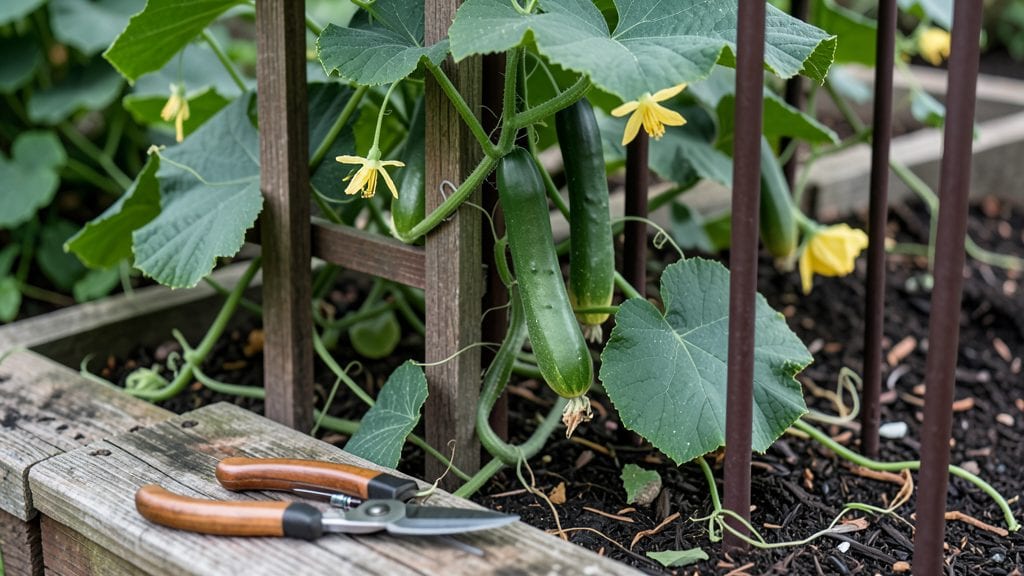
Trimming cucumber plants is the secret weapon behind those grocery-store-sized cucumbers in my garden—it’s not just about more fruits, but healthier vines too. 🌿 Last summer, I went from a handful of small cucumbers to bushels by making just a few strategic cuts each week.
The key isn’t hacking away wildly; it’s guiding the plant’s energy where you want it to go.
You’ll need sharp pruning shears (dull blades crush stems and invite disease), a sunny morning for trimming, and about 15 minutes per plant. Focus on removing those little side shoots—called suckers—that sprout between the main stem and leaves.
These energy vampires steal nutrients from your cucumbers, leaving you with fewer, smaller fruits. I also pinch off the first few flowers to let the plant build stronger vines before fruiting.
After trimming, your plants will reward you with better air circulation, fewer pests, and cucumbers that grow straight and plump instead of gnarled and bitter. The vines stay compact, making harvesting easier, and the fruits ripen faster.
It’s the difference between a few sad cucumbers and a vine so productive, you’ll be gifting them to neighbors by midsummer.
This method works for both bush and vining cucumbers, though vining types need more frequent trimming. Start early in the season, and you’ll see the payoff in just a few weeks—no waiting until the plant is already struggling.
The best part? Once you get the hang of it, trimming takes less time than watering, and the results speak for themselves.
📚 In This Guide
- What you need
- Instructions
- Tips and common mistakes
- Wrapping up and next steps
What you need
- ● Pruning shears: Sharp, bypass-style shears (4–6 inches) for clean cuts. Must be sterilized with rubbing alcohol before use.
- ● Gloves: Heavy-duty gardening gloves (nitrile or leather) to protect against thorns and sap.
- ● Disinfectant: 1 part bleach to 9 parts water (for sterilizing tools between cuts).
- ○ Garden twine or clips: (Optional) For supporting vines post-trimming (if trellising).
- ● Sharp knife or scissors: Backup for small trims (if shears aren’t handy).
- ● Watering can or hose: To hydrate plants post-pruning (1–2 gallons per plant).
- ● Compost bin: For disposing of trimmed vines (or repurpose as mulch!).
- ● Mature cucumber plants (at least 3–4 weeks old with 3+ true leaves).
- ● Clear, dry weather (avoid trimming after rain to prevent disease spread).
- ● Morning sunlight (plants should be fully hydrated before cutting).
- ● Patience! Trim gradually—never remove more than 1/3 of the plant at once.
Step-by-Step guide to trimming cucumber plants
Here’s how to shape your cucumber vines for healthier growth and more abundant harvests.
🌱 Step 1: Identify and Remove Suckers
Suckers are the small shoots that grow in the crotch between the main stem and a leaf or branch. These compete with your main plant for energy, so you’ll want to remove them early. Use your fingers or clean pruning shears to pinch them off just above the leaf they’re growing from—this prevents unsightly stubs and encourages cleaner growth.
Start checking for suckers when your plant reaches about 12 inches tall. I like to do this in the morning so the cuts have time to heal before evening humidity sets in. If you wait too long, suckers can grow large enough to produce their own fruit, which weakens the main plant.
✂️ Step 2: Prune Lower Leaves for Airflow
Remove the bottom 2-3 sets of leaves once your plant hits 3 feet tall. These lower leaves touch the soil, making them prime targets for fungal diseases like powdery mildew. Use sharp shears to cut just above a leaf node (the bump where leaves attach) to avoid leaving ragged edges that invite pests.
This step also helps sunlight and air reach the middle of the plant, where most of your cucumbers will form. I always prune on a dry day—wet leaves can tear, and damp conditions increase the risk of infection. After trimming, give the plant a light watering to help it recover.
☀️ Step 3: Thin Fruit for Optimal Size
When cucumbers appear, leave only 1-2 per node (the spot where leaves and branches meet). Overcrowded fruit strains the plant, leading to smaller, bitter harvests. Gently twist off excess cucumbers at the stem—don’t pull, as this can damage the plant. Aim to keep 6-8 cucumbers on a 4-foot plant for best results.
Watch for yellowing leaves or stunted growth—they’re signs you’ve left too many cucumbers. Harvest regularly to signal the plant to produce more. I check my vines every 2-3 days in peak season, always picking when cucumbers are firm and 6-8 inches long for ideal flavor and texture.
🌿 Step 4: Maintain Vines Through the Season
Continue trimming suckers and thinning fruit weekly as the plant grows. For bush varieties, prune lightly to encourage bushiness, while vining types benefit from more aggressive suckering. Always sterilize your shears with rubbing alcohol between cuts to prevent spreading disease.
By late summer, you’ll notice new growth slowing. This is normal—reduce pruning and focus on harvesting. Stop trimming entirely 2-3 weeks before your first frost to let the plant harden off naturally. I like to mark my calendar so I don’t accidentally prune too late in the season.
Tips & tricks for perfect cucumber plant trimming
Precision trimming transforms your cucumber harvest—here's how to avoid common pitfalls and maximize your garden's potential.
Timing is Everything: I check for suckers every 3-4 days once the plant hits 12 inches—this keeps me ahead of the game. Early removal prevents energy drain from the main plant. In Step 1, focus on the first 3-4 main stems where suckers appear most aggressively. These early suckers compete fiercely for resources, so don't delay!
Leaf Pruning Strategy: When you reach Step 2 and remove those bottom 2-3 sets of leaves, save the largest, healthiest leaves for compost. These lower leaves often show early signs of disease, so removing them prevents fungal spread upward. I always leave the topmost leaves intact—they're working hard to photosynthesize for your cucumbers.
Fruit Thinning Technique: The 1-2 cucumbers per node rule in Step 3 might seem strict, but trust me—it pays off. I use my thumb and forefinger to gently twist cucumbers at the stem, avoiding any tugging that could damage the plant. For bush varieties, you can leave slightly more (up to 3 cucumbers per node) since they handle crowding better than vining types.
Seasonal Maintenance: Your weekly pruning schedule in Step 4 should shift with the seasons. During heatwaves, increase to every 2-3 days to prevent stress. In cooler weather, you can extend to weekly. Always carry rubbing alcohol in a small spray bottle for quick sterilization between cuts—it takes seconds and prevents disease transmission better than wiping with cloth.
Pro Tips for Trimming Cucumber Plants
- Precision trimming transforms your cucumber harvest—here's how to avoid common pitfalls and maximize your garden's potential.
- Timing is Everything: I check for suckers every 3-4 days once the plant hits 12 inches—this keeps me ahead of the game.
- Leaf Pruning Strategy: When you reach Step 2 and remove those bottom 2-3 sets of leaves, save the largest, healthiest leaves for compost.
Frequently asked questions
Got questions about trimming cucumber plants? You’re not alone! Here are answers to the most common queries to help you master the art of pruning for a bountiful harvest.
When is the best time to trim cucumber plants?
Trim cucumber plants in the morning when the plants are dry and dew has evaporated. This reduces the risk of disease. Aim to prune every 1–2 weeks during the growing season, focusing on yellowing, diseased, or overcrowded vines. Avoid heavy pruning late in the day, as it can stress the plant.
Should I trim all the leaves off my cucumber plant?
No! Only remove yellow, damaged, or diseased leaves—never strip all foliage. Leaves provide energy for the plant through photosynthesis. Trim selectively to improve airflow and reduce pests, but leave enough leaves to support fruit production. Aim to keep 3–4 healthy leaves per vine.
Will trimming cucumber plants increase my yield?
Yes, but only if done correctly! Pruning directs energy toward fruit production by removing competing vines and leaves. Focus on trimming side shoots (suckers) and overcrowded growth. However, over-pruning can stress the plant—balance is key for bigger, healthier cucumbers.
Can I use scissors or should I pinch off vines by hand?
Both work, but clean, sharp pruners are best for thicker stems to avoid tearing. For delicate vines, pinching by hand is gentler and reduces the risk of spreading disease. Sterilize tools with rubbing alcohol between cuts to prevent bacterial or fungal infections.
What do I do if my cucumber plant looks weak after trimming?
If your plant appears stressed, reduce pruning frequency and ensure it gets consistent water (1–2 inches per week) and balanced fertilizer (high in potassium). Avoid trimming more than 20–30% of the plant at once. Weak plants may need temporary shade if exposed to intense sun post-pruning.
Does trimming work the same for bush and vining cucumbers?
Not exactly! Bush cucumbers need minimal trimming—just remove dead or diseased leaves. Vining varieties benefit more from regular pruning to control sprawl and improve airflow. For vining types, focus on removing suckers (side shoots) and training vines along trellises.
Wrapping up and next steps
Trimming your cucumber plants isn’t just about tidiness—it’s your secret weapon for bigger, healthier harvests! 🌱 By mastering the art of pruning, you’ll boost airflow, reduce pests, and encourage more fruit production.
Whether you’re a seasoned gardener or just starting out, every snip brings you one step closer to a bountiful garden.
Ready to put your new skills to the test? Grab your pruners and head to the garden this weekend! With patience and practice, you’ll be reaping the rewards of your hard work in no time. Happy pruning—and happy harvesting! 🥒✨