Pruning
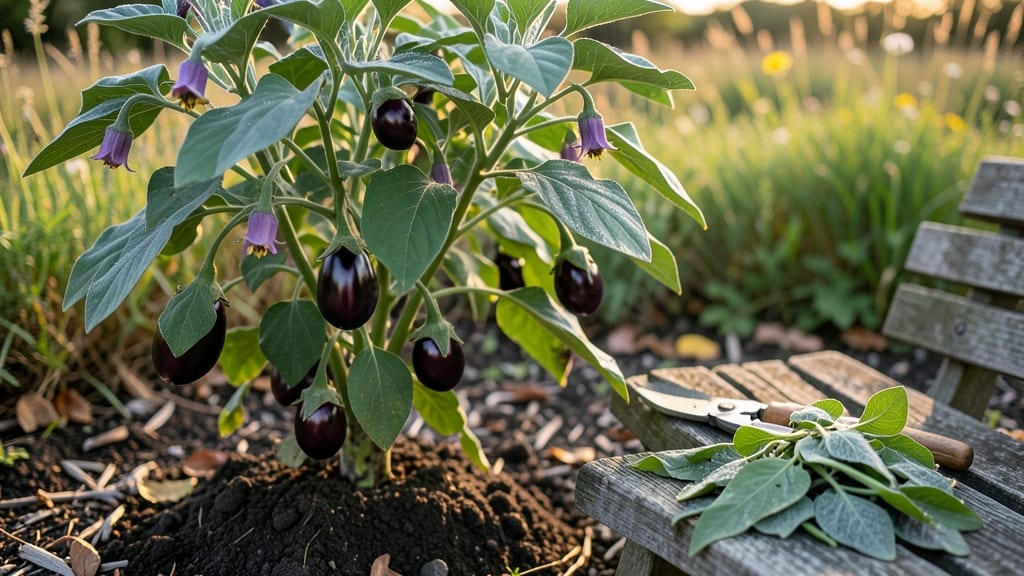
Trimming eggplant plants isn’t just about shaping them—it’s the secret to bigger harvests and healthier vines. I learned this the hard way after my first eggplant season ended with half the expected yield, all because I ignored the pruning step.
The right cuts improve airflow, prevent disease, and direct energy toward fruit production instead of wild, unproductive growth.
You’ll need just three tools: sharp pruning shears, a small hand saw for thicker stems, and a pair of gloves to protect your hands from thorns.
The best time to trim is in the morning, when the plants are dry and the air is cool—this reduces stress on the plant. Focus on removing suckers (those small shoots that form in the leaf axils) and any yellow or diseased leaves.
Every cut should be clean, at a 45-degree angle, about a quarter-inch above a leaf node.
Within two weeks of proper pruning, you’ll notice stronger stems and more flowers setting fruit. The plants stay compact, making them easier to manage and harvest, and the eggplants themselves grow larger and more uniform.
My first pruned plant produced twice as many market-sized eggplants as my unpruned neighbor’s bush—no joke. The key is consistency: check your plants weekly during peak growing season and trim as needed.
This method works for both container-grown and in-ground eggplants, though smaller pots may need slightly more frequent pruning to prevent overcrowding. If you’re in a hot climate, trim a little more aggressively to keep the plant from overheating.
The goal is always the same: more fruit, less fuss. Once you master the technique, you’ll wonder how you ever grew eggplants any other way.
📚 In This Guide
- What you need
- Instructions
- Tips and common mistakes
- Wrapping up and next steps
What you need
- ● Sharp pruning shears (bypass or anvil type, sterilized with rubbing alcohol or bleach) – 1 pair
- ● Garden gloves (nitrile or leather for grip and protection) – 1 pair
- ● Disinfectant solution (1 part bleach to 9 parts water or hydrogen peroxide) – small spray bottle
- ● Compost or mulch (for covering pruned areas) – small bag
- ● Watering can or hose (with a gentle spray nozzle) – 1
- ● Hand pruners (for smaller branches) – 1 pair
- ● Plant tie or twine (to support heavy branches post-pruning) – small roll
- ● Garden journal (to track pruning dates and plant progress) – 1 notebook
- ● Organic fungicide (preventative measure for cuts) – small bottle
Instructions for trimming eggplant plants
Here's how to prune eggplants like a pro—boosting fruit size and plant health without stress.
Identify the Right Time to Prune
Prune your eggplant plants in the morning when temperatures are cool—this gives them time to recover before the heat of the day. Start when plants reach 12-18 inches tall and have 4-5 sets of true leaves. This is when the main stem has enough energy to support new growth after trimming. Avoid pruning during flowering or fruiting stages unless addressing disease or pests.
Look for healthy, sturdy stems before cutting. Weak or yellowing stems should be pruned immediately, but strong ones can wait until you’ve identified the main growth zones. Eggplants are sensitive to over-pruning, so focus on strategic cuts rather than indiscriminate trimming.
Remove Suckers and Lower Leaves
Suckers are the small shoots that grow in the V-shaped junctions between the main stem and branches. These compete with your eggplant for nutrients and often produce small, underdeveloped fruit. Use clean, sharp pruning shears to snip suckers at their base, just above the leaf node. Never tear or rip them—this can damage the plant and invite disease.
Also remove the lowest 2-3 sets of leaves on the main stem. These leaves touch the soil and can harbor pests or rot. Cut them off at the stem with a 45-degree angle to prevent water from pooling. This improves airflow and reduces the risk of fungal infections.
Thin Branches for Better Airflow
Eggplants naturally grow in a bushy habit, but too many branches lead to small fruit and crowded foliage. Focus on keeping 3-4 main branches per plant, removing any that grow inward or cross over others. These branches block sunlight and airflow, increasing humidity and fungal risks. Thin by cutting branches back to the main stem or a strong lateral branch.
Watch for water sprouts—thin, weak shoots that grow straight up from the stem. These steal energy from fruit production. Pinch them off with your fingers or trim with shears. Always prune just above a leaf node to encourage new growth in the right direction.
Prune for Fruit Development
Once your eggplant starts flowering, shift focus to fruit-bearing branches. Remove any flowers or small fruit clusters that appear on the lower third of the plant—these won’t mature well and divert energy from higher, more productive branches. Cut them off at the stem with a clean snip, leaving a small bump rather than a jagged edge.
Leave 1-2 flowers per cluster on the remaining branches. Overloading the plant with too many flowers can reduce fruit size. If you notice large, misshapen fruit, prune nearby leaves to improve airflow and sunlight exposure. This helps the remaining fruit grow larger and more evenly shaped.
Clean Up and Monitor Growth
After pruning, sterilize your shears with rubbing alcohol to prevent spreading disease. Remove all pruned material from the garden—don’t compost it if it shows signs of disease or pest damage. Drop clippings in a sealed bag and dispose of them in the trash to avoid reinfesting your plants.
Monitor your eggplant for new suckers or regrowth every 5-7 days. Prune again if needed, but avoid heavy trimming during hot weather—eggplants are sensitive to stress when temperatures exceed 85°F. Keep an eye out for signs of shock, like wilting or yellowing leaves, and adjust your pruning approach if the plant seems overwhelmed.
Tips & tricks for precision eggplant pruning
Mastering eggplant pruning takes practice, but these key insights will help you boost fruit size and plant health with confidence.
The Right Time Matters: Pruning in the morning when temperatures are below 85°F gives your plants time to recover before the heat of the day. I've seen plants stressed by afternoon pruning show signs of wilting within hours, so timing is everything. Focus on plants that are 12-18 inches tall with 4-5 sets of true leaves—this is when they have enough energy to bounce back quickly.
Clean Cuts Prevent Disease: Always use sterilized pruning shears and make cuts at a 45-degree angle just above a leaf node. I learned this the hard way when my first eggplant plants developed fungal spots after uneven cuts. The angled cut prevents water from pooling, which is crucial for preventing rot. Remember to remove all pruned material immediately—don't compost it if there are any signs of disease or pests.
Branch Management is Key: When thinning branches in Step 3, aim to keep 3-4 main branches per plant. I've noticed that plants with too many branches produce smaller fruit because energy gets spread too thin. Watch for water sprouts—those weak vertical shoots that grow straight up—they're energy vampires that divert nutrients from your eggplant harvest.
Monitor and Adjust: Check your plants every 5-7 days for new suckers or regrowth. Eggplants are sensitive to stress, especially when temperatures exceed 85°F, so avoid heavy pruning during heatwaves. If you see wilting or yellowing leaves after pruning, your plant might be overwhelmed—scale back your pruning approach for a few days and keep it well-watered.
Pro Tips for Trim Eggplant Plant
- Mastering eggplant pruning takes practice, but these key insights will help you boost fruit size and plant health with confidence.
- The Right Time Matters: Pruning in the morning when temperatures are below 85°F gives your plants time to recover before the heat of the day.
- Clean Cuts Prevent Disease: Always use sterilized pruning shears and make cuts at a 45-degree angle just above a leaf node.
Frequently asked questions
Got questions about trimming eggplant plants? You’re not alone—pruning can feel tricky at first, but mastering it leads to healthier plants and juicier harvests! Here are answers to the most common queries to help you prune like a pro.
When is the best time to trim eggplant plants?
Trim eggplant plants after they’ve established 4–6 true leaves (about 4–6 weeks after transplanting). Focus on removing lower leaves and leggy growth during the early morning to minimize stress. Avoid heavy pruning during flowering or fruiting—save aggressive trims for the off-season or early growth stages.
How much should I trim off an eggplant plant?
Start conservatively! Remove only 10–20% of the plant’s foliage at a time. For leggy plants, trim back new, unripe growth to redirect energy to fruit production. Avoid cutting more than 1/3 of the plant in one session—this can shock the plant and reduce yields. Think of it like a haircut: small, strategic snips work best!
Will trimming eggplant plants increase fruit size?
Yes! Pruning encourages the plant to focus energy on fewer, larger fruits instead of producing many small ones. By removing excess leaves and stems, you improve air circulation (reducing disease risk) and help the plant channel nutrients to developing eggplants. Just avoid over-pruning—balance is key!
What if I trim too much? Can I fix an over-pruned eggplant?
If you’ve gone overboard, don’t panic! Stop pruning immediately and water deeply to help the plant recover. Over-pruned eggplants may produce fewer fruits initially, but they’ll bounce back with proper care. In extreme cases, use a balanced fertilizer (like 10-10-10) to boost recovery. Prevention is easier: trim in stages and monitor plant health closely.
Are there alternatives to pruning for bushier eggplants?
If pruning feels too hands-on, try these low-maintenance alternatives:
- Pinch back tips: Gently squeeze off the top 1–2 inches of new growth to encourage branching.
- Use a trellis: Train eggplants vertically to improve airflow and reduce leaf density naturally.
- Thin seedlings: Space plants 18–24 inches apart at planting to avoid overcrowding.
- Mulch heavily: Retain moisture and reduce stress, which can limit excessive leafy growth.
Wrapping up and next steps
Trimming your eggplant plants isn’t just about keeping them tidy—it’s your secret weapon for bigger, healthier fruits and a more productive harvest. By mastering precision pruning, you’ll encourage stronger growth, reduce disease risks, and enjoy a bounty of plump, flavorful eggplants. 🌱
Ready to put your new skills to the test? Start with one plant this season, observe how it responds, and gradually expand your trimming routine. Before you know it, you’ll be a pruning pro—and your garden will thank you with a stunning eggplant harvest! 🎉