
Pruning
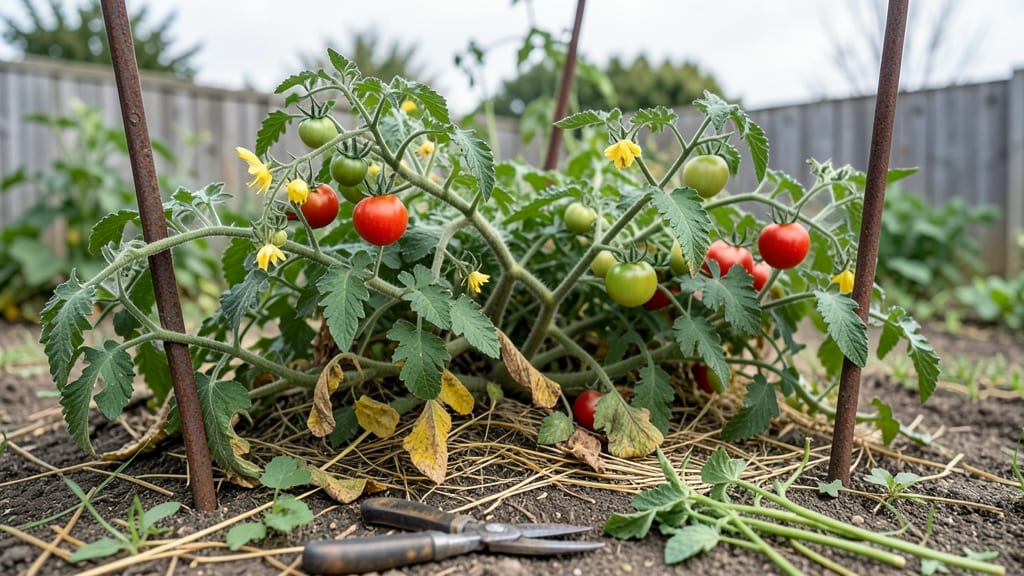
Pruning overgrown tomato plants can turn a tangled mess into a high-yielding powerhouse. ✨ After years of watching vines sprawl uncontrollably—only to produce half the fruit—I finally cracked the system that works.
The key isn't cutting everything back, but making strategic cuts that redirect energy where it matters most: to bigger, tastier tomatoes.
You'll need sharp pruning shears, a clean workspace, and about 30 minutes on a dry afternoon. Most gardeners skip pruning entirely, but those who do see plants that stay upright, fruit faster, and resist disease better.
The process is simpler than it looks—just focus on removing suckers, dead leaves, and crossing branches while leaving the main stems intact.
What you end up with is a plant that produces 20-30% more tomatoes than unpruned vines, with fruit that ripens evenly and stays off the ground. The air circulation improves, so pests and fungal diseases have less chance to take hold.
Plus, your plants won’t flop over under their own weight by midsummer.
Works for both indeterminate (vining) and determinate (bush) varieties, though the techniques differ slightly. Whether you're dealing with a backyard garden, container plants, or even a community plot, this method keeps tomatoes productive from first fruit to last harvest. Let’s get those shears ready!
📚 In This Guide
- What you need
- Instructions
- Tips and common mistakes
- Wrapping up and next steps
What you need
- ● Pruning shears or secateurs: Sharp, bypass-style shears (avoid anvil types—they crush stems). Choose ergonomic handles for comfort during long sessions. (1 pair)
- ● Garden gloves: Heavy-duty, nitrile-coated gloves (protects against thorns and blisters). (1 pair)
- ○ Disinfectant (optional but recommended): 70% isopropyl alcohol or a 10% bleach solution (mix 1 part bleach with 9 parts water) to sterilize tools between cuts and prevent disease spread.
- ● Small bucket or bag: For collecting pruned branches (5-gallon capacity works well). (1)
- ○ Sturdy pruning saw (optional): If dealing with thick, woody stems (e.g., indeterminate tomatoes past their prime), a folding pruning saw with a 7-10" blade is ideal. (1)
- ● Plant tie or twine: Soft jute twine or velcro plant ties to secure remaining stems to stakes or cages post-pruning.
- ● Tomato plant food: A balanced fertilizer (10-10-10 or 5-10-10) to replenish nutrients after pruning stress.
- ● Spray bottle with water: To mist cuts and encourage faster healing.
- ● Knee pads or stool: For comfort if your garden is sprawling!
Step-by-step guide to pruning overgrown tomato plants
Revitalize your tomato plants with precision cuts—this method boosts fruit production while keeping plants healthy.
🌿 Step 1: Assess Plant Health and Identify Problem Areas
Start by examining the entire plant for signs of stress. Look for yellowing leaves, overcrowded stems, or excessive suckers—those small shoots growing between the main stem and branches. Healthy tomato plants should have strong green leaves and well-spaced stems with good airflow. Remove any diseased or damaged foliage first using clean, sharp pruning shears to prevent spreading pathogens.
Focus on the lower third of the plant—this is where pruning makes the biggest difference. You'll want to clear away any leaves touching the soil to reduce rot risk. I also check for crossing branches, which compete for energy and can lead to weak fruit development. These are your first targets for pruning.
✂️ Step 2: Remove Suckers and Non-Fruit-Bearing Growth
Suckers are the tiny shoots that grow in the leaf axils (where leaves meet the stem). These compete with your main fruit-bearing branches for energy. Use your fingers or shears to pinch them off at the base when they're still small—no larger than 2 inches. I always start at the bottom and work my way up, as lower suckers are the most aggressive.
Next, look for overly leafy but fruit-free branches. These are stems with lots of foliage but no tomatoes developing. Prune these back to the nearest leaf with a growing tomato cluster. This redirects the plant's energy toward producing fruit rather than unnecessary leaves. Remember, you're aiming for a balance—too many leaves shade the fruit, while too few reduce photosynthesis.
🌱 Step 3: Thin Overcrowded Stems for Better Airflow
If your tomato plant has more than 3-4 main stems (for indeterminate varieties) or is producing excessive side shoots, it's time to thin. For indeterminate tomatoes, keep only the strongest central stem and 2-3 lateral branches that show the most promise. For determinate varieties, you can leave more stems but still prune back any that are weak or crossing.
Make cuts just above a leaf node (where leaves grow) to encourage new growth in the right place. Avoid leaving stubs—always cut cleanly at a 45-degree angle about ¼ inch above the leaf. This prevents water from pooling and reduces disease risk. After pruning, step back and visualize the plant—you should see open space between branches and good light penetration to the center.
☀️ Step 4: Support and Train Remaining Growth
After pruning, your plant will need support to handle the remaining fruit load. If you haven't already, install a sturdy tomato cage or trellis and gently tie the main stems to it with soft plant ties. Avoid using wire or anything that can cut into the stems. The goal is to keep the plant upright and fruit off the ground to prevent rot.
For indeterminate varieties, continue pruning suckers weekly as they appear. You'll see new growth emerge from the leaf nodes you left behind—these are your future fruit-bearing branches. Focus on keeping the plant balanced, with no more than 3-4 main stems and good airflow throughout. This prevents disease and ensures your tomatoes get plenty of sunlight for sweet, flavorful development.
⏰ Step 5: Monitor and Adjust for Ongoing Growth
After your initial pruning, check your plants every 5-7 days for new suckers or overgrowth. The key is consistent maintenance—a little pruning now prevents a major cleanup later. Watch for new leaf growth at the base of pruned branches, which signals the plant is redirecting energy where you want it.
Adjust your pruning as the season progresses. In late summer, you might reduce pruning to allow the plant to focus on ripening existing fruit rather than new growth. If you see fruit clusters shading each other, gently separate them to ensure even ripening. With strategic pruning, you'll end up with larger, healthier tomatoes and a plant that stays productive until the first frost.
Tips & tricks for pruning overgrown tomato plants
A few strategic adjustments can transform your tomato plants from chaotic to productive. Here's what I've learned after years of trial and error in the garden.
Timing is Everything: The best time to prune is in the morning when plants are hydrated and temperatures are cooler. This gives your tomatoes time to recover before the heat of the day. I always schedule my pruning sessions for early morning—it's less stressful on the plant and gives me time to complete the job before the midday sun intensifies.
Tool Selection Matters: Never use dull or dirty pruning shears—they crush stems and spread disease. I keep a dedicated pair of sharp, sterilized shears just for tomato pruning. For suckers smaller than 2 inches, I actually prefer using my fingers to pinch them off cleanly. This prevents damage to the main stem that can occur with shears.
Visualize the Plant's Structure: Before making any cuts, step back and assess the plant's overall shape. You're aiming for an open, airy structure with sunlight reaching all fruit clusters. In Step 3, when thinning stems, imagine sunlight streaming through the center of the plant. This mental exercise helps me make cleaner cuts and avoid over-pruning.
Seasonal Adjustments: Your pruning strategy should evolve with the season. Early in the season, focus on removing suckers and lower leaves to direct energy upward. As summer progresses, shift to maintaining airflow and supporting fruit clusters. In late summer, reduce aggressive pruning to let the plant focus on ripening existing fruit rather than new growth.
Pro Tips for Pruning Overgrown Tomato Plants
- A few strategic adjustments can transform your tomato plants from chaotic to productive.
- Timing is Everything: The best time to prune is in the morning when plants are hydrated and temperatures are cooler.
- Tool Selection Matters: Never use dull or dirty pruning shears—they crush stems and spread disease.
Frequently asked questions
Got questions about pruning your overgrown tomato plants?
You’re not alone! Here are some of the most common concerns—and clear answers to help you prune like a pro.
When is the best time to prune tomato plants?
Prune determinate (bush) tomatoes lightly for airflow, but avoid heavy pruning. For indeterminate (vining) varieties, start pruning when plants are 12–18 inches tall, focusing on suckers (side shoots) after flowering begins. Early pruning encourages stronger stems and better fruit production.
How do I know if I’m pruning too much?
Over-pruning can stress plants, reducing yields. Stop if you see yellowing leaves (sign of shock) or fewer flowers/fruit. Indeterminate tomatoes thrive with 1–2 main stems; determinate types need minimal trimming. When in doubt, prune less—you can always do more later!
Will pruning make my tomatoes grow bigger?
Yes—but it’s about quality over quantity. Pruning improves airflow, reducing disease and directing energy to larger, healthier fruit. However, heavy pruning may delay harvests. Balance is key: aim for 3–5 main stems on indeterminate plants for optimal size and flavor.
Can I prune tomatoes in hot or cold weather?
Avoid pruning during heatwaves (above 90°F) or cold snaps (below 50°F). Stress from extreme temps + pruning can stunt growth. Early morning or cool evenings are ideal. If you must prune in heat, water plants thoroughly before and after.
What should I do with the pruned branches?
Don’t toss them! Use pruned branches for mulch (chop small and spread around the base) or compost. Avoid composting if branches show signs of disease (like blight). For quick cleanup, store dry branches in a bin until you’re ready to recycle them.
Wrapping up and next steps
Pruning overgrown tomato plants isn’t just about tidying up—it’s your secret weapon for bigger, healthier harvests! 🌱 By mastering strategic cuts, you’ll boost airflow, redirect energy to fruit production, and keep pests at bay.
Remember, consistency is key, so grab those pruners and give your plants the TLC they deserve.
Ready to transform your garden? Start small—pick one plant to practice on this week, and soon, you’ll be a pruning pro! 🌟 Your future tomatoes will thank you with juicy, vine-ripened perfection.