
Pruning
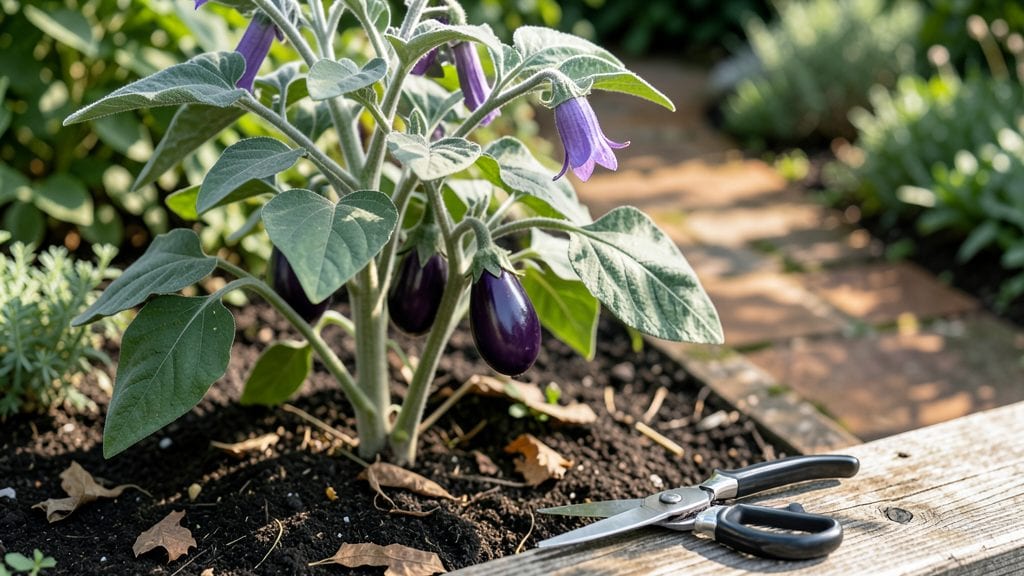
Pruning aubergine plants isn’t just about shaping the plant—it’s about unlocking three times the harvest by focusing energy where it matters most. 🌱 I’ve learned the hard way that skipping these cuts means fewer fruits, more disease, and plants that flop over by midsummer.
The right pruning turns a single bush into a productive machine, giving you eggplants from early summer through fall.
You only need three basic cuts: removing suckers (those little shoots between branches), trimming back leggy growth, and thinning crowded stems. Grab sharp pruners and a pair of gloves—no fancy tools required.
The key is timing: start when plants hit 12 inches tall, then repeat every 2-3 weeks until harvest. Beginners often over-prune, so focus on keeping the plant open and airy rather than aggressive trimming.
What you’ll get is a plant that stays compact, produces more and larger fruits, and resists pests better. Those glossy purple globes? They’ll be bigger and sweeter because the plant isn’t wasting energy on weak branches.
Plus, your harvest stretches longer—some varieties keep producing until frost if you keep the pruning up.
This works for both garden beds and containers, and the same principles apply whether you’re growing heirlooms or hybrid varieties. The only difference? Heirlooms might need slightly more aggressive pruning to handle their sprawling habit. Ready to turn those floppy stems into a high-yielding powerhouse?
📚 In This Guide
- What you need
- Instructions
- Tips and common mistakes
- Wrapping up and next steps
What you need
- ● Pruning shears or secateurs: A pair of sharp, sterilized pruners (5-7 inch blades) to make clean cuts. Look for bypass-style shears for precision.
- ● Gloves: Heavy-duty gardening gloves (nitrile-coated for grip) to protect against thorns and sap.
- ● Disinfectant (70% isopropyl alcohol or bleach solution): To sterilize tools before and after pruning (1 part bleach to 9 parts water).
- ● Rubbing alcohol or hydrogen peroxide (3%): For wiping down cuts on the plant to prevent infection.
- ● Compost or mulch: A small bag (5-10 gallons) to cover pruned branches or dispose of trimmings.
- ○ Support stakes or trellis (optional): If your aubergine variety is vining (e.g., 'Ichiban'), have 5-6 ft bamboo stakes or a lightweight trellis ready for training.
- ● Plant growth regulator (e.g., Paclobutrazol): A diluted solution (follow label instructions) to slow excessive growth if your plant is overproducing foliage.
- ● Pruning paint or sealing wax: To coat larger cuts (½ inch or wider) and prevent disease entry.
- ● Notebook & pen: For tracking pruning dates, plant response, and harvest progress.
- ● Sun hat & sunscreen: Because pruning sessions can turn into sun-soaked gardening marathons! ☀️
Step-by-Step instructions for pruning aubergine plants
Here’s how I keep my aubergine plants thriving—more fruit, stronger stems, and fewer pests.
✂️ Step 1: Remove Suckers for Airflow and Light
Start by identifying the suckers—those small shoots growing in the crotch between the main stem and a branch. These compete for nutrients and block airflow, inviting fungal diseases. Pinch them off with your fingers or clean pruners, leaving a tiny stub. I do this every 7-10 days during the growing season, always working in the morning so wounds dry quickly.
Focus on the lower third of the plant first—these suckers drain energy that could go toward fruit production. If you see a sucker larger than 2 inches, cut it at the base with sharp pruners to avoid tearing the stem. The goal is to keep the plant’s energy directed upward and outward, not wasted on unnecessary growth.
✂️ Step 2: Prune Lower Leaves for Circulation
Once the plant reaches 3 feet tall, remove the lowest 6-8 inches of leaves using clean, sharp pruners. This isn’t just about aesthetics—it prevents soil-borne diseases from splashing onto the foliage and improves airflow around the fruit. I make a 45-degree cut just above a leaf node to encourage faster healing and reduce water loss.
Skip this step if your plant is still small or struggling—wait until it’s established with at least 3-4 main branches. If you’re growing in a greenhouse or high-humidity area, prune even more aggressively to prevent powdery mildew. You’ll know you’ve done enough when you can see light and air moving freely through the plant’s center.
✂️ Step 3: Trim Overly Long Branches to Balance Growth
By mid-season, some branches will stretch too long, growing longer than 18 inches without producing fruit. Cut these back to 12-15 inches, always leaving 2-3 leaves above the cut to support photosynthesis. This encourages the plant to put energy into lateral branches instead of weak, leggy growth.
I also remove any branches growing straight upward—these are called "watermelon vines" and rarely produce fruit. Instead, they waste energy. After pruning, spray the cuts with a copper fungicide to prevent infection. You’ll notice new side shoots forming within 7-10 days, and those are where the best fruit develops.
⏰ Step 4: Post-Harvest Pruning for Winter Hardiness
After your last harvest of the season, give the plant one final trim. Cut back all branches to half their height and remove any dead or yellowing leaves. This reduces the plant’s winter workload and prevents pests from overwintering in the foliage. I always prune in late fall, after the first frost, but before temperatures drop below 40°F.
Leave the main stem and a few strong branches to support next year’s growth. Mulch heavily around the base with 3-4 inches of organic matter to protect roots from freezing. If you’re in a mild climate, you can even leave a few small fruits on the plant to ripen over winter—just monitor for pests and adjust pruning as needed.
Tips & tricks for pruning aubergine plants
Pruning aubergine plants isn't just about cutting back—it's about strategic growth management that transforms your harvest. Here's what I've learned after years of trial and error in my garden.
Timing is Everything: The 7-10 day interval for removing suckers (Step 1) might seem frequent, but it's crucial. I've found that morning pruning makes all the difference—those early hours mean less humidity on fresh cuts, reducing disease risk. If you're working during peak sun, water the plant first to prevent shock. The key is to maintain that balance between airflow and plant stress.
Leaf Pruning Technique: When you reach Step 2 and remove those lowest 6-8 inches of leaves, don't just hack them off! That 45-degree cut above the leaf node is what prevents water from pooling and causing rot. I've seen plants recover much faster when cuts are made this way. For stubborn leaves, work in small sections—don't try to remove everything at once. The plant needs time to adjust to each change.
Branch Pruning Strategy: The 18-inch threshold for long branches (Step 3) might seem arbitrary, but there's science behind it. Aubergines naturally produce fruit on lateral branches that form after the main stem reaches about 18 inches. Cutting back to 12-15 inches forces the plant to focus its energy where it counts—on fruit production rather than vertical growth. This is where you'll see the biggest difference in yield.
Winter Preparation Secret: That late fall pruning (Step 4) when temperatures drop below 40°F isn't just about cleaning up—it's about setting up next year's success. I've noticed plants that get this proper winter trim produce fruit 2-3 weeks earlier the following season. The key is that 3-4 inches of mulch—it acts like a blanket for the roots, protecting them from temperature swings that can stress the plant.
Pro Tips for Pruning Aubergine Plants
- Pruning aubergine plants isn't just about cutting back—it's about strategic growth management that transforms your harvest.
- Timing is Everything: The 7-10 day interval for removing suckers (Step 1) might seem frequent, but it's crucial.
- Leaf Pruning Technique: When you reach Step 2 and remove those lowest 6-8 inches of leaves, don't just hack them off!
Frequently asked questions
Got questions about pruning your aubergine (eggplant) plants? You’re not alone! Here are some of the most common concerns—and straightforward answers—to keep your plants thriving and productive.
When is the best time to prune aubergine plants?
Prune your aubergine plants early in the morning when the weather is cool to reduce stress. The ideal times are:
- Early growth stage: Remove lower leaves to improve airflow and prevent disease.
- Flowering stage: Trim suckers (side shoots) to redirect energy to fruit production.
- Harvest season: Light pruning can encourage more flowers and fruit.
How do I know which branches to cut?
Focus on these three key areas:
- Lower leaves: Remove any touching the soil to prevent rot and pests.
- Suckers: These are small shoots growing between the main stem and branches. Cut them back to the main stem to avoid overcrowding.
- Damaged or diseased branches: Prune these immediately to stop the spread.
Will pruning reduce my eggplant yield?
Not if done correctly! Pruning increases yield by:
- Improving airflow, which reduces disease risk.
- Encouraging more flowers and fruit by focusing energy on the main plant.
- Preventing overcrowding, which can lead to smaller, lower-quality eggplants.
What should I do if my aubergine plant looks stressed after pruning?
Stress is normal, but you can help your plant recover with these steps:
- Water deeply after pruning to reduce shock.
- Avoid fertilizing for a week to let the plant adjust.
- Provide shade during hot afternoons if pruning was heavy.
- Monitor for pests or disease, which can exploit stressed plants.
Can I prune aubergine plants indoors or in containers?
Yes! Container-grown aubergines benefit from pruning even more since space is limited. Follow the same rules as outdoor plants but:
- Prune more aggressively to control size and encourage bushier growth.
- Use smaller pruners or even clean scissors for tight spaces.
- Ensure your container has drainage to prevent root rot after pruning.
Wrapping up and next steps
Pruning your aubergine plants isn’t just about keeping them tidy—it’s your secret weapon for bigger yields, healthier growth, and year-round harvests! 🌱 By mastering the three key cuts (pinching, lateral pruning, and suckering), you’ll encourage stronger stems, better airflow, and more fruit production.
With the right tools, timing, and techniques, you’re well on your way to a thriving garden.
Now that you’re armed with knowledge, roll up your sleeves and get pruning! Start with the youngest plants and build your confidence—soon, you’ll be a pruning pro. Happy gardening, and may your aubergines flourish! 🍆✨