
Shrubs
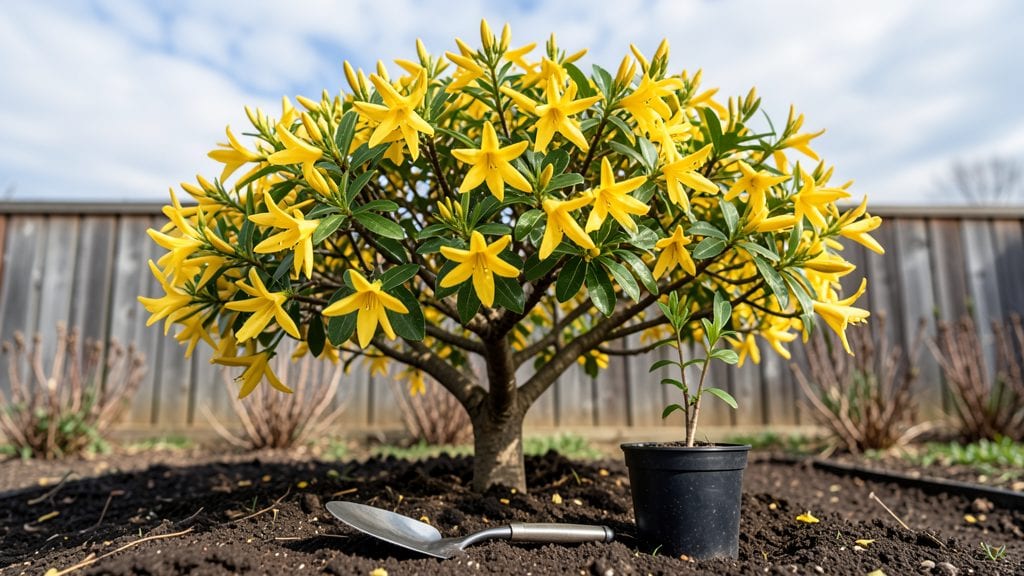
Planting forsythia bushes transforms your yard into a spring gold explosion—those bright yellow blooms appear before almost anything else.
I learned the hard way that the wrong spot or soil can leave you with sparse, weak growth, but once I cracked the formula, my bushes now burst into color every March without fail.
The secret starts with full sun and well-draining soil—forsythia thrives where others struggle. Dig a hole twice as wide as the root ball but no deeper, then mix in compost to give those roots a nutrient boost right from day one.
Spacing matters too: plant bushes 6-8 feet apart to prevent future crowding and encourage strong stems.
After planting, water deeply to settle the soil, then keep it consistently moist for the first two weeks—no soggy roots, just steady hydration. Mulch around the base to lock in moisture and protect against winter chill.
By summer, you’ll see new growth, and next spring? That showstopping yellow canopy you’ve been dreaming of.
Works in zones 5-8, whether you’re lining a driveway or creating a natural border. The key is patience—forsythia rewards long-term care with decades of reliable blooms. Let’s get those roots in the ground!
📚 In This Guide
- What you need
- Instructions
- Tips and common mistakes
- Wrapping up and next steps
What you need
- ● Forsythia bushes: 1–3 plants (depending on desired coverage; dwarf varieties like ‘Spring Glory’ are compact, while standards like ‘Northern Gold’ grow taller).
- ● Shovel or trowel: A garden shovel for digging holes (12–18" wide/deep) or a hand trowel for smaller plants.
- ● Well-draining soil: Mix 1 part compost (or aged manure) with 2 parts native soil to improve fertility and drainage.
- ● Mulch: 2–3 inches of wood chips, pine straw, or shredded bark to retain moisture and suppress weeds.
- ● Watering can or hose with nozzle: A gentle spray setting to avoid displacing soil around roots.
- ● Gloves: Heavy-duty gardening gloves to protect hands from thorns and rough soil.
- ○ Pruners (optional but helpful): Bypass pruners for trimming dead branches post-planting.
- ● Soil test kit: To check pH (forsythia thrives in 6.0–7.0; amend if needed with lime or sulfur).
- ● Root stimulator: A mycorrhizal fungus or seaweed extract to boost root growth.
- ● Stakes or cages: For young plants in windy areas (use 3–4 ft bamboo stakes).
- ● Slow-release fertilizer: 10-10-10 or balanced organic fertilizer (sprinkle lightly around roots after planting).
- ● Drip irrigation system: For automated watering (especially in hot climates).
Step-by-Step instructions for planting forsythia bushes
Here's how to plant these cheerful yellow bloomers for vibrant spring displays every year.
Choose the Perfect Planting Spot
Forsythia thrives in full sun—at least 6 hours of direct sunlight daily—so pick a location with open sky exposure. I always check the site in winter first; if the ground stays shaded by trees or buildings for more than 4 hours, move to another spot. The bush handles a little afternoon shade in hot climates, but too much shade means fewer blooms.
Test the soil drainage by digging a 1-foot deep hole and filling it with water. If it doesn’t drain within 2 hours, amend the soil with 2-3 inches of compost or plant on a slight mound to prevent root rot. Forsythia roots spread aggressively, so leave 8-10 feet between plants for mature size.
Prepare the Soil and Dig the Hole
Loosen the soil in a 3-foot diameter circle around the planting site with a garden fork, breaking up compacted layers down to 12 inches deep. Mix in 1-2 cups of 10-10-10 fertilizer into the loosened soil to give roots a nutrient boost. Avoid fresh manure—it burns tender roots and can attract pests.
Dig a hole twice as wide as the forsythia’s root ball but only as deep as the container’s bottom. If the root ball is tightly packed, score the edges with a knife to encourage outward root growth. Gently remove the bush from its container and place it in the hole so the top of the root ball sits 1 inch above ground level. This prevents water from pooling around the stem.
Plant and Water Thoroughly
Backfill the hole with the amended soil, pressing lightly around the edges to eliminate air pockets. Water deeply until the soil 2 inches down feels saturated. I like to use a soaker hose to avoid disturbing the roots with a forceful stream. Mulch the base with 2-3 inches of wood chips, keeping the mulch 6 inches away from the stem to prevent rot.
Forsythia establishes quickly, but the first year is critical. Water once a week if rainfall is light, aiming for 1 inch of moisture per week. Yellowing leaves after planting usually mean overwatering—let the top 2 inches of soil dry out between waterings. Avoid fertilizing for the first 6 weeks to let roots adjust.
Prune and Shape for Long-Term Health
Prune immediately after planting to remove any broken branches or stems that look weak. Forsythia blooms on old wood, so avoid heavy pruning until right after flowering. Cut back any suckers or unwanted shoots that appear at the base to direct energy into the main plant. I prune lightly each year in late winter to maintain shape and encourage dense growth.
Watch for signs of stress like leaf drop or stunted growth—these often mean the plant isn’t getting enough sunlight or water. Forsythia is tough once established, but the first year sets the stage for years of cheerful blooms. With proper care, you’ll have a sunlit spring show for decades.
Tips & tricks for perfect forsythia planting
These key insights will help you create the ideal conditions for your forsythia to thrive and bloom beautifully every spring.
Sunlight Strategy: In Step 1, when selecting your planting spot, pay close attention to the sun's movement throughout the day. While forsythia needs at least 6 hours of direct sunlight, the most critical period is morning sun. If your site gets afternoon shade, that's actually preferable in hot climates—it prevents leaf scorch while still allowing for abundant blooms. I've found that checking sunlight exposure in winter gives the most accurate reading of summer conditions.
Soil Drainage Test: The 2-hour drainage test in Step 1 is non-negotiable for forsythia health. If water remains after 2 hours, you're dealing with heavy clay soil. In these cases, I recommend creating a raised bed or planting on a slight mound rather than just adding compost. This ensures proper drainage at the root level where it matters most. The goal is to mimic the well-drained conditions forsythia prefers in its native habitats.
Root Ball Preparation: When preparing the hole in Step 2, scoring the tightly packed root ball edges with a knife is a game-changer. This simple step encourages roots to grow outward rather than circling the root ball. I've seen forsythia plants establish twice as quickly when this step is done properly. Just be gentle—you're not trying to cut through roots, just loosen the outer edges slightly.
Watering Wisdom: The once-weekly watering guideline in Step 3 assumes average rainfall conditions. In my experience, newly planted forsythia often needs water every 4-5 days during hot, dry periods. The key is to water deeply each time, ensuring that moisture reaches at least 2 inches down. I've learned the hard way that shallow, frequent watering leads to weak root development and more susceptibility to stress.
Pro Tips for Planting Forsythia Bushes
- These key insights will help you create the ideal conditions for your forsythia to thrive and bloom beautifully every spring.
- Sunlight Strategy: In Step 1, when selecting your planting spot, pay close attention to the sun's movement throughout the day.
- Soil Drainage Test: The 2-hour drainage test in Step 1 is non-negotiable for forsythia health.
Frequently asked questions
Got questions about planting forsythia bushes? You’re not alone! Here are answers to the most common queries to help you grow a vibrant, healthy shrub with ease.
When is the best time to plant forsythia bushes?
Plant forsythia in early spring or fall (4–6 weeks before the first frost) for optimal root establishment. Avoid extreme heat or cold—spring lets you see how the plant adapts to your soil before summer stress sets in.
How far apart should I space forsythia bushes?
Space forsythia bushes 6–10 feet apart for full growth. If planting in a hedge, keep them 3–5 feet apart and prune annually to maintain shape. Overcrowding reduces airflow, increasing disease risk.
Can forsythia grow in partial shade?
While forsythia thrives in full sun (6+ hours/day), it tolerates partial shade (4–6 hours of sun). In shadier spots, expect fewer blooms but still lush foliage. Test your site first—if leaves yellow, it’s likely too dark!
Why aren’t my forsythia bushes blooming?
Common culprits:
- Too much shade (needs sun for flowers)
- Over-fertilizing (promotes leaves over blooms)
- Young age (wait 2–3 years for first flowers)
- Dormant season (blooms appear before leaves in early spring)
What’s a good alternative if forsythia doesn’t thrive in my climate?
Try these spring-blooming shrubs for similar color and hardiness:
- Elderberry (vibrant yellow flowers, edible berries)
- Weigela (pink/purple blooms, deer-resistant)
- Dwarf Lilac (fragrant purple flowers, compact size)
Wrapping up and next steps
Planting forsythia bushes is a rewarding way to welcome vibrant spring colors into your garden with minimal effort! 🌸 With the right location, soil prep, and pruning know-how, these cheerful shrubs will thrive for years—brightening your landscape and attracting pollinators.
Now that you’re equipped with the essentials, take the next step: mark your spot, gather your tools, and get ready to enjoy the stunning blooms that’ll make your neighbors green with envy.
Pro tip: Snap a photo of your forsythia’s first flush of flowers—it’s the perfect reminder of a job well done! 📸