Trees
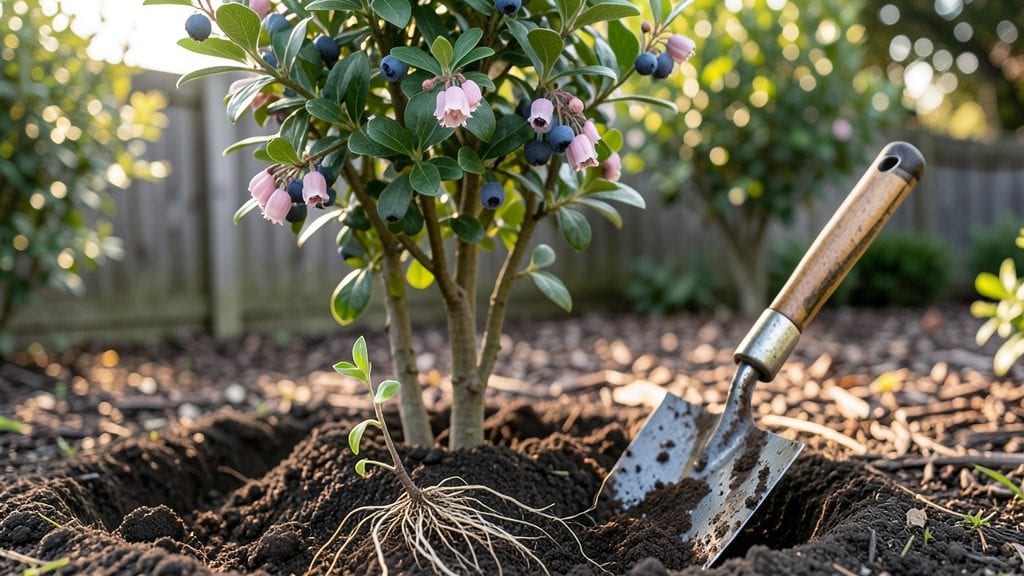
Planting blueberry trees gives you a year-round harvest of sweet, juicy berries—if you nail the soil and spacing from day one. 🌿 I learned the hard way that blueberries hate alkaline soil and crowded roots, so I’m sharing the exact steps that turned my patchy bushes into a reliable producer.
The key isn’t just digging a hole; it’s creating the right acidic bed and giving each tree enough room to breathe.
Start with soil that mimics their natural bog habitat: mix in 2-3 inches of peat moss or pine fines into the planting hole, and keep the pH between 4.5 and 5.5.
Southern gardeners can plant in fall or winter to avoid summer heat stress, while northerners should wait until early spring when frost is out of the picture. A 5-foot diameter planting mound keeps roots aerated and water flowing away from the trunk.
Within 2-3 years, you’ll see lush canes and your first real harvest—though patience is key, as young trees focus on root growth first. The payoff? Six weeks of peak production in summer, plus lingering berries that birds won’t touch if you pick them regularly.
And yes, container growing works too—just use 15-gallon pots and acid-loving fertilizer.
Climate matters: Southern growers need afternoon shade to prevent sunburn, while northern trees thrive in full sun. Either way, mulch with pine needles to maintain acidity and suppress weeds. Here’s how to set it up right the first time.
📚 In This Guide
- What you need
- Instructions
- Tips and common mistakes
- Wrapping up and next steps
What you need
- ● Blueberry plants: 1–3 dwarf (3–4 ft tall) or semi-dwarf (5–6 ft tall) trees (for home gardens)
- ● 3–5 standard trees (6–8 ft tall) for larger spaces
- ● Southern highbush (zones 7–9) or Northern highbush (zones 4–7) varieties
- ● Soil amendments: 5–10 lbs of peat moss or pine bark fines (per tree)
- ● 2–3 lbs of sulfur (for acidic soil, if needed)
- ● 1–2 lbs of slow-release fertilizer (10-10-10 or 12-12-17 NPK ratio)
- ● Planting tools: 1 shovel (for digging)
- ● 1 garden trowel (for precision)
- ● 1 pruning shears (sterilized)
- ● 1 soil pH test kit (to check acidity, ideal: 4.5–5.5)
- ● Mulch: 3–4 inches of pine straw, wood chips, or pine bark (per tree)
- ● Watering supplies: 1 hose with adjustable nozzle or drip irrigation kit
- ● 5–10 gallons of water (for initial watering)
- ● Epsom salt (1 tbsp/month during growing season for magnesium)
- ● Blueberry tree cages (to protect from wildlife)
- ● Organic compost (for nutrient-rich soil)
- ● Soil moisture meter (to monitor hydration)
- ● Pollinator-friendly plants (e.g., lavender or clover nearby)
Step-by-step instructions for planting blueberry trees
Here’s the precise method I’ve used to establish thriving blueberry bushes—key to that year-round harvest is the right soil, spacing, and acid-loving care.
🌱 Step 1: Choose the Right Location and Prepare the Soil
Blueberries demand acidic soil (pH 4.5–5.5) and full sun (6–8 hours daily). I always test soil pH first with a kit—if it’s above 5.5, amend with sulfur or peat moss (mix 2–3 inches into the top 12 inches of soil). Dig a hole twice as wide as the root ball but only as deep—planting too deep suffocates roots and causes stress.
Loosen the soil around the edges of the hole to encourage root spread. Blueberries hate compacted soil, so I add composted pine needles or leaf mold to the backfill mix for organic acidity. If your soil drains poorly, raise the planting area slightly or mound soil to prevent root rot.
🪴 Step 2: Plant Bare-Root or Container-Grown Trees With Precision
For bare-root trees, soak the roots in water for 2–4 hours before planting to revive them. Spread the roots gently outward in the hole, ensuring they’re not curled or bent—this encourages a strong, wide root system. If planting container-grown bushes, tease the roots at the pot’s edge to break up any circling.
Position the tree so the top of the root flare (where roots meet the trunk) sits 1–2 inches above soil level. Backfill with your amended soil mixture, tamping lightly every 2 inches to eliminate air pockets. Water deeply to settle the soil—you’ll know it’s right when moisture reaches 6–8 inches down.
☀️ Step 3: Mulch and Water for Establishment
Spread 3–4 inches of pine bark mulch or wood chips around the base, keeping it 3 inches away from the trunk to prevent rot. Mulch retains moisture and slowly lowers soil pH over time—critical for blueberries. Water immediately after mulching to help the mulch settle and hydrate the root zone.
Keep the soil consistently moist (not soggy) for the first 6–8 weeks. You’ll know it’s right when the top 2 inches of soil feel damp but not wet to the touch. Avoid overhead watering—drip irrigation or soaker hoses prevent fungal diseases that thrive in wet foliage.
✂️ Step 4: Prune and Fertilize for Long-Term Health
Prune in late winter or early spring before new growth begins. Remove dead, diseased, or crossing branches, then cut back any suckers growing from the base. I also thin out crowded stems to improve airflow—this reduces humidity around leaves and cuts disease risk. Sterilize pruners with rubbing alcohol between cuts to prevent spreading pathogens.
Fertilize in early spring with an acid-loving plant fertilizer (10-10-10 or 8-3-9 with sulfur). Apply according to package rates, then water deeply to move nutrients into the soil. Avoid high-nitrogen fertilizers—they promote leafy growth at the expense of fruit production, which is the last thing you want from a blueberry bush.
🌿 Step 5: Monitor and Adjust for Peak Production
Check soil pH annually—blueberries are finicky about acidity. If pH drifts above 5.5, reapply sulfur or aluminum sulfate in early fall. You’ll also notice fruit size and color improve when pH is optimal. Thin fruit clusters to ½-inch apart when berries are ½-inch in diameter—this ensures larger, sweeter berries and prevents overcrowding on branches.
Watch for pests like blueberry maggots or aphids. I treat organically with neem oil or insecticidal soap at the first sign of damage. A healthy bush resists most issues, but early intervention prevents infestations from spreading. With this care, your bushes will bear fruit within 2–3 years and keep producing for decades.
Tips & tricks for planting thriving blueberry bushes
These professional insights will help you avoid common pitfalls and maximize your blueberry harvest—from soil prep to long-term care.
Soil pH Precision: Don't just guess at soil acidity—use a reliable pH test kit to confirm your soil's exact pH before planting. The 4.5-5.5 range is critical, and even slight deviations can reduce fruit production. I've seen blueberries struggle when pH creeps above 5.5, so test annually and adjust with sulfur or aluminum sulfate if needed. The 2-3 inches of peat moss mixed into the top 12 inches of soil creates that perfect acidic environment right where roots will thrive.
Root Revival Technique: That 2-4 hour root soaking for bare-root trees is non-negotiable—it revives dormant roots and prevents transplant shock. I fill a bucket with water and submerge the roots completely, checking every 30 minutes to ensure they stay hydrated. For container-grown bushes, gently tease the roots at the pot's edge to break up any circling, which prevents girdling as the bush matures. This simple step makes all the difference in establishment success.
Mulching Strategy: The 3-4 inches of pine bark mulch serves two critical purposes: moisture retention and gradual pH adjustment. I always keep it 3 inches away from the trunk to prevent rot, and I refresh it annually. This mulch layer also suppresses weeds that compete with your blueberries for nutrients. The key is consistency—maintaining that moisture level in the top 2 inches of soil during the first 6-8 weeks sets the stage for strong root development.
Pruning Insight: When pruning in late winter, focus on three things: removing dead/diseased wood, thinning crowded stems for airflow, and cutting back suckers at the base. I sterilize my pruners between cuts with rubbing alcohol to prevent spreading pathogens. The goal is to create an open canopy that lets sunlight penetrate to the center of the bush—this improves fruit quality and reduces disease risk. Think of it as creating a balanced framework for future harvests.
Pro Tips for Planting Blueberry Trees
- These professional insights will help you avoid common pitfalls and maximize your blueberry harvest—from soil prep to long-term care.
- Soil pH Precision: Don't just guess at soil acidity—use a reliable pH test kit to confirm your soil's exact pH before planting.
- Root Revival Technique: That 2-4 hour root soaking for bare-root trees is non-negotiable—it revives dormant roots and prevents transplant shock.
Frequently asked questions
Got questions about planting blueberry trees? You’re not alone! Here are answers to the most common concerns—so you can grow thriving bushes with confidence.
When is the best time to plant blueberry trees?
Plant bare-root blueberries in early spring (before buds swell) or fall (6–8 weeks before frost). Container-grown bushes can go in spring or fall, but avoid extreme heat or cold. Pro tip: If planting in fall, water deeply before the ground freezes to protect roots!
How far apart should I space blueberry trees?
Space standard bushes 4–6 feet apart in rows 8–10 feet apart for airflow and sunlight. Dwarf varieties need 3–4 feet between plants and 6–8 feet between rows. Why? Crowding invites disease and reduces yields.
Can I grow blueberry trees in containers or small spaces?
Yes! Use 5-gallon pots or larger with acidic soil mix (pH 4.5–5.5) and drainage holes. Dwarf varieties like ‘Top Hat’ thrive in containers. Key tip: Move pots to partial sun (6+ hours/day) and fertilize monthly with acid-loving plant food.
Why aren’t my blueberry trees producing fruit?
Common culprits: wrong soil pH (test and amend with sulfur/pine needles), lack of pollinators (plant multiple varieties), young age (bushes need 2–3 years to bear fruit), or over-fertilizing (use low-nitrogen, high-potassium fertilizer). Fix it: Adjust care and be patient!
What pests or diseases should I watch for?
Blueberries attract birds, aphids, and spider mites (use netting or neem oil). Diseases like mummy berry or botrytis thrive in wet conditions—prune for airflow and remove infected fruit. Preventative tip: Mulch with pine straw to deter pests and retain acidity.
Wrapping up and next steps
Planting blueberry trees is a rewarding journey that leads to a year-round harvest of delicious, nutrient-packed berries—if you get the spacing, soil, and care just right! 🌱 With the right preparation, you’ll enjoy vibrant bushes, bountiful yields, and a low-maintenance addition to your garden or landscape.
Now that you’re armed with the essentials, there’s only one step left: dig in and start planting!
Ready to turn your blueberry dreams into reality? Pick your spot, prep your soil, and watch your garden transform into a sweet, purple paradise. Happy planting! 🌿