
Pruning
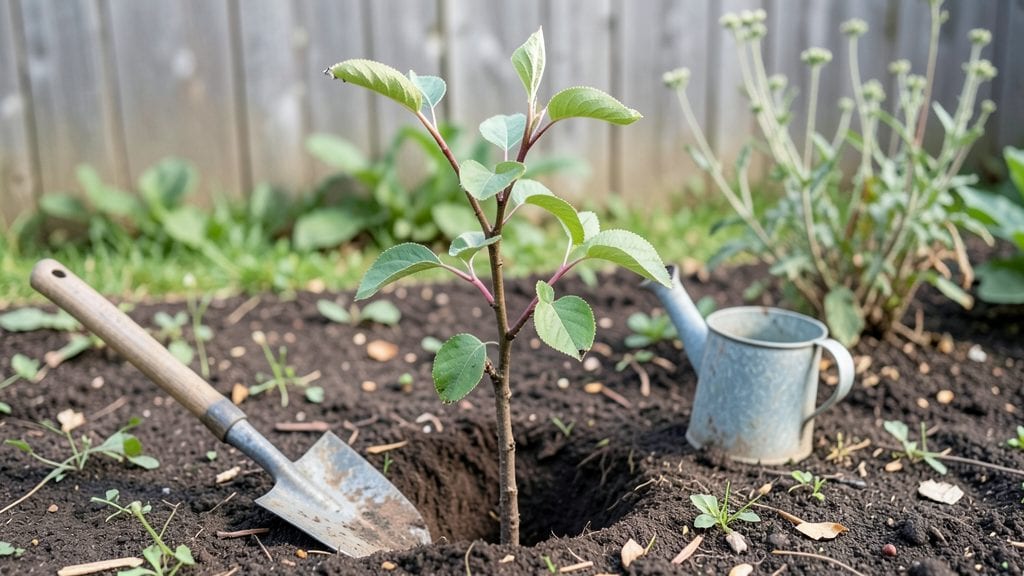
Planting apple tree seedlings in the right soil transforms a fragile sapling into a sturdy, productive tree within just a few seasons.
I’ve watched my own seedlings go from wobbly sticks to strong trunks by focusing on one key detail: the layered soil mix that encourages deep roots from day one. The difference between a tree that thrives and one that struggles often comes down to what’s happening just below the surface.
Most gardeners overlook how soil structure affects root growth, but it’s the foundation of long-term health. You’ll need a mix that drains well but holds moisture, with a top layer of compost-rich soil to feed those early roots.
Spacing matters too—give each seedling room to breathe, about 20 feet apart for mature growth, while keeping them close enough to protect from wind until they establish. The first year is all about setting them up for success, not rushing their growth.
By the time winter rolls around, you’ll see new shoots pushing through the soil, a sign your seedlings are putting down strong roots. Consistent watering—about an inch per week—keeps the soil moist without drowning the roots, while mulching helps retain that moisture and keeps weeds at bay.
The payoff? Trees that fruit earlier, resist disease better, and stand tall for decades. It’s the kind of long-term investment that makes gardening worth every minute.
This method works whether you’re planting in a backyard orchard or a small urban yard with containers. The key is adapting the soil layers to your space—raised beds, in-ground plots, or even large pots.
Once you’ve mastered the basics, you can experiment with different varieties and soil amendments to fine-tune your approach. Let’s get those roots growing deep.
📚 In This Guide
- What you need
- Instructions
- Tips and common mistakes
- Wrapping up and next steps
What you need
- ● Apple tree seedlings: 1–5 (depending on desired orchard size), preferably dwarf or semi-dwarf varieties (4–6 ft mature height) for easier maintenance.
- ● Shovel or trowel: 1 heavy-duty shovel for digging holes (18–24" wide/deep) and 1 trowel for delicate root handling.
- ● Compost or well-aged manure: 5–10 gallons (mix 50% soil, 50% compost for nutrient-rich planting medium).
- ● Native topsoil: 10–15 gallons (screened to remove rocks/weeds).
- ● Mulch (wood chips, straw, or pine needles): 2–3 bags (3" layer to retain moisture and suppress weeds).
- ○ Root stimulator or mycorrhizal fungi: 1 packet (optional but highly recommended for root establishment).
- ● Tree supports (stakes or cages): 1–5 (if seedlings are biodegradable options for sustainability).
- ● Drip irrigation or hose with spray nozzle: 1 (for gentle watering post-planting).
- ● Soil test kit: 1 (to check pH—apple trees thrive in 6.0–7.0 range; adjust with lime or sulfur if needed).
- ● Slow-release fertilizer (10-10-10 or organic option): 1–2 lbs (apply after 6–8 weeks to avoid root burn).
- ● Tree guard or wire mesh: 1–5 (to protect seedlings from rabbits/deer in early stages).
- ● Pruning shears: 1 pair (for shaping the tree after planting).
- ● Garden gloves: 1 pair (to keep hands clean and protected).
Step-by-Step instructions for planting apple tree seedlings
Here's how to plant your apple tree seedlings with a soil technique that encourages strong roots and healthy growth.
Choose and Prepare the Planting Site
Select a location with full sun exposure—at least 6-8 hours of direct sunlight daily. Apple trees thrive in well-draining soil with a pH between 6.0 and 7.0. If your soil is heavy clay, amend it with 2-3 inches of compost mixed into the top 12 inches of soil to improve drainage and fertility.
Dig a hole that's twice as wide as the root ball but only as deep as the container the seedling came in. This prevents burying the graft union (the swollen area where the scion was attached to the rootstock), which can lead to disease or weak growth. Loosen the sides of the hole with a shovel to encourage root spread.
Layer the Soil for Optimal Root Growth
Start by placing a 3-inch layer of coarse sand or perlite at the bottom of the hole. This improves drainage and prevents waterlogging, which can suffocate roots. Next, add a 2-inch layer of well-aged compost mixed with the native soil. This blend provides nutrients while allowing roots to establish without competing with aggressive weeds.
Gently remove the seedling from its container and place it in the hole so the top of the root ball sits 1-2 inches above the surrounding soil level. This slight elevation helps prevent water from pooling around the base. Fill the hole with the remaining soil, tamping lightly with your hands to remove air pockets but avoid compacting the roots.
Water Deeply and Mulch for Retention
Water the seedling deeply—about 1-2 gallons—to settle the soil and eliminate air gaps. The soil should be moist 6 inches deep after watering. Avoid overwatering, as soggy soil can lead to root rot. Let the top 2 inches of soil dry out between waterings to encourage deep root growth.
Spread a 3-inch layer of organic mulch, like wood chips or straw, around the base of the tree, keeping it 3-4 inches away from the trunk to prevent moisture buildup. Mulch helps retain soil moisture, regulate temperature, and suppress weeds. Replenish the mulch annually to maintain its effectiveness.
Support and Monitor for Early Growth
Install a stake next to the seedling and tie it loosely with soft fabric or tree ties to provide support as it grows. Avoid tight ties that can girdle the trunk as it thickens. Prune any damaged or crossing branches to encourage a strong, open canopy. Remove any suckers (shoots growing from the rootstock below the graft) to maintain the desired variety.
Monitor the seedling for signs of stress, such as wilting, yellowing leaves, or pest activity. Apple trees are susceptible to aphids, codling moths, and fire blight, so inspect regularly and treat early if needed. Fertilize lightly in spring and early summer with a balanced 10-10-10 fertilizer to support growth without overstimulating the young tree.
Adjust Care as the Tree Matures
After the first year, gradually increase watering depth to 3-5 gallons per week, depending on rainfall. Deep, infrequent watering encourages roots to grow downward rather than staying shallow. In late winter, prune to remove dead wood and shape the tree, focusing on opening the center for airflow and light penetration.
By the third year, your apple tree should establish a strong root system and begin producing fruit. Continue mulching, fertilizing, and monitoring for pests. With proper care, your layered soil technique will set the foundation for a productive, long-lived tree.
Tips & tricks for planting apple tree seedlings
Here's what I've learned from years of planting apple trees—and how to avoid the mistakes that can derail your young tree's growth.
Soil Layering Precision: When creating your 3-inch layer of coarse sand or perlite in Step 2, don't skip mixing it thoroughly with the native soil at the edges. Roots will seek out the path of least resistance, and if you leave pockets of pure sand, they'll grow horizontally instead of downward. I like to use a small shovel to gently fold the sand into the surrounding soil about 2 inches deep around the hole's perimeter.
Graft Union Visibility: The graft union—the swollen area where the scion (desired variety) meets the rootstock—should remain visible after planting. If you bury it completely, the tree may produce unwanted rootstock varieties. In Step 1, use a small stake or marker to note the graft union's position before backfilling soil, then verify it's still visible after planting.
Watering Strategy: That initial 1-2 gallons of water in Step 3 is just the beginning. After planting, I recommend creating a small basin around the tree's base to help direct water straight to the roots. This prevents runoff and ensures the soil stays moist to 6 inches deep. In dry climates, I add a slow-release watering system like a drip irrigation line for the first growing season.
Mulch Placement: The 3-inch layer of organic mulch in Step 3 deserves special attention to placement. While mulch is excellent for moisture retention, it should never touch the trunk. I create a small mulch volcano shape—higher at the edges and lower near the trunk—to prevent moisture buildup that can cause rot. Also, avoid using fresh wood chips, which can draw nitrogen from the soil and stress your young tree.
Pro Tips for Planting Apple Tree Seedlings
- Here's what I've learned from years of planting apple trees—and how to avoid the mistakes that can derail your young tree's growth.
- Soil Layering Precision: When creating your 3-inch layer of coarse sand or perlite in Step 2, don't skip mixing it thoroughly with the native soil at the edges.
- Graft Union Visibility: The graft union—the swollen area where the scion (desired variety) meets the rootstock—should remain visible after planting.
Frequently asked questions
Got questions about planting apple tree seedlings?
You’re not alone! Here are answers to the most common concerns—from timing to troubleshooting—to help you grow a thriving orchard.
When is the best time to plant apple tree seedlings?
Plant your seedlings in early spring (just before buds swell) or late fall (6–8 weeks before frost). Avoid extreme heat or cold—roots need time to establish before stress hits. Bare-root seedlings thrive in cooler months, while container-grown trees can go in slightly later.
How long does it take for apple tree seedlings to bear fruit?
Patience is key! Dwarf varieties may fruit in 3–5 years, while standard trees take 5–7+ years. Proper care (water, sunlight, pruning) speeds up the process. Pro tip: Choose disease-resistant varieties for faster, healthier yields.
How often should I water apple tree seedlings?
Water deeply 2–3 times per week (more in drought). The first year is critical—keep soil moist but not soggy. Mulch (2–3 inches) retains moisture and suppresses weeds. Reduce watering in winter (unless snow-free) to prevent root rot.
Can I plant apple tree seedlings in containers?
Yes! Use a large pot (15+ gallons) with drainage holes and well-draining soil. Dwarf varieties adapt best. Move containers to a sunny spot, rotate them weekly for even growth, and repot every 2–3 years. Note: Container trees may need winter protection in cold climates.
What should I do if my seedlings’ leaves turn yellow or wilt?
Yellow leaves often signal overwatering, poor drainage, or nutrient deficiency (like iron chlorosis). Wilt could mean underwatering or root stress. Check soil moisture, improve drainage, and fertilize with a balanced formula. Pests (aphids, mites) may also cause wilting—spray with neem oil if needed.
Do apple tree seedlings need cross-pollination?
Most apple trees require another variety for pollination (bees do the work!). Plant at least two compatible varieties (e.g., ‘Gala’ + ‘Granny Smith’) within 50–100 feet. Check labels—some self-pollinate poorly. Fun fact: Honeybees love apple blossoms!
Wrapping up and next steps
Planting apple tree seedlings is a rewarding journey that combines patience, care, and a touch of science—especially when it comes to layered soil secrets for deep root success. 🌱 From selecting the right soil mix to nurturing your young tree with proper watering and mulching, every step sets the foundation for a thriving orchard.
Remember, healthy roots today mean sweet harvests tomorrow!
Now that you’re armed with the knowledge, roll up your sleeves and get planting! Start small with one seedling, experiment with soil layers, and watch your apple tree grow into a flourishing centerpiece of your garden. Happy planting—your future orchard awaits! 🍏✨