
Watering
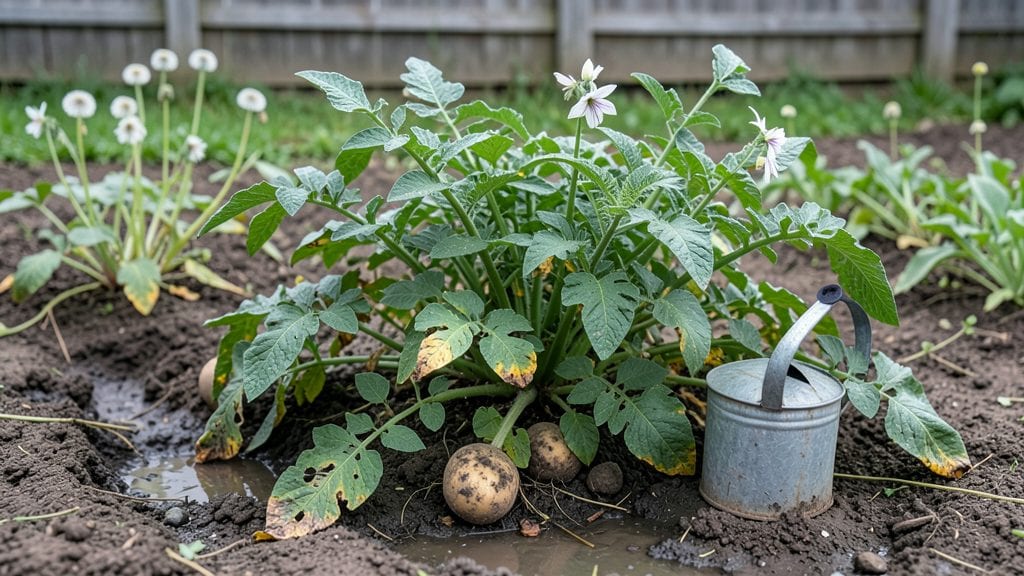
Overwatered potato plants can feel like a death sentence, but I’ve pulled mine back from the brink more times than I’d like to admit. That first wilted leaf or mushy stem sends a panic, but the fix is simpler than you’d think—drainage, airflow, and a little patience.
The key is acting fast before fungal rot sets in, and I’ll walk you through the exact steps that saved my harvest last summer.
Here’s the thing—potatoes hate soggy roots, and overwatering creates the perfect breeding ground for rot and disease. I learned this after drowning my tubers in a downpour week, where the soil stayed clingy for days.
The moment I adjusted my watering schedule and loosened the soil, new green shoots appeared within a week. You’ll need a few tools: a trowel, mulch, and maybe a fan for airflow if your garden stays damp.
By the end of this rescue, your plants will be breathing easier with firm, white tubers forming underground. The leaves might look rough at first, but within 2-3 weeks of proper care, you’ll see fresh growth and a chance at a decent harvest.
The secret? Let the top inch of soil dry out before watering again—your potatoes will thank you.
This works for backyard gardens, raised beds, or even container-grown potatoes. The principles stay the same: drainage first, then consistency. Let’s get those roots breathing again before it’s too late.
Root Causes Of Waterlogged Tubers
When your potato plants look drowned—wilting leaves, yellowing foliage, or mushy stems—it’s often a sign of overwatering. But why does excess moisture turn your garden’s potential goldmine into a soggy mess?
Let’s break down the science behind the struggle, so you can diagnose and fix the problem before it’s too late.
Potatoes hate soggy feet—literally. Their roots need aeration to absorb oxygen and nutrients efficiently. When soil drains poorly (common in clay-heavy or compacted ground), water pools around the roots, suffocating them. Here’s what happens:
- Oxygen starvation: Roots rely on air pockets in soil to breathe. Water fills these spaces, cutting off oxygen, which triggers anaerobic conditions—a root’s worst nightmare. Without oxygen, roots can’t process nutrients or grow properly.
- Fungal feasts: Stagnant water creates the perfect breeding ground for Phytophthora (a water mold) and Pythium, pathogens that rot roots and stems. These fungi thrive in moisture and can spread rapidly, turning healthy tubers to mush.
- Nutrient lockout: Excess water washes away essential nutrients like nitrogen and phosphorus, which potatoes need for robust growth. Even if you’re fertilizing, the plants can’t access them in waterlogged soil.
Actionable fix: Test your soil’s drainage by digging a 6-inch hole, filling it with water, and timing how long it takes to drain. If it’s slower than 4–6 hours, amend the soil with organic matter (compost, sand, or perlite) to improve aeration.
Potatoes are drought-tolerant once established—they store water in their tubers and don’t need daily drinks. Yet, many gardeners water on a fixed schedule without checking soil moisture, leading to chronic oversaturation. Here’s why this backfires:
- Surface runoff: Heavy or frequent watering causes water to pool on the soil surface instead of soaking in evenly. This creates localized soggy spots where roots can’t escape the deluge.
- Root bound stress: Potatoes grow deep, and shallow watering (like sprinklers) keeps the top layer wet while the lower roots dry out. This imbalance stresses the plant, making it vulnerable to disease.
- Temperature shock: Overwatering cools the soil too quickly, slowing root metabolism. Potatoes thrive in 60–75°F soil; cold, wet conditions stunt growth and invite rot.
Actionable fix: Switch to deep, infrequent watering—aim for 1–1.5 inches per week (including rain) and water early in the day so soil dries slightly before nightfall. Use a moisture meter or the finger test (stick your finger 2 inches into the soil; if it’s damp, wait).
Growing potatoes in containers or raised beds can backfire if drainage isn’t prioritized. Unlike in-ground gardens, these setups trap water like a sponge if not managed properly. Key issues include:
- No drainage holes: Pots without holes act as water traps. Even with good soil, excess water has nowhere to go, leading to root suffocation within days.
- Small volume = fast saturation: Containers dry out quickly but also retain moisture longer than ground soil. A sudden downpour or overwatering can turn the entire root zone into a swamp.
- Poor soil choice: Using garden soil or potting mix without perlite or vermiculite increases compaction, reducing airflow to roots.
Actionable fix: For containers, use a mix of 50% potting soil, 30% compost, and 20% perlite. Drill drainage holes in the bottom and add a 2-inch gravel layer at the base. Water only when the top 1–2 inches of soil are dry.
Understanding these root causes (pun intended) is the first step to reviving your potatoes. Next, we’ll tackle how to rescue waterlogged plants before it’s too late. 🚀
Revive Your Spuds: Step-by-Step Fixes
Overwatered potato plants can feel like a soggy mess, but don’t toss them yet! With the right care, you can nurse them back to health and still harvest delicious tubers. Below are targeted solutions for common symptoms of overwatering, paired with prevention tips to keep your spuds thriving.
Problem: Too much water suffocates roots, leading to yellowing leaves, wilting, or fungal issues like blight.
Fix It:
- 🔥 Stop watering immediately—let the soil dry out 1–2 inches deep before adding moisture again.
- 🍳 Check soil moisture by sticking your finger in the soil. If it’s damp past 1 inch, wait 2–3 days before watering.
- 👨🍳 Switch to deep watering—water deeply 1–2 times per week (instead of daily light sprinkles) to encourage strong root growth.
- 🥘 Use a moisture meter if you’re unsure—it takes the guesswork out of watering.
Prevention Tip: 💡 Mulch around plants (2–3 inches of straw or grass clippings) to retain moisture without drowning roots.
Problem: Compacted or clay-heavy soil traps excess water, preventing roots from breathing.
Fix It:
- ✨ Loosen the soil gently around the base of plants (but avoid disturbing tubers) to improve airflow.
- 🔪 Amend the soil with compost or perlite to boost drainage—mix in 1–2 inches of organic matter.
- 🎯 Elevate plant beds if possible (even a slight mound) to prevent water pooling.
Prevention Tip: 🌡️ Test your soil’s drainage—fill a jar with soil and water, then time how long it takes to drain. Ideal: 4–6 hours.
Problem: Overwatering weakens plants, making them prone to pests or disease.
Fix It:
- 🔪 Prune yellow or mushy leaves to redirect energy to healthy growth (but leave green foliage).
- 💪 Feed with balanced fertilizer (10-10-10) lightly—overwatered plants need nutrients but not too much at once.
- 🥗 Avoid nitrogen-heavy fertilizers (like blood meal) until the plant recovers, as they promote leafy growth over roots.
Prevention Tip: 🎯 Rotate crops—never plant potatoes in the same spot two years in a row to prevent soil-borne diseases.
Most overwatered potato plants show improvement in 7–14 days if drainage improves. If leaves stay yellow or mold appears, dig up a few tubers to check for rot—if they’re mushy, it’s time to replant.
Final Pro Tip: 🌟 Harvest early if recovery is slow—new potatoes (small tubers) can still be eaten, even if the plant isn’t fully revived!
Need a quick reference? Bookmark this table for future watering checks:
| Symptom | Likely Cause | Fix |
|---|---|---|
| Yellowing leaves | Overwatering or nutrient deficiency | Reduce water, add compost |
| Wilted stems | Root rot or fungal infection | Improve drainage, prune affected areas |
| Stunted growth | Poor soil or excess moisture | Amend soil, fertilize lightly |
Frequently asked questions
How can I tell if my potato plants are overwatered vs. underwatered?
Check the soil and leaves: Overwatered plants have yellowing leaves (especially lower ones), mushy stems, and soil that stays damp for days. Underwatered plants show crispy brown edges on leaves and dry, pulling soil. Stick your finger 2 inches deep—if it's soggy, you're overwatering; if bone-dry, underwatered.
Can I still save my potatoes if the stems are mushy and black?
If stems are mushy and black, fungal rot has likely set in. Dig up a few tubers to check—if they're soft or smelly, the plant won't recover. However, if only the stems are affected but tubers are firm, prune the rot immediately, improve drainage, and reduce watering. Act fast to prevent spread.
What's the best way to fix compacted soil around my potato plants?
Loosen the soil gently with a fork or trowel (avoid disturbing tubers), then mix in 2-3 inches of compost or perlite to improve drainage. For containers, add a 2-inch gravel layer at the bottom before replanting. Water deeply but less frequently to encourage roots to grow deeper.
How often should I water potato plants after they've been overwatered?
Wait until the top 1-2 inches of soil are dry (use your finger to test), then water deeply 1-2 times per week. Early morning is best—this gives soil time to dry before evening. Avoid wetting leaves to prevent fungal diseases.
Will my potatoes still grow if the leaves turn yellow from overwatering?
Yes, but focus on tuber development rather than foliage. Yellow leaves mean the plant is redirecting energy underground. Keep watering adjusted, prune only the worst yellow leaves, and avoid fertilizing until new green growth appears. Harvest new potatoes (small tubers) early if recovery is slow.