Watering
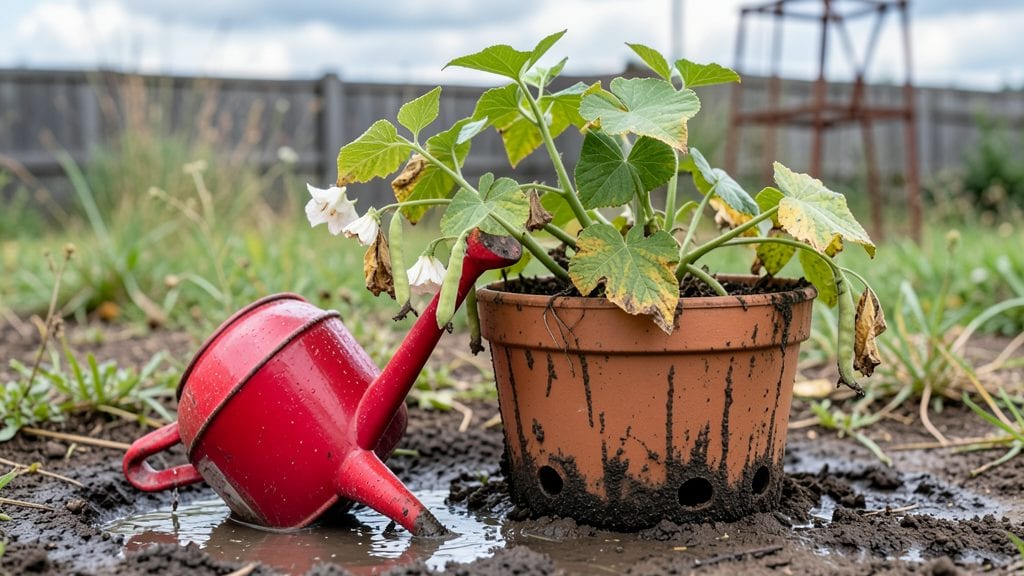
Overwatered bean plants look like sad, droopy ghosts instead of thriving vines. 🌱 I’ve pulled more wilting beans from soggy soil than I’d like to admit, but the good news is they’re tougher than they look—and with the right moves, you can nurse them back to life in just days.
The key is acting fast before root rot sets in.
Yellow leaves, mushy stems, and soil that smells like a swamp? Those are your warning signs. First, stop watering completely for 48 hours to let the roots breathe. Then, gently loosen the soil around the base with your fingers (no digging!) to improve airflow.
If the roots look black or slimy, trim the bad parts with clean scissors—this gives fresh roots a fighting chance.
Once you’ve drained the excess moisture, adjust your watering routine. Bean plants need about 1 inch of water per week, delivered only when the top inch of soil feels dry.
Well-draining soil is your best friend—amend heavy clay with compost or perlite if your garden holds onto water like a sponge. Within a week, you’ll see new green growth pushing through.
To keep your beans from turning into soggy messes again, water in the morning so leaves dry quickly, and avoid overhead sprinklers. Mulch around the base to regulate moisture, and always check soil moisture before watering—stick your finger in! With these tweaks, your beans will bounce back stronger than ever.
Root Causes Of Soggy Soil
Overwatering bean plants is often an accident—well-meaning gardeners may not realize how quickly excess moisture can suffocate roots. Understanding the science behind why this happens helps you prevent it before your plants turn mushy. Let’s break down the key culprits turning your garden into a swamp.
Beans thrive in well-draining soil, but many gardeners overlook this critical factor. If your soil is clay-heavy, compacted, or lacks organic matter, water pools around roots instead of draining away.
Even raised beds or containers can trap moisture if they lack drainage holes or use water-retentive materials like dense clay pots.
Why it matters: Roots need oxygen. When soil stays soggy for more than a day, anaerobic conditions develop, starving roots of the oxygen they need to absorb nutrients. This triggers root rot (often caused by fungi like Pythium or Phytophthora), which turns healthy roots into a mushy, brown mess.
Actionable fix:
- Test your soil’s drainage: Dig a 6-inch hole, fill it with water, and time how long it takes to drain. If it’s slower than 4 hours, amend with perlite, coarse sand, or compost.
- For containers, use pots with drainage holes and elevate them on feet or saucers to prevent waterlogging.
- Avoid planting beans in low-lying areas where water naturally pools.
Beans have shallow roots and don’t need daily drinks—especially in humid climates. Yet, many gardeners water on a fixed schedule rather than checking soil moisture. Factors like rainfall, temperature, and wind can drastically change how fast soil dries, but automatic routines don’t account for these variables.
Why it matters: Excessive watering displaces oxygen in soil pores, creating pockets where roots suffocate. It also leaches nutrients away, leaving beans malnourished even if they’re drowning. Over time, this weakens the plant’s immune system, making it vulnerable to pests and diseases.
Actionable fix:
- Use the finger test: Stick your index finger 1–2 inches into the soil. If it’s damp, wait. If it’s dry, water deeply but infrequently.
- Water in the morning so excess moisture evaporates during the day.
- Reduce frequency in rainy or humid conditions—beans can survive longer dry spells than you think!
Seedlings and mature bean plants have very different water needs. New sprouts need consistent moisture to establish roots, but once beans start flowering and podding, they become more drought-tolerant. Many gardeners keep watering at the same rate, unaware their plants are now overhydrated.
Why it matters: Overwatering at the wrong life stage stresses plants. For example:
- 🌱 Seedlings: Too much water can drown tender roots before they anchor.
- 🌼 Flowering stage: Excess moisture can cause blossom drop (flowers fall off before pollination).
- 🥜 Pod development: Waterlogged soil leads to splitting pods or poor flavor.
Actionable fix:
- Water seedlings lightly but frequently (every 1–2 days) until they’re 2–3 inches tall.
- Shift to deep, infrequent watering (once every 5–7 days) once beans flower.
- Mulch around plants to retain moisture without suffocating roots (use straw or shredded leaves, not thick layers).
Potted beans are especially prone to overwatering because containers dry out unevenly. Small pots, plastic materials, and lack of airflow create a greenhouse effect, trapping humidity and preventing evaporation. Even if you think you’re watering "just right," the soil might still stay too wet.
Why it matters: Plastic pots retain more moisture than terracotta or fabric grow bags. Without proper airflow, bacterial root rot (caused by Erwinia or Pseudomonas) can set in within days, turning roots to sludge. Overwatered potted beans also yellow leaves (from nutrient deficiencies) and stunted growth.
Actionable fix:
- Choose pots with drainage holes and use a well-draining mix (50% potting soil, 30% perlite, 20% compost).
- Upgrade to larger containers (at least 12 inches deep) for mature plants—they dry out slower.
- Let the top inch of soil dry out between waterings, even in pots.
- Avoid saucers that trap excess water—empty them after watering.
Pro tip: 💡 If your beans are already drowning, don’t panic—this next section covers how to rescue them in 3 simple steps!
Revive Your Bean Plants Now
Overwatered bean plants can feel like a hopeless cause, but with the right steps, you can nurse them back to health—even if their roots are soggy and struggling. The key is acting fast, diagnosing the damage, and giving your plants the care they need to bounce back.
Below, we’ve broken down practical, step-by-step fixes based on the most common causes of overwatering, plus tips to keep your beans thriving long-term.
Before doing anything else, halt further watering to prevent root rot from worsening. Soggy soil suffocates roots, cutting off oxygen and nutrients—so let the soil dry out slightly before taking action.
How to do it:
- Pause watering for 2–3 days to allow excess moisture to evaporate.
- Check soil moisture by sticking your finger 1–2 inches deep—if it’s damp, wait longer.
- Move potted beans to a shadier spot (if outdoors) or a cooler indoor location to slow evaporation.
✨ Pro Tip: If your beans are in containers, lift the pot to check the bottom. If it’s heavy with water, drain it immediately—stagnant water at the roots is a red flag!
Overwatered soil becomes compacted and oxygen-deprived. Loosen the roots and improve drainage to revive them.
🍳 For Potted Beans:
- Empty excess water from the saucer or tray underneath the pot.
- Gently remove the plant from its container and loosen the root ball with your fingers or a fork.
- Repot in fresh, well-draining soil (mix in perlite or sand for better aeration).
- Place the pot in a sunny spot (but avoid direct midday sun) and water lightly only when the top inch of soil feels dry.
👨🍳 For Garden Beans:
- Create drainage channels around the plant by making shallow trenches (1–2 inches deep) radiating outward.
- Add compost or coarse sand to the soil around the base to improve aeration.
- Mulch lightly (1–2 inches) with straw or shredded leaves to retain moisture without smothering the roots.
💡 Pro Tip: If the roots smell foul or look mushy, trim the damaged sections with sterilized scissors before repotting.
Once the soil is dry and roots are aerated, focus on gentle revival to rebuild strength.
🌡️ Adjust Watering Habits
- Water deeply but infrequently—aim for 1 inch of water per week (including rainfall), letting the top 2 inches of soil dry out between waterings.
- Water at the base (not overhead) to avoid fungal issues.
- Use a moisture meter if you’re unsure—it’s a game-changer for overwatering-prone gardeners!
🎯 Support Weak Plants
- Stake or cage your beans if they’re leaning or weak—they’ll need support as they recover.
- Fertilize lightly with a balanced, water-soluble fertilizer (like 10-10-10) to replenish lost nutrients.
Avoid heavy nitrogen—it encourages leafy growth at the expense of roots. - Monitor for pests (like aphids or spider mites), which thrive on stressed plants. Spray with neem oil if needed.
✨ Pro Tip: Morning watering is best—it gives leaves time to dry, reducing fungal risks.
Once your beans are back on track, avoid future overwatering with these habits:
- Test your soil—if it drains poorly, amend it with compost or sand.
- Use self-watering pots or drip irrigation for consistent moisture control.
- Group plants with similar water needs—beans prefer slightly drier conditions than leafy greens.
- Check the weather—adjust watering if rain is forecasted.
Final Thought: Overwatered beans can recover if you act quickly and adjust their environment. With patience and the right care, your plants will rebound—and you’ll become a watering pro in no time! 🌿💦
Frequently asked questions
How can I tell if my bean plants are overwatered vs. underwatered?
Check the soil and leaves: Overwatered beans have yellowing leaves, mushy stems, and soil that smells sour or rotten. Underwatered plants show crispy brown edges, drooping leaves, and dry soil that pulls away from the pot. Stick your finger 1-2 inches deep—if it's damp, you're overwatering; if bone-dry, underwatering.
Will my overwatered beans recover if I stop watering completely?
Not always—stopping watering alone isn't enough. Roots need time to dry out and recover, but you must also loosen compacted soil and improve drainage. For potted beans, repot in fresh soil; for garden beans, create drainage channels. Expect 5-7 days of minimal watering before gradual revival.
Can I save beans with black, mushy roots?
Trim the black, slimy roots with clean scissors and replant in fresh, dry soil. Healthy roots should be firm and white. If most roots are damaged, your plant may not survive—but act fast! Soak remaining roots in a hydrogen peroxide (3%) and water mix (1:1) for 10 minutes before replanting to prevent infection.
How often should I water beans after they recover?
Once revived, water beans deeply but infrequently—about 1 inch per week, including rainfall. Let the top 2 inches of soil dry between waterings. Morning watering prevents fungal growth, and mulching helps regulate moisture. Avoid soggy soil at all costs!
Are some bean varieties more prone to overwatering?
All beans struggle with excess moisture, but bush beans (like 'Blue Lake') recover faster than pole beans (like 'Kentucky Wonder') due to their shallower roots. For containers, choose dwarf varieties like 'Mascotte'—they tolerate slight drying better. Always prioritize well-draining soil regardless of variety.