
Watering
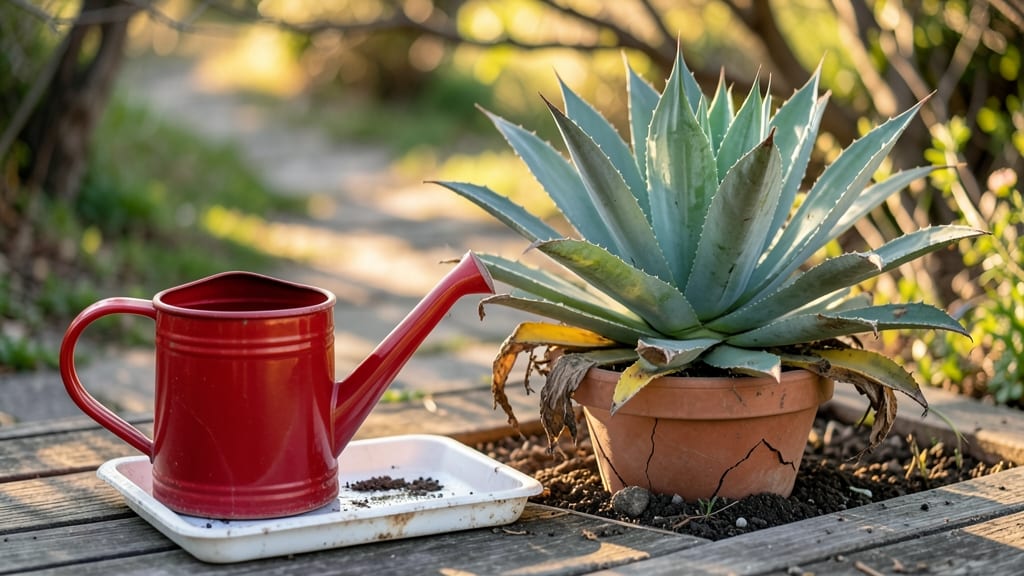
That overwatered agave plant with its mushy leaves and drooping fronds is clearly begging for help—so let’s fix it before it’s too late. 🌱 I’ve revived more than I can count, and the secret isn’t complicated: stop the watering and save those roots.
The moment you see yellowing at the base or blackened stems, time’s up on the usual watering schedule.
Agaves store water like sponges, but too much turns their roots to mush in days. First, halt all watering—yes, even if the soil feels dry. Then, gently remove the plant, trim any squishy roots (they won’t recover), and repot in cactus mix with extra perlite.
The goal? Drainage so aggressive it’d make a desert proud.
Within 2-3 weeks, you’ll see crisp, upright leaves returning as the roots firm up. Keep waterings to once every 3-4 weeks in summer (less in winter), and your agave will bounce back stronger. The key? Patience—succulents forgive mistakes, but only if you act fast.
This works for both potted agaves and those in ground beds (just improve drainage with gravel). Pro tip: stick a chopstick in the soil before watering—if it comes out dry after a week, wait another week. Your agave will thank you with bold, healthy growth by next season.
Why it happens
Agave plants thrive in arid conditions, making them particularly susceptible to overwatering. Unlike moisture-loving houseplants, agave roots are adapted to store water efficiently and detest prolonged dampness. When water accumulates around their roots for too long, a cascade of physiological stress begins—often silently, until it’s too late.
Here’s why your agave might be drowning in its own pot, broken down by the most common culprits:
💧 Overzealous Watering Habits
Agave plants are succulents, meaning they’ve evolved to survive drought, not soggy soil. Their roots are shallow and spread horizontally, designed to absorb brief rains rather than sustain prolonged moisture.
When you water on a fixed schedule (e.g., every week regardless of conditions), you risk creating a waterlogged environment. Here’s the science:
- Oxygen deprivation: Soil pores fill with water, displacing oxygen that roots need to respire. Without oxygen, root cells suffocate, leading to anaerobic conditions—a silent killer for agave.
- Fungal infections: Excess moisture creates the perfect breeding ground for Phytophthora and Pythium, fungi that rot roots by breaking down cell walls. Agave’s natural resistance weakens when roots are waterlogged for more than 48 hours.
- Nutrient imbalance: Overwatering leaches vital minerals (like nitrogen and potassium) from the soil, while excess water dilutes the remaining nutrients, starving the plant even as it appears "hydrated."
Actionable fix: Shift to the "finger test"—stick your finger 2 inches into the soil. If it’s dry, water; if damp, wait. Agave should go weeks between drinks in warm weather, even longer in winter.
🌊 Poor Drainage: The Silent Saboteur
Even with perfect watering habits, agave roots can drown if the pot or soil lacks proper drainage. The issue isn’t just how much you water, but how long the water lingers. Here’s why drainage fails:
- Clogged pots: Over time, mineral deposits (from tap water) or decomposed organic matter can block drainage holes. Agave pots should have at least 3–4 holes near the bottom to allow excess water to escape within 10–15 minutes of watering.
- Compacted soil: Heavy or clay-based potting mixes retain water like a sponge. Agave needs gritty, fast-draining soil (60% mineral grit like perlite or pumice, 30% cactus/succulent mix, 10% organic matter like worm castings).
- No saucer escape: If your pot sits in a saucer or tray without drainage, water pools at the roots indefinitely. Agave roots cannot tolerate wet feet—even for a day.
Actionable fix: Repot your agave in a terracotta or fabric pot (which wicks moisture) with a 2-inch layer of gravel at the bottom. Avoid saucers unless they’re drainage-free (e.g., elevated stands).
🌡️ Temperature and Humidity Mismatch
Agave plants are native to deserts, where high temperatures and low humidity prevent water from lingering. When these conditions change—like moving your agave indoors or to a humid climate—its water needs shift dramatically. Here’s how:
| Condition | Effect on Agave | Watering Adjustment |
|---|---|---|
| High humidity (>50%) | Slows evaporation, keeping soil moist longer. Roots suffocate faster. | Water 50% less frequently; let soil dry completely between waterings. |
| Low temperatures (<50°F/10°C) | Metabolism slows; roots absorb water 3x slower than in heat. | Water monthly or less in winter. Avoid watering if soil is even slightly damp. |
| Indoor heating/AC | Dry air increases transpiration (water loss), but central heating can create "hot spots" where soil dries unevenly. | Monitor soil moisture zone by zone—roots near vents may dry faster than others. |
Actionable fix: Use a hygrometer to track humidity. In winter, move agave to a bright, cool spot (like a sunroom) and reduce watering to once every 4–6 weeks.
🌱 Pot Size and Root Bound Stress
Agave roots are not deep—they spread outward to capture brief desert rains. When crammed into a pot that’s too large, the excess soil stays damp for days, trapping moisture around the roots. Here’s the breakdown:
- Overpot syndrome: A pot 2+ inches wider than the root ball holds 30–50% more water than the plant can use. Agave roots rot in 3–5 days if submerged.
- Slow-draining soil volume: Bigger pots = more soil = longer drying time. A 6-inch pot may take 2 weeks to dry fully, even in heat.
- Competition for oxygen: Dense soil in large pots creates anaerobic pockets, where roots suffocate even if the top layer looks dry.
Actionable fix: Repot only when roots circle the pot (every 2–3 years). Choose a pot just 1–2 inches wider than the root ball. Never upgrade pot size if your agave is already overwatered—wait until it’s revived.
Reviving your overwatered agave plant
An overwatered agave can feel like a lost cause—those plump, droopy leaves and mushy stems might leave you wondering if your plant is beyond saving. But don’t toss it just yet! With the right approach, you can nurse your agave back to health and restore its iconic, architectural beauty.
Below, we’ll break down the most common signs of overwatering and the practical fixes to bring your agave back from the brink. Plus, we’ll share prevention tips to keep your plant thriving long-term.
The first rule of agave recovery? Cut off the water. Agaves are succulents, meaning they’re adapted to dry conditions and store water in their leaves. Overwatering suffocates their roots, leading to rot. Until you can assess the damage, let the soil dry out completely.
How to do it:
- ⏰ Pause watering for at least 1-2 weeks. This gives the roots time to recover and prevents further stress.
- 🌡️ Check soil moisture by sticking your finger 2 inches into the soil. If it’s damp, wait longer.
- 🚰 If repotting is needed, remove the plant from its current container and let the roots air-dry for a few hours before replanting (more on this below).
Pro tip: If your agave is in a decorative pot without drainage holes, consider transferring it to a cache pot with drainage to prevent future waterlogging.
Before you can revive your agave, you need to know how bad the damage is. Healthy agave roots should be firm, white, or light tan. If they’re mushy, black, or smell foul, they’re rotting and need to be trimmed.
How to check:
- 👨🍳 Gently remove the plant from its pot and brush off excess soil.
- 🔪 Inspect the roots:
- ✅ Healthy roots: Firm, white, or light brown.
- ❌ Rotten roots: Soft, black, or oozing—trim these with sterilized scissors.
- 🧴 Optional: Dip trimmed roots in a fungicide (like hydrogen peroxide or cinnamon powder) to prevent infection.
Pro tip: If more than half the roots are rotted, your agave may not survive. However, even a few healthy roots can regrow into a new plant with patience!
Once you’ve trimmed the bad roots, it’s time to give your agave a fresh start. The key is using well-draining soil and a container that won’t trap moisture.
How to repot:
- 🏺 Choose the right pot: Select a container with drainage holes (or drill some if needed). Terracotta pots are ideal—they allow moisture to evaporate.
- 🌱 Use cactus/succulent mix: Combine 50% potting soil, 30% perlite or pumice, and 20% coarse sand (or buy a pre-mixed succulent blend).
- 🌍 Plant at the right depth: Bury the agave just enough to hold it steady—don’t bury the base of the leaves, as this can cause rot.
- 💧 Water lightly only after 3-5 days. This gives the roots time to adjust without drowning.
Pro tip: If your agave is very large or top-heavy, stake it lightly with a small wooden stick to prevent toppling while it recovers.
Agaves are sun lovers, and proper light exposure speeds up recovery. However, too much direct sun too soon can stress a weakened plant. Balance is key!
How to adjust:
- 🌞 Start with bright, indirect light for 1-2 weeks, then gradually reintroduce 6+ hours of direct sunlight daily.
- 🌡️ Keep temperatures stable: Agaves thrive in 70–90°F (21–32°C). Avoid drafts or cold windowsills.
- 💨 Improve airflow: Place a small fan nearby (on low) to prevent humidity buildup around the plant.
Pro tip: If your agave is outdoors, move it to a sheltered spot (like a patio or under a pergola) to protect it from heavy rain while it recovers.
Once your agave is back on track, follow these habits to prevent future overwatering:
- 📅 Water on a schedule: Agaves need water only when the soil is completely dry—typically every 2–4 weeks, depending on climate. Stick your finger in the soil to test!
- 🏺 Use the right pot: Always choose containers with drainage holes. If using decorative pots, place them in cache pots with drainage.
- 🌱 Soil matters: Never use regular potting soil—succulent mixes or amended soil with perlite/sand is a must.
- 🌧️ Watch the weather: Reduce watering in humid months or during rainy seasons. Agaves hate soggy soil!
- 🔄 Rotate your plant: Agaves grow toward the light. Rotate the pot every few months to ensure even growth and prevent leaning.
Pro tip: If you’re unsure whether your agave needs water, underwater slightly—it’s better than overdoing it. A wrinkled or slightly shriveled leaf is a sign it’s thirsty, not dead!
With patience and the right care, your overwatered agave can bounce back stronger than ever. Keep an eye on its progress, and soon you’ll be admiring its striking rosette and spiky charm once again! 🌵✨
Frequently asked questions
Why do agave leaves turn yellow when overwatered?
Yellowing leaves signal root rot from excess moisture. Agaves store water in their leaves, so soggy roots force the plant to dump water through the foliage. Check for mushy stems and blackened roots—these confirm overwatering. The fix? Stop watering immediately and repot in gritty, fast-draining soil.
Can I save an agave with blackened, mushy stems?
Possibly! Trim away all blackened tissue down to healthy green tissue, then let the cut ends dry for 24 hours. Repot in cactus mix with perlite and avoid watering for 5-7 days. If the base remains firm, new growth may emerge within 4-6 weeks.
How often should I water agave after recovery?
Once revived, water agave only when the soil is bone-dry—typically every 3-4 weeks in summer (less in winter). Stick your finger 2 inches deep: if dry, water thoroughly; if damp, wait. Agaves prefer drought over soggy soil.
What's the best pot material for preventing overwatering?
Terracotta pots are ideal—they wick moisture away and dry faster than plastic. For decorative pots without drainage, use a cache pot with holes underneath. Fabric grow bags also work well for airflow. Always ensure 3+ drainage holes in the container.
Will my agave grow back if I cut off all the rotten roots?
Yes, but only if healthy roots remain. Even a single healthy root can regenerate the plant! After trimming, treat cuts with cinnamon powder (natural fungicide) and repot in fresh, dry soil. Keep light bright but indirect for 2 weeks3-8 weeks.