
Companion Plants
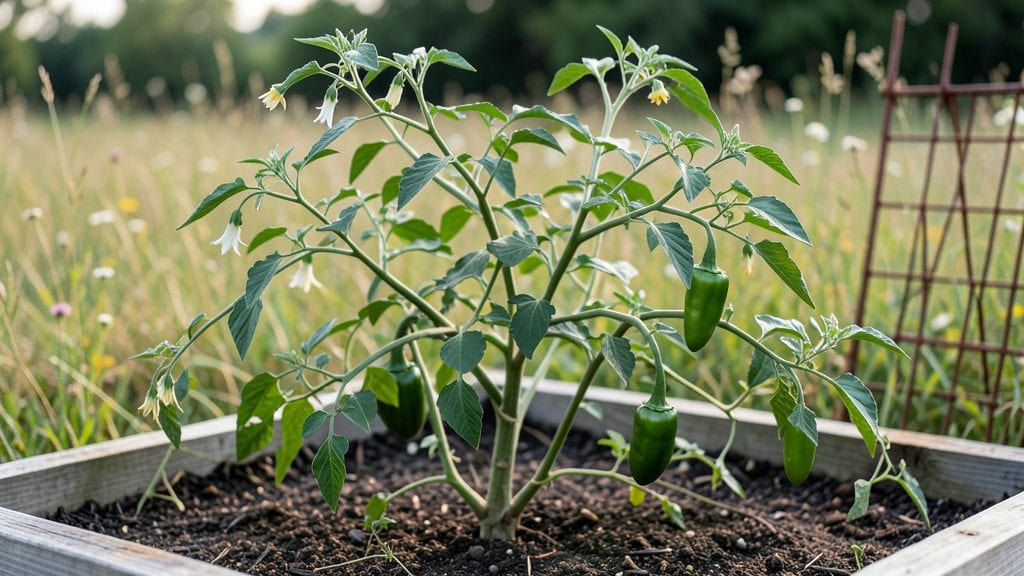
Leggy pepper plants stretch for light like desperate hands—it’s a classic sign your plants are begging for better conditions. I’ve turned my own overgrown peppers into bushy, productive powerhouses by focusing on three key fixes: pruning, light, and spacing.
The difference between sad, spindly stems and thick, fruit-loaded bushes often comes down to a few sharp cuts and a sunny spot.
Most leggy plants suffer from either too little light or too much competition. My first season, I crammed peppers too close together, and they bolted upward instead of branching out. The fix?
Prune the main stem just above a leaf node where you want new growth, and suddenly those weak stems thicken and send out sturdy side branches. A south-facing window or grow light can work wonders too—peppers need 6+ hours of direct sun daily to stay compact and productive.
After trimming, your plants will focus energy on filling out instead of reaching. Within 2-3 weeks, you’ll see thicker stems and new leaves forming at the pruned spots. The payoff? More flowers, more peppers, and plants that actually support their own weight.
Plus, you’ll avoid the heartbreak of peppers snapping under their own fruit load—something that’s happened to me more times than I’d like to admit.
This works for bell peppers, jalapeños, and even chiles, whether you’re growing in containers or garden beds. The key is acting fast—once plants get too tall, they’re harder to recover. Let’s get those leggy stems under control before it’s too late.
The Root Causes Behind Tall, Thin Peppers
Leggy pepper plants aren’t just a cosmetic issue—they’re a sign your plants are struggling to balance growth and energy. Understanding the why behind those stretched stems is the first step to fixing it.
Let’s break down the science behind why your peppers reach for the sky instead of packing on fruit.
Peppers are light-hogs, and when they don’t get enough, they stretch like teenagers in search of a growth spurt. This phenomenon, called etiolation, occurs when plants prioritize stem elongation over leaf and fruit development to reach sunlight.
- Why it happens: In low-light conditions, peppers produce less chlorophyll (the green pigment that fuels photosynthesis).
To compensate, they grow taller and thinner to access more light, but their leaves stay small and weak. - Actionable clue: Check for pale, sparse leaves or stems leaning toward a window or grow light.
If your plants look like they’re doing a "reach" for the ceiling, light deprivation is likely the culprit.
Peppers thrive in consistent warmth (70–85°F during the day, 60–70°F at night). When temperatures dip or spike unexpectedly, they enter survival mode—prioritizing vertical growth over fruiting.
- Why it happens: Cold stress (below 55°F) slows photosynthesis, while heat stress (above 90°F) can scorch leaves, forcing the plant to redirect energy upward. Even drafts or sudden temperature swings trigger this response. - Actionable clue: Leggy growth paired with yellowing leaves or stunted fruit?
Your peppers might be fighting temperature stress. Check for drafts, poor airflow, or inconsistent heating/cooling.
When pepper plants are packed too closely together, they compete for nutrients, water, and light. The result? Stretched, weak stems as they desperately try to outcompete neighbors.
- Why it happens: Crowded plants experience shading (blocked light) and moisture competition (roots struggle to absorb water efficiently).
Poor airflow also increases humidity around the plant, promoting fungal issues, which further stresses the pepper. - Actionable clue: Look for plants with elongated stems but few leaves or flowers. If your garden bed or container feels like a sardine can, overcrowding is the likely cause.
Peppers need a balanced diet, but an overabundance of nitrogen (N)—often from over-fertilizing or using high-N lawn fertilizers—tricks plants into focusing on leafy growth instead of fruiting.
- Why it happens: - Excess nitrogen = Lush foliage but weak stems (think "all leaves, no peppers"). - Phosphorus (P) deficiency = Poor root and flower development, leading to leggy, unfocused growth. - Actionable clue: If your plants have vibrant green leaves but no flowers or fruit, you’re likely overdoing nitrogen.
Yellowing leaves with purple stems? Phosphorus might be the missing link.
When peppers are transplanted too early (before soil warms) or into root-bound containers, they divert energy to establishing new roots instead of growing strong stems.
- Why it happens: - Cold soil slows root growth, forcing the plant to stretch upward. - Root-bound pots (where roots circle the container) restrict nutrient uptake, triggering a "panic grow" response. - Actionable clue: Leggy plants right after transplanting?
Or peppers in small pots with roots poking out? Your plants are playing catch-up.
Peppers hate drought stress and overwatering—both can lead to leggy growth. Uneven moisture triggers survival mechanisms, including rapid stem elongation.
- Why it happens:
- Underwatering = Roots struggle to absorb nutrients, so the plant stretches to find water.
- Overwatering = Roots suffocate, leading to poor nutrient uptake and weak stems.
- Actionable clue: Check the soil 1–2 inches down—if it’s bone-dry or soggy, your watering routine is disrupting growth.
Some pepper varieties are bred for longer growing seasons or specific climates. If you’re growing a hot-climate pepper (like a jalapeño) in a short-season zone, it may focus on stretching instead of maturing.
- Why it happens: Peppers like bell peppers or long-season varieties need warmth to fruit.
If days shorten or temps drop before they’re ready, they’ll prioritize survival over harvest. - Actionable clue: If leggy growth happens every year around the same time, your variety might not be suited for your growing zone.
Quick Fixes for Tall, Weak Plants
When your pepper plants stretch tall and spindly instead of growing sturdy and productive, it’s time to take action. The good news? Most leggy pepper plant issues can be reversed with simple adjustments.
Below, we’ll break down the most common causes and provide practical, step-by-step solutions—plus tips to keep your plants healthy and thriving long-term.
Problem: Leggy growth is often a cry for more sunlight. Peppers need 6–8 hours of direct light daily—any less, and they’ll stretch toward the nearest light source, weakening stems and reducing fruit production.
How to Fix It: 🔥 Move plants to a sunnier spot (indoors or outdoors). 🍳 Rotate pots weekly (180°) to ensure even growth. 👨🍳 Use a grow light if natural light is insufficient (LED or fluorescent bulbs work well). ⏰ Extend daylight hours in short-day seasons with a timer-controlled light (14–16 hours total).
Prevention Tip: 💡 Start seeds under grow lights (12–16 hours/day) before transplanting outdoors. This hardens them for sunlight and prevents shock.
Problem: Overwatering or inconsistent moisture stresses plants, leading to weak stems and leggy growth. Peppers hate soggy roots but also need steady hydration.
How to Fix It: 💧 Water deeply but less frequently—aim for 1 inch per week (check soil moisture 1–2 inches down). 🔪 Ensure pots have drainage holes to prevent root rot. 🌡️ Water in the morning to reduce evaporation and fungal risks.
Prevention Tip: ✨ Use mulch (straw or shredded leaves) to retain moisture and regulate soil temperature.
Problem: Leggy plants often have overgrown stems with few leaves, reducing photosynthesis and fruit production. Strategic pruning encourages compact, stronger growth.
How to Fix It: ✂️ Pinch off the tips of leggy stems (just above a leaf node) to promote branching. 🌿 Remove lower leaves touching the soil to improve airflow and reduce disease. 🍅 Focus on the top 3–4 nodes—prune aggressively if the plant is severely leggy, but leave some foliage for energy.
Pro Tip: 🎯 Prune in the morning when plants are hydrated and can recover faster.
Problem: Poor soil or nutrient imbalances (especially nitrogen-heavy fertilizers) can cause weak, leggy growth. Peppers need a balanced diet of nitrogen, phosphorus, and potassium.
How to Fix It: 📊 Test your soil (or use a simple DIY kit) to check pH (ideal: 6.0–6.8) and nutrient levels. 💪 Feed with a balanced fertilizer (e.g., 10-10-10 or 5-5-5) every 4–6 weeks during growing season. 🥗 Add compost or worm castings for organic nutrients and microbial activity.
Prevention Tip: 🔥 Avoid over-fertilizing with nitrogen—it promotes leafy (but weak) growth at the expense of fruit.
Problem: Peppers are heat-loving (ideal: 70–85°F) and struggle in cool or humid conditions, leading to slow, leggy growth.
How to Fix It: 🌡️ Move plants to a warmer spot (avoid drafts or cold windowsills). 🌬️ Improve airflow with a small fan (especially indoors) to prevent fungal issues. 💦 Reduce humidity (if too high) with a dehumidifier or by spacing plants further apart.
Prevention Tip: 🌿 Start seeds in a warm environment (70–80°F) to avoid weak seedlings.
To keep your pepper plants strong, bushy, and productive, follow these proactive steps:
- Choose the right variety—some peppers (like jalapeños) are more compact than others.
- Use larger pots (5+ gallons) for better root development.
- Transplant seedlings deeply—bury up to the first true leaves to encourage root growth.
- Monitor pests early—aphids and spider mites can stress plants, leading to leggy growth.
By addressing light, water, pruning, nutrients, and environmental factors, you’ll transform weak, leggy peppers into sturdy, fruit-bearing powerhouses in no time! 🚀
Frequently asked questions about leggy pepper plants
Why do my pepper plants grow so tall and thin instead of bushy?
Leggy growth happens when peppers stretch for light due to insufficient sunlight, overcrowding, or nutrient imbalances. Without enough light, they prioritize vertical growth over leaf and fruit production. Check for pale stems or plants leaning toward windows—these are clear signs they need more brightness.
Can I still save leggy pepper plants, or is it too late?
It’s never too late to fix leggy peppers! Prune the main stem just above a leaf node to encourage branching, and move them to a sunny spot (or under grow lights). Within 2-3 weeks, you’ll see thicker stems and new growth. For severe cases, consider staking or caging to support weak stems.
How often should I prune leggy pepper plants?
Prune leggy peppers once every 2-3 weeks during the growing season, focusing on the top 3-4 nodes. Avoid over-pruning—remove only the most elongated stems to redirect energy to stronger growth. Always use clean, sharp scissors to prevent disease.
Will leggy pepper plants still produce fruit?
Yes, but leggy plants often yield smaller harvests because their energy goes into stem growth instead of fruit development. To maximize production, prune early, ensure 6+ hours of sunlight daily, and fertilize with a balanced formula (like 10-10-10) to encourage fruiting over foliage.
What’s the best way to prevent leggy growth next season?
Start with proper spacing (18-24 inches apart for bush varieties), use larger containers (5+ gallons), and provide consistent warmth (70-85°F). Begin seeds under grow lights, and transplant only after soil reaches 60°F+ to avoid stress-induced stretching.