
Companion Plants
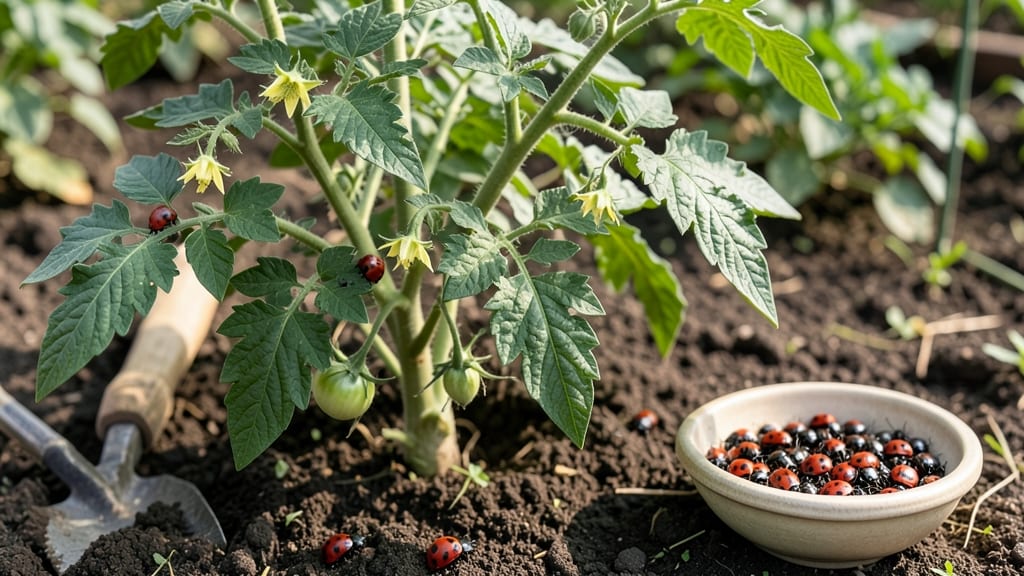
Ladybugs for plants serve as natural pest controllers by consuming aphids, mites, and other garden pests, cutting down the need for chemical treatments while fostering a balanced garden ecosystem. For optimal results, release them during early morning or evening hours.
These tiny but mighty insects are nature's pest patrol, with each adult capable of eating 5,000 pests in its lifetime. 🌿 Their bright coloration isn't just for show—it acts as a warning to predators while helping them spot aphid colonies from a distance.
The key to their effectiveness lies in their life cycle: eggs hatch into larvae that voraciously consume pests before transforming into the adult form we recognize. Unlike some beneficial insects, ladybugs specifically target harmful pests while leaving pollinators like bees untouched.
When introducing them to your garden, timing matters most. Spring and fall releases work best when temperatures are mild, and you should avoid releasing them during peak heat or when other predators like birds are active.
I always recommend placing them near neighborhood plants like dill or fennel, which they naturally gravitate toward for shelter and food. The first 24 hours after release are critical—they need time to acclimate before becoming fully active hunters.
💡 In This Article
- How Ladybugs Hunt and Consume Garden Pests
- Best Ways to Introduce Ladybugs to Your Garden
How ladybugs hunt and consume garden pests
Ladybugs are precision hunters with a diet specialized for soft-bodied pests. Their compound eyes give them a 360-degree field of vision, allowing them to spot aphid colonies from up to 10 feet away. The secret weapon?
Their antennae, which detect chemical signals (pheromones) released by stressed plants under aphid attack. When they locate prey, they use their sharp mandibles to pierce the soft exoskeletons of aphids, mites, and even young caterpillars—consuming up to 50 pests per day as adults.
Their life cycle is a pest-control powerhouse: eggs (laid in clusters on leaves) hatch into larvae that are even more voracious than adults. These larvae can eat 400 aphids in just 2 weeks, growing from 1/8-inch to nearly 1/2-inch long.
What's fascinating is their climate adaptability—species like the seven-spotted ladybug thrive in temperate zones, while Asian lady beetles dominate warmer climates. Their preference for aphids (which produce honeydew) over beneficial insects like bees stems from aphids' high sugar content and lack of defensive mechanisms.
Temperature plays a critical role in their hunting efficiency. Below 50°F, they become sluggish, while above 85°F, they seek shade and reduce activity. This is why releasing them during spring or fall (when temps are 55-75°F) gives them optimal hunting conditions.
Their hunting strategy also includes group foraging: when one ladybug finds a food source, it releases pheromones to attract others, creating a swarm effect that can wipe out entire pest populations in days.
Here's what makes them selective predators: their proboscis (a straw-like mouthpart) is perfectly designed to suck fluids from soft-bodied insects, making them ineffective against hard-shelled pests like beetles. This specialization ensures they don't compete with birds or spiders for food.
Interestingly, their bright coloration isn't just for show—it contains pyrazines, a chemical that makes them taste bitter to predators, while their yellow legs act as visual signals to other ladybugs during hunting.
What most gardeners don't realize is their seasonal dormancy strategy. In winter, they enter diapause (a suspended state) in leaf litter or bark, emerging when temperatures rise above 60°F. This natural behavior means they'll often return to the same garden year after year if given proper shelter.
Their ability to consume 5,000 pests in a lifetime translates to 90% fewer aphids in treated gardens compared to untreated plots, making them one of nature's most efficient pest control systems.
The key to their effectiveness lies in their multi-stage life cycle and climate adaptation. Each stage—egg, larva, pupa, adult—plays a role in pest control, with larvae being particularly aggressive hunters. Their preference for aphids (which multiply rapidly) means they provide exponential pest reduction over time.
For gardeners, this means fewer chemical sprays and healthier plants that develop stronger natural defenses against future infestations.