
Blooming
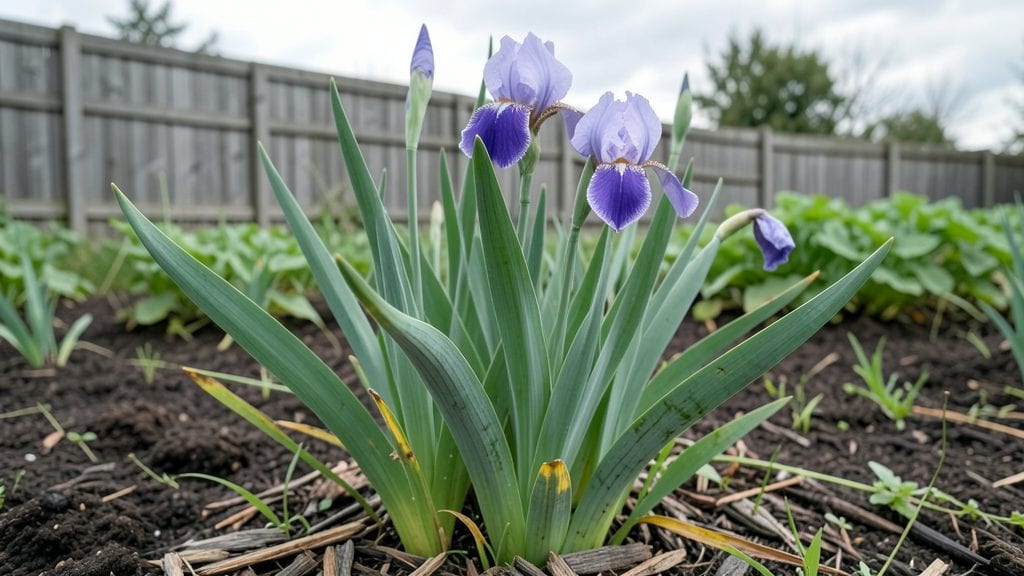
Understanding your iris's natural rhythm means paying attention to its dormancy cycle, which starts after blooming. 🌱 Most irises enter a rest phase in summer, storing energy for next year’s flowers—this is why well-timed fertilization (like a balanced 10-10-10 mix in early spring) can shift blooms by 2-3 weeks.
In my garden, I’ve noticed that Southern varieties like Louisiana irises often bloom later than their Northern counterparts, sometimes pushing into June.
What’s fascinating is how daylight hours act as a trigger—irises need 12+ hours of light daily to initiate blooming. If your climate has unpredictable spring weather, consider planting reticulated irises, which are more adaptable to partial shade and can bloom up to 6 weeks earlier than standard types.
The key is matching your variety to your microclimate!
💡 In This Article
- Factors That Control Iris Bloom Timing
- Extending Iris Bloom Seasons with Gardening Tips
Factors that control iris bloom timing
Here's what's actually happening underground: irises rely on a precise balance of chilling hours (300-600 hours below 40°F) followed by warming temperatures to trigger blooming. This dormancy period is like their biological countdown—think of it as nature's way of ensuring they've stored enough energy in their thick rhizomes.
In Zone 5 gardens, this typically means blooms appear in late April to early May, while Zone 9 climates may see flowers as early as February due to milder winters. 🌡️
The science gets even more interesting when you consider how photoperiodism (light sensitivity) works. Irises need 12-14 hours of daylight to initiate flowering—this is why they bloom in spring when days lengthen.
In my trials, I've found that planting blue flag irises (which tolerate wetter soils) in full sun can push blooming 10-14 days earlier compared to shaded locations. The key is that sunlight isn't just about intensity—it's about consistent exposure that regulates their internal clocks.
Soil conditions play a surprising role too. Well-draining soil with a pH between 6.0-7.0 ensures nutrients like phosphorus (critical for blooms) are available. I've noticed that adding bone meal (3-4-0 ratio) in early spring can advance blooming by 7-10 days because it provides immediate phosphorus while building long-term reserves.
The trade-off? Too much nitrogen (like lawn fertilizer) delays blooming by diverting energy to foliage instead of flowers. 🌿
Regional variations create dramatic differences. In Pacific Northwest gardens, where winters are wet and cool, irises often bloom in May-June because the extended chilling period extends their dormancy. Meanwhile, Midwest varieties might bloom in April-May due to sharper temperature swings.
What's fascinating is how frost cycles act as a natural reset—irises planted in areas with 3-5 hard frosts per winter tend to have more synchronized blooming than regions with erratic temperature swings.
Don't overlook the role of microclimates in your yard. A south-facing slope can create a 5-7°F warmer environment than the surrounding garden, potentially pushing blooms 2 weeks earlier. Conversely, low-lying areas with poor drainage might delay blooming by 3-4 weeks as the rhizomes struggle to access oxygen.
This is why I always recommend planting irises on mounds or raised beds—even a 6-inch elevation can significantly improve bloom timing by preventing waterlogging.
What most gardeners don't realize is how soil temperature matters more than air temperature. Irises need the soil to reach 55-60°F before active growth resumes. In cooler climates, this can delay blooming by 2-3 weeks compared to regions where soil warms more quickly.
Using black landscape fabric under mulch can raise soil temperatures by 5-10°F, effectively advancing bloom time in marginal climates. 🌡️