
Succulent
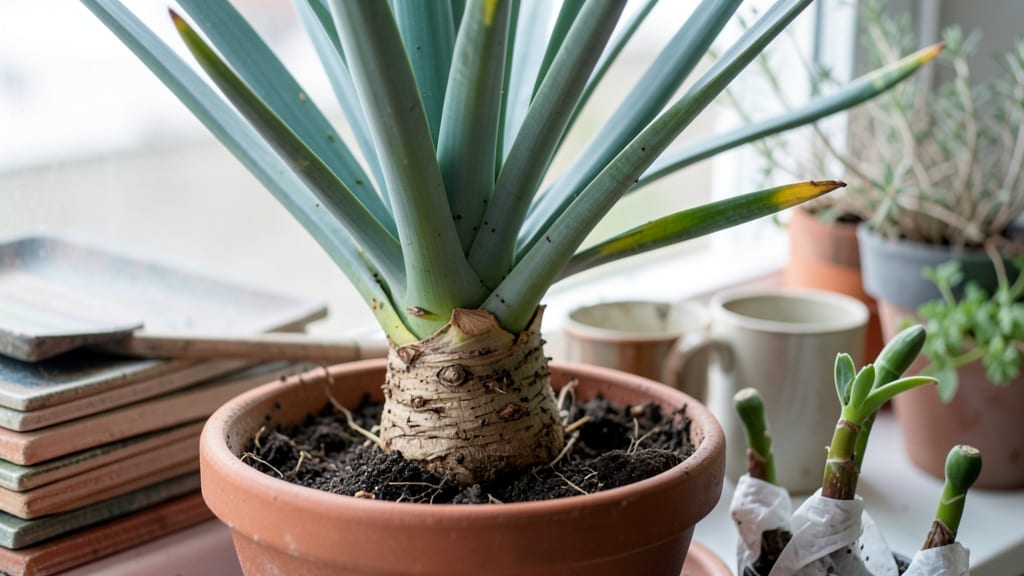
Transplanting a yucca plant feels like giving it a fresh start—when done right, it bounces back stronger than ever. 🌱 I’ve moved mine twice, and the key is timing: late spring or early fall, when temperatures are mild and the plant’s energy isn’t focused on blooming or dormancy.
The trick is handling those thick roots gently—yuccas hate soggy soil, so we’re aiming for fast establishment without overwatering. You’ll need well-draining soil, a pot just 2-3 inches larger than the root ball, and a sunny spot that mimics its desert origins.
Even a slightly stressed yucca recovers fast if you follow these steps.
📚 In This Guide
- What you need
- Instructions
- Tips and common mistakes
- Wrapping up and next steps
What you need
- ● New pot: Choose a container 1-2 inches larger in diameter than the current one, with drainage holes (terracotta or ceramic works best).
- ● Well-draining potting mix: A blend of cactus/succulent soil (60%), perlite or pumice (20%), and sand or grit (20%) to prevent root rot.
- ● Trowel or garden shovel: For digging and loosening roots.
- ● Gloves: To protect your hands from sharp leaves.
- ● Watering can or hose with a gentle spray nozzle: For post-transplant hydration.
- ○ Pruning shears (optional): To trim damaged roots or overgrown foliage.
- ○ Rooting hormone (optional): Speeds up recovery if repotting a large or stressed plant.
- ● Mulch (gravel or pebbles): Adds a decorative touch and regulates soil moisture.
- ● Plant support (stake or cage): For tall yuccas that may need stability after transplanting.
- ● Fertilizer (balanced, low-nitrogen): Apply lightly 4-6 weeks after transplanting.
Step-by-step instructions for transplanting a yucca plant
Here’s how to move your yucca with minimal shock—your plant will thank you.
🪴 Step 1: Choose the Right Time and New Location
Yuccas thrive when transplanted during their active growing season, which is late spring or early summer. This gives them 6-8 weeks to establish roots before winter dormancy. Pick a spot with full sun (at least 6 hours daily) and well-draining soil—yuccas hate soggy roots. If your current location is shady or waterlogged, this is your sign to relocate.
Measure the new hole twice as wide as the root ball and 1-2 inches deeper than the current pot. Yuccas need space for their roots to spread, so don’t skimp on the width. If you’re moving to a container, ensure it’s 2-3 inches larger in diameter than the current pot. The extra room prevents root binding, which stresses the plant.
💧 Step 2: Water and Prepare the Plant for Moving
Water your yucca 1-2 days before transplanting—this ensures the root ball stays intact and reduces transplant shock. The soil should be moist but not dripping wet. If your yucca is in a pot, gently tap the sides to loosen the root ball from the container. For in-ground plants, dig a 12-inch circle around the base to avoid damaging roots.
Here’s the thing—yuccas are tough, but their roots are brittle. Wrap the root ball in burlap or a tarp if you’re moving it a distance. This protects the roots from tearing. If you’re transplanting in-ground to in-ground, slide the root ball onto a tarp first, then lift it out. You’ll see why this helps when you avoid broken roots.
☀️ Step 3: Dig and Plant with Proper Spacing
Dig the new hole and set the yucca in so the top of the root ball sits level with the ground. Yuccas don’t like being buried too deep—this can rot the base. If you’re unsure, check the original planting depth by comparing the soil line on the stem to the surrounding ground. Fill the hole with the native soil (or amended soil if your original mix was poor) and tamp it down lightly to remove air pockets.
Water deeply right after planting to settle the soil and eliminate air gaps. You’ll notice the soil sink slightly—this is normal. Add a 1-2 inch layer of gravel or sand around the base if your soil drains poorly. This mimics the rocky, arid conditions yuccas love. Avoid mulching heavily; yuccas prefer minimal organic matter near the base.
✂️ Step 4: Care for the Yucca Post-Transplant
Keep the soil moist but not soggy for the first 2-3 weeks—this helps roots establish without rotting. Water deeply every 5-7 days, then reduce to once every 2-3 weeks once established. Overwatering is the #1 killer of newly transplanted yuccas. You’ll know it’s time to cut back when you see new growth at the tips of the plant.
Wait 4-6 weeks before fertilizing—this gives the roots time to adjust. Use a balanced, slow-release fertilizer (like 10-10-10) at half strength. Avoid high-nitrogen fertilizers; they encourage leafy growth at the expense of hardiness. If you notice yellowing leaves, it’s usually a sign of overwatering, not under-fertilizing.
Tips & tricks for stress-free yucca transplanting
Transplanting yucca might seem intimidating, but these insider tricks will help your plant thrive with minimal stress.
Timing Secret: The 6-8 week window after transplanting is your yucca's chance to establish roots before winter. If you're moving in late summer, consider waiting until next spring—yuccas struggle to root in cooler months. I've seen plants that were transplanted in fall fail to thrive, while those moved in spring bounced back beautifully.
Root Protection Strategy: That 12-inch circle you dig around in-ground plants? Use it to your advantage by sliding a tarp underneath before lifting. This creates a natural hammock for the root ball, preventing those brittle roots from snapping. For potted yuccas, gently tap the sides of the pot to loosen the root ball—this makes removal much easier without damaging the roots.
Soil Intelligence: The native soil recommendation isn't just about convenience—yuccas recognize their own soil's microbial community. If you must amend, use a cactus/succulent mix that mimics their natural rocky habitat. I've had success adding a handful of perlite to improve drainage without altering the soil's natural composition too much.
Post-Transplant Care: Those first 2-3 weeks are critical—think of it as the plant's recovery period. Instead of sticking to a rigid watering schedule, check soil moisture by sticking your finger 2 inches deep. If it's dry, water; if it's still damp, wait. Yellowing leaves after 4-6 weeks usually mean overwatering, not fertilizer needs—this happens more often than you'd think.
Pro Tips for Transplant A Yucca Plant
- Transplanting yucca might seem intimidating, but these insider tricks will help your plant thrive with minimal stress.
- Timing Secret: The 6-8 week window after transplanting is your yucca's chance to establish roots before winter.
- Root Protection Strategy: That 12-inch circle you dig around in-ground plants?
Frequently asked questions
How long should I wait before transplanting a yucca plant?
Give your yucca at least 2–4 weeks after purchasing or repotting to let it recover from stress. If it’s root-bound, you can transplant sooner—just ensure the soil is dry to avoid root damage. A healthy plant will show new growth as a sign it’s ready for a fresh home!
Can I transplant a yucca plant in winter?
While yuccas are hardy, spring or early summer is ideal for transplanting—they’re dormant in winter and may struggle with shock. If you must transplant in winter, choose a mild day and avoid frost. Give it extra care with bright, indirect light to help it bounce back faster.
What if my yucca plant drops leaves after transplanting?
A few leaves dropping is normal—it’s shedding stress! If it’s excessive, check for overwatering, root damage, or transplant shock. Reduce watering, keep it in bright light, and avoid moving it again for 2–3 weeks. Patience pays off as new growth emerges!
Can I use regular potting soil for my yucca transplant?
Nope! Yuccas hate soggy soil—opt for a cactus/succulent mix with perlite or sand for drainage. Mix in 10–20% perlite to prevent root rot. If you’re repotting, break up old soil gently to avoid compacting it.
What if my yucca plant doesn’t grow after transplanting?
Slow growth could mean underwatering, poor light, or nutrient deficiency. Check soil moisture (stick your finger in—it should be dry 1–2 inches down), ensure it gets 6+ hours of sunlight daily, and fertilize lightly with a balanced, diluted succulent fertilizer every 2–3 months.
Wrapping up and next steps
Transplanting your yucca plant doesn’t have to be stressful—with the right tools, timing, and care, you’ll give it a fresh start for years of vibrant growth. 🌱 Remember to handle the roots gently, choose the perfect spot, and let it recover in a cozy, shaded space.
Once your yucca is settled, watch it thrive with minimal fuss!
Ready to see your plant flourish? Next, explore our tips on maintaining your yucca’s health—like watering, fertilizing, and spotting pests early. Happy gardening!