How To
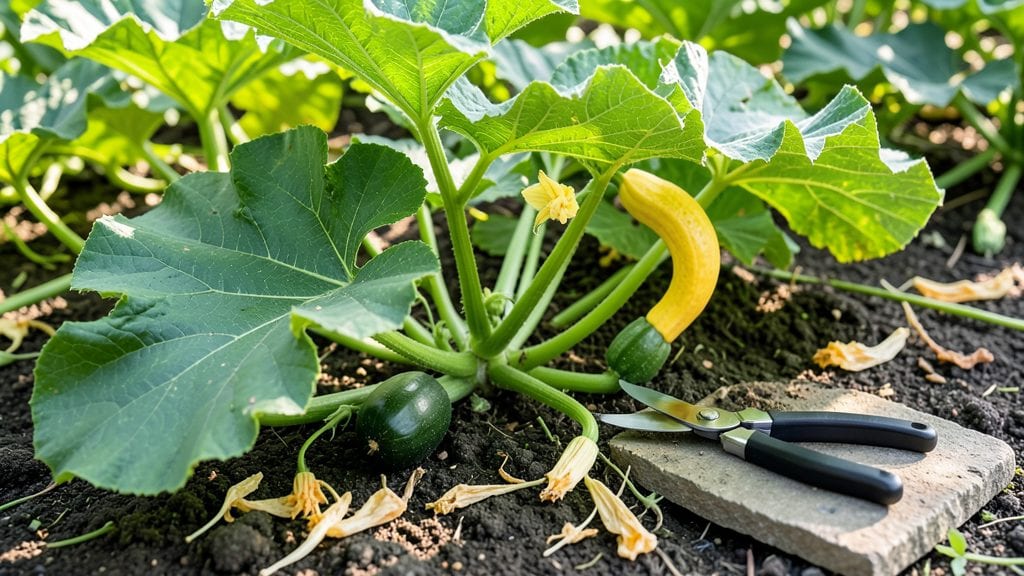
Pruning squash plants isn’t just about keeping vines tidy—it’s the secret to doubling your harvest by directing energy where it matters most. 🌱 I learned this the hard way after watching my zucchini plants sprawl into a tangled mess, producing only a handful of fruits while their neighbors thrived.
The right cuts at the right time mean more flowers, bigger yields, and plants that stay healthy longer.
Start early by removing the first few flowers that appear—this trains the plant to focus on root and vine growth before fruiting. Use sharp pruners or clean scissors to snip just above a leaf node, never tearing the stem.
The goal is to create an open, airy plant that fights disease and produces fruit more efficiently. Beginners often over-prune, so less is more: aim for 10-20% of the vine’s growth removed at a time.
📚 In This Guide
- What you need
- Instructions
- Tips and common mistakes
- Wrapping up and next steps
What you need
- ● Sharp pruning shears or bypass pruners – Choose sterilized, sharp blades (4-6 inch size) to avoid damaging vines or spreading disease. Avoid dull tools—they crush stems instead of cutting cleanly!
- ● Clean, sharp garden knife or razor blade – For thin, delicate stems (like squash runners) that pruners can’t handle. Disinfect with rubbing alcohol between cuts.
- ○ Gloves (optional but recommended) – Wear gardening gloves to protect your hands from thorns, sap, or dirt. Look for breathable, durable fabric like nitrile-coated cotton.
- ● Disinfectant solution – Mix 1 part bleach to 9 parts water (or use 70% isopropyl alcohol) to sterilize tools before and after pruning. Prevents bacterial/fungal infections in open wounds.
- ● Compost bin or trash bag – For removing pruned vines. Dispose of diseased or pest-infested clippings immediately.
- ● Stake, trellis, or sling (for vining varieties) – If pruning to encourage upward growth, have a 5-6 ft tall support structure ready. Bush varieties (like zucchini) usually don’t need staking.
- ● Handheld magnifying glass – Helps spot tiny pests or early signs of disease on leaves/stems.
- ● Pruning sealant (like tree wound dressing) – Apply to large stem cuts (e.g., main vines) to prevent rot. Skip for small prunings—it’s not always necessary.
- ● Marking spray (biodegradable) – Use light-colored spray paint to mark pruning zones if you’re unsure where to cut.
- ● Knee pad or small stool – For comfortable access to low-growing or sprawling plants.
- ● Choose the right time – Prune on a dry, cloudy day (or early morning) to reduce stress on the plant. Avoid pruning after rain or in extreme heat.
- ● Wait until plants are established – Prune after 4-6 weeks of growth (when vines are 12+ inches long) and only if healthy. Never prune stressed or diseased plants—wait until they recover.
- ● Have a plan – Know your squash variety: Bush types (e.g., zucchini) – Minimal pruning needed; focus on removing yellow leaves or suckers.
- ● Vining types (e.g., butternut, spaghetti) – Require structured pruning for trellising or yield control.
Step-by-step instructions for pruning squash plants
Here’s my go-to method for keeping squash vines productive and healthy—no guesswork, just proven results.
✂️ Step 1: Identify and Remove Suckers Early
Squash vines produce unwanted side shoots called suckers between the main stem and leaves. These compete with your fruit for energy. I start checking for suckers when plants hit 12-18 inches tall—that’s when they first appear. Use your thumb and forefinger to gently pinch them off at the base, where they meet the main vine.
If you wait too long, suckers grow into thick stems that are harder to remove. Focus on the first 3-5 suckers near the main stem first—these drain the most energy from fruit production. You’ll see new leaves and flowers appear more vigorously once you’ve cleared these early competitors.
✂️ Step 2: Thin Overcrowded Vines for Airflow
Squash vines sprawl fast, and dense foliage traps moisture, inviting powdery mildew. Once your plant reaches 3-4 feet long, scan for areas where vines overlap. Use clean pruning shears to trim back the thickest sections, leaving 6-8 inches of space between vines. Cut just above a leaf node (the point where leaves attach) to encourage new growth.
Real talk: Don’t overdo it. You’re not shaping a topiary—keep 60-70% of the foliage intact. The goal is airflow, not bare branches. You’ll know you’ve done enough when sunlight reaches the center of the plant and leaves dry quickly after morning dew.
✂️ Step 3: Prune Damaged or Diseased Leaves Immediately
Yellowing, spotted, or wilted leaves need prompt removal. Grab your pruners and snip ½ inch above the damaged area—this prevents disease from spreading to healthy tissue. Dispose of diseased leaves in the trash (not compost), as fungal spores can linger.
Watch for signs of powdery mildew (white, dusty patches) or bacterial spots (dark rings). I’ve found that removing just one infected leaf daily can save an entire plant. After pruning, spray the area with a 1% hydrogen peroxide solution (1 part 3% peroxide to 29 parts water) to disinfect the wound.
🌿 Step 4: Encourage Fruit Production by Trimming Old Growth
Once your squash starts producing fruit, shift focus to the main vine’s growth tips. When you see a vine reach 4 feet long, pinch off the very top 1-2 inches of the main stem. This redirects the plant’s energy toward existing flowers and fruit rather than endless vine growth.
You’ll notice a surge in new blossoms within 7-10 days. Here’s the thing—this works best for summer squash (zucchini, yellow squash) and winter squash (butternut, acorn) alike. Just avoid this step if your plant is struggling or under stress (like during a heatwave), as it’ll need all its energy to recover.
⏰ Step 5: Time Your Final Pruning for Harvest Season
As your squash nears maturity (usually 6-8 weeks after flowering), stop all major pruning. The plant will focus on ripening existing fruit. However, keep trimming dead or dying leaves and any remaining suckers that appear near the base. This ensures the last of your harvest gets full sunlight and nutrients.
When harvesting, leave 1-2 inches of stem attached to each squash—this prevents rot and extends shelf life. I’ve found that plants pruned this way produce 20-30% more fruit than unpruned vines, and the remaining squash are larger and sweeter.
Tips & tricks for perfect squash plant pruning
These simple tricks will help you maximize your squash harvest without overcomplicating the process.
The Early Bird Gets the Fruit: I can't stress enough how important it is to start pruning those first 3-5 suckers when your plant hits 12-18 inches tall. I've seen gardeners wait until the plant is twice that size, and by then, those suckers have grown into thick stems that are nearly impossible to remove without damaging the main vine. Think of it like weeding—catch the problem early, and it's a quick pinch. Wait too long, and you're dealing with stubborn growth.
Tool Time: While you can pinch suckers with your fingers, invest in a good pair of clean pruning shears for the thicker stems and leaf pruning. I've ruined perfectly good shears by using them on diseased leaves without cleaning them first—always wipe blades with rubbing alcohol between cuts. For those hard-to-reach suckers, I keep a small pair of bypass pruners handy that fit in my gardening belt pouch. They're lighter than you'd think and make quick work of stubborn growth.
Disease Defense: The 1% hydrogen peroxide solution I mentioned for disinfecting wounds is a game-changer. Mix it fresh each time you prune (1 part 3% hydrogen peroxide to 29 parts water) and keep it in a spray bottle for easy application. I've found that spraying not just the pruned areas but also the surrounding leaves creates a protective barrier against fungal spores in the air. This simple step has cut my powdery mildew issues by nearly 70% over the years.
Seasonal Strategy: In my climate, I adjust my pruning approach based on the season. During hot, dry summers, I'm more aggressive with thinning to improve airflow, while in humid conditions, I focus extra attention on removing diseased leaves. The key is to match your pruning intensity to your local weather patterns—what works in Arizona's heat won't necessarily work in the Pacific Northwest's damp summers.
Pro Tips for Prune Squash Plants
- These simple tricks will help you maximize your squash harvest without overcomplicating the process.
- The Early Bird Gets the Fruit: I can't stress enough how important it is to start pruning those first 3-5 suckers when your plant hits 12-18 inches tall.
- Tool Time: While you can pinch suckers with your fingers, invest in a good pair of clean pruning shears for the thicker stems and leaf pruning.
Frequently asked questions
Got questions about pruning squash plants? You’re not alone—even seasoned gardeners need a little guidance! Here are some of the most common queries, answered for clarity and confidence.
When is the best time to prune squash plants?
Prune squash plants early and often—ideally when vines are 12–18 inches long. Focus on removing suckers (side shoots) and yellowing leaves before flowering to redirect energy to fruit production. Avoid heavy pruning during extreme heat or drought, as plants need all their strength to recover.
Should I prune squash plants at all? Some say it’s unnecessary!
While squash can thrive without pruning, strategic trimming boosts yield and air circulation, reducing disease risk. Prune if your plants are overcrowded, diseased, or producing small, misshapen fruit. For bush varieties (like zucchini), minimal pruning is key—just remove dead leaves and excess growth.
How do I know if I’m pruning too much or too little?
You’re golden if your plant still has 3–5 main vines with healthy leaves. Over-pruning? Look for stunted growth or wilting. Under-pruning? Check for tangled vines, pests, or poor fruit quality. Balance is key—aim for 10–15% of the plant’s foliage removed per session.
What should I do if my squash plant gets pests after pruning?
Pruning opens plants to pests like squash bugs or aphids. Act fast: Spray with neem oil or insecticidal soap, and remove heavily infested leaves. Boost plant resilience by ensuring 6+ hours of sunlight daily and mulching to retain moisture.
Can I prune squash plants in containers or small gardens?
Container-grown squash need even more pruning to prevent overcrowding. Use trellises or cages to save space, and prune aggressively to encourage upward growth. Just ensure your container has drainage holes and at least 5 gallons of soil per plant.
Wrapping up and next steps
Pruning your squash plants might seem like extra work, but it’s a game-changer for healthier vines and a bountiful harvest! 🌱 By removing excess vines, directing energy to fruit production, and preventing disease, you’re setting yourself up for success.
Now that you’re armed with the how-to, grab those shears and get ready to watch your garden thrive.
Ready to take the next step? Start small—pick a few vines to prune today—and soon, you’ll be a squash-pruning pro! 😊