
Pruning
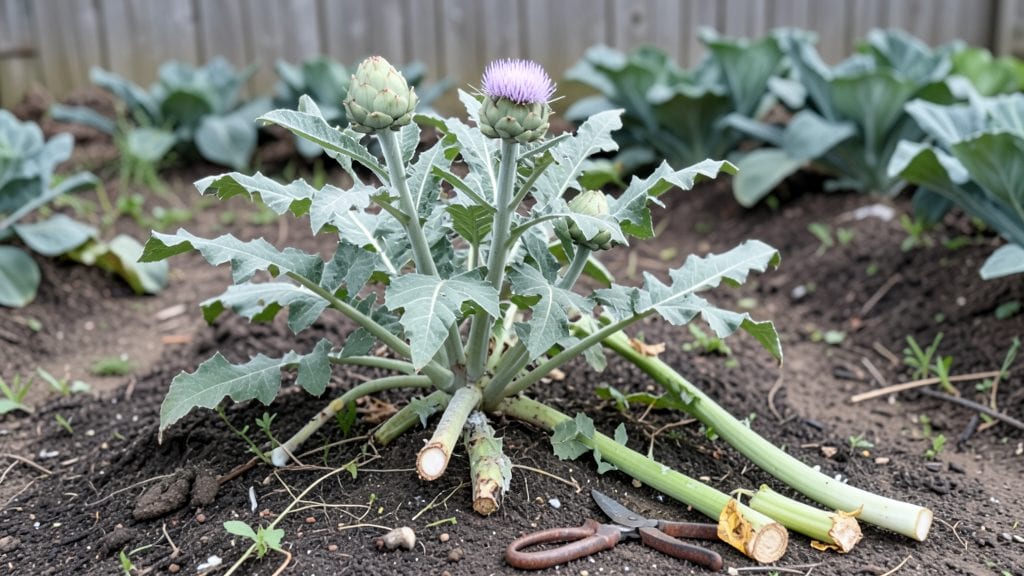
Pruning artichoke plants isn’t just about keeping them tidy—it’s how you unlock a second harvest when most gardeners call it quits. 🌱 I learned this the hard way after my first plants bolted early, but now I treat every cut like a conversation with the plant, asking it to grow again.
The right timing and technique turn what looks like a harsh trim into a signal for more buds to form.
The key is working with the plant’s natural rhythm: prune right after harvest to encourage regrowth, then do a light cleanup in late fall before dormancy. You’ll need sharp pruners, gloves, and a clear day to avoid spreading disease—artichokes hate wet cuts.
Most gardeners stop after the first harvest, but these plants can give you two full crops if you know when to cut and how to support them afterward.
After pruning, you’ll notice new shoots within weeks, especially if you feed the soil with compost. The plants stay bushier, produce more buds, and resist pests better. Even if you miss a cut, artichokes are forgiving—just focus on removing dead growth and leaving healthy stems.
The payoff? A garden that keeps giving long after others have quit for the season.
This works for both globe and French varieties, though globe artichokes respond best to aggressive pruning. For small spaces, container-grown plants need the same care but on a smaller scale. Here’s how to make every cut count toward more harvests next year.
📚 In This Guide
- What you need
- Instructions
- Tips and common mistakes
- Wrapping up and next steps
What you need
- ● Sharp pruning shears or secateurs – Choose bypass pruners (not anvil) for clean cuts. Size: 6-8 inches, with stainless steel blades for durability.
- ● Gloves – Heavy-duty gardening gloves to protect against thorns and rough stems. Material: Nitrile-coated for grip and puncture resistance.
- ● Disinfectant (70% isopropyl alcohol or bleach solution) – 1 part bleach to 9 parts water to sterilize tools between cuts and prevent disease.
- ○ Compost bin or bag – For disposing of pruned plant debris. Optional: Compostable bags if you prefer easy cleanup.
- ● Watering can or hose – To hydrate plants post-pruning. Tip: Use a gentle spray to avoid disturbing the roots.
- ○ Pruning saw (optional but helpful) – For thicker stems or woody growth. Size: 8-10 inches with a fine-toothed blade.
- ● Mature artichoke plants – Pruning is best done when plants are 6-12 inches tall (early spring) or after harvest (late summer).
- ● Dry weather – Avoid pruning if rain is forecasted within 24 hours to prevent fungal issues.
- ● Sunny day – Choose a bright, overcast morning to reduce stress on the plant.
Step-by-Step guide to pruning artichoke plants
Here’s how to keep your artichokes thriving and producing all season long.
✂️ Step 1: Remove Dead or Damaged Foliage
Start by inspecting your plants for any yellowed, brown, or wilted leaves. These are easy to spot—they’ll stand out against the healthy, deep green foliage. Use sharp pruning shears or clean scissors to cut these leaves at the base, just above a healthy leaf node. This prevents disease from spreading and keeps the plant focused on producing new growth.
Don’t skip this step, even if the leaves look minorly damaged. Artichokes are sensitive to stress, and removing dead foliage helps redirect energy to the buds and developing heads. I always prune on a dry morning when the leaves aren’t damp, as this reduces the risk of fungal issues.
✂️ Step 2: Trim Side Shoots for Better Bud Formation
Once your artichoke plants are established, they’ll produce side shoots along the stems. These shoots compete with the main buds for nutrients and can reduce your harvest. Pinch off or cut these side shoots when they’re still small—typically 2-3 inches long—using your fingers or shears. Focus on the shoots growing below the main bud clusters to encourage stronger central growth.
Here’s the thing—if you let these side shoots grow too large, they’ll drain energy from your artichoke buds. I’ve found that regular trimming keeps the plant’s energy focused on producing larger, more flavorful heads. Aim to do this every 7-10 days during the growing season to stay on top of it.
✂️ Step 3: Harvest and Prune Mature Artichokes
When your artichoke buds reach 3-5 inches in diameter and the scales are tightly closed, it’s time to harvest. Cut the stem 1-2 inches below the base of the bud using clean shears. This leaves a small stub that encourages the plant to produce new buds. After harvesting, inspect the plant for any remaining side shoots or spent buds and trim them away to keep the plant tidy.
Don’t wait too long to harvest—once the buds start to open, they’ll become tough and less flavorful. I like to harvest in the morning when the buds are firm and the plant is hydrated. After harvesting, give the plant a light watering to help it recover and prepare for the next round of growth.
✂️ Step 4: Prune for Winter Dormancy
As temperatures drop and the growing season winds down, it’s time to prepare your artichoke plants for dormancy. Cut back the foliage by one-third to reduce moisture loss and protect the plant from cold damage. Leave the stems 4-6 inches tall to allow for new growth in the spring. Remove any remaining dead or diseased leaves to keep the plant healthy.
This is also a great time to add a 2-3 inch layer of mulch around the base of the plant to insulate the roots. I use straw or shredded leaves, which help retain moisture and protect the plant from freezing temperatures. Avoid over-mulching, as this can suffocate the roots and cause rot.
⏰ Step 5: Early Spring Pruning for New Growth
When new growth appears in the spring, trim back any dead or damaged stems to encourage fresh, vigorous shoots. Cut just above a healthy leaf node to promote branching. This is the time to give your artichoke plants a little extra care—they’ll reward you with a bountiful harvest if you keep them healthy and well-maintained.
Watch for signs of new buds forming in the early spring. These will appear as small, tight clusters at the base of the stems. Once you see them, reduce pruning to avoid disturbing the developing heads. A little patience now will pay off with a fantastic harvest later in the season.
Tips & tricks for pruning artichoke plants like a pro
Here's what I've learned after years of growing artichokes—these small details make all the difference between a decent harvest and a spectacular one.
Tool Prep is Everything: Always sterilize your pruning shears with rubbing alcohol between cuts in Step 1. I learned this the hard way after a fungal infection spread through my plants. Sharp, clean tools make precise cuts that heal faster and reduce stress on the plant. For side shoots in Step 2, I keep a small pair of nail clippers in my gardening bag—perfect for those tiny 2-3 inch shoots that need quick attention.
Timing Secret for Side Shoots: The 7-10 day trimming schedule in Step 2 works best when you do it first thing in the morning. That's when the plant's sap is flowing upward, making it easier to see which side shoots are actively growing. I've found that trimming in the morning also gives the plant the full day to recover before nightfall. Pro tip: Use your fingers to pinch off shoots under 1 inch—no tools needed!
Harvesting Visual Cues: For Step 3, the 3-5 inch diameter rule is your guide, but look for these too: tightly closed scales that feel firm when gently squeezed, and a rich purple tint at the base of the bud. I harvest when the outer scales are still tightly packed like a closed fist—this ensures maximum tenderness. If you see any fuzzy growth on the buds, harvest immediately and compost those to prevent spread.
Winter Pruning Strategy: When cutting back by one-third in Step 4, aim to remove the oldest, largest leaves first. These leaves can harbor pests over winter. I mark my plants with small flags to identify the main stems I want to preserve—this helps me visualize the 4-6 inch target height. For mulching, I always add a layer of straw first (about 1 inch), then top with leaves—this creates better insulation than leaves alone.
Pro Tips for Prune Artichoke Plants
- Here's what I've learned after years of growing artichokes—these small details make all the difference between a decent harvest and a spectacular one.
- Tool Prep is Everything: Always sterilize your pruning shears with rubbing alcohol between cuts in Step 1.
- Timing Secret for Side Shoots: The 7-10 day trimming schedule in Step 2 works best when you do it first thing in the morning.
Frequently asked questions
Got questions about pruning artichoke plants? You’re not alone! Here are answers to the most common concerns—from timing to troubleshooting—to help you keep your plants thriving and productive.
When is the best time to prune artichoke plants?
Prune artichokes after harvesting the main bud (the "heart") to encourage side shoots for continuous harvests. For perennial varieties, do a light cleanup in late winter or early spring (before new growth starts) to remove dead or weak stems. Avoid heavy pruning in fall—it can stress the plant before winter.
Do I need special tools to prune artichokes?
Nope! Basic tools like sharp pruning shears or clean scissors work perfectly. For larger stems, a pruning saw (with a fine-tooth blade) can help. Just sterilize your tools with rubbing alcohol between cuts to prevent disease. No fancy equipment required!
What do I do with the cut-off parts of the plant?
Toss the woody, mature stems (they won’t regrow). For young, green shoots, chop them into small pieces and compost them—they’ll break down quickly! If you’re feeling adventurous, try regrowing artichokes from cuttings (place stems in water; roots may form in 2–3 weeks).
My artichoke plant isn’t producing buds—did I prune wrong?
Don’t panic! Over-pruning (cutting too aggressively) or pruning at the wrong time (like mid-summer) can reduce bud formation. Focus on removing only dead or overcrowded growth. If buds still don’t appear, check for sunlight, water, and fertilizer—artichokes need 6+ hours of sun daily and well-draining soil.
Can I prune artichokes in hot or cold weather?
Wait for mild temperatures (ideally 50–75°F). Pruning in extreme heat stresses plants, while cold snaps can damage new growth. If you must prune in winter, do it on a dry, sunny day to help wounds heal faster. Always prune early in the day to reduce water loss.
Wrapping up and next steps
Pruning your artichoke plants might seem tricky at first, but with the right tools, timing, and techniques, you’ll unlock a bountiful harvest all season long! Remember to trim strategically—encouraging new growth, removing dead foliage, and protecting your plants from pests.
Whether you’re a beginner or a seasoned gardener, these steps will help you maximize yield and keep your artichokes thriving.
Now that you’re armed with the know-how, grab those shears and get ready to transform your garden! 🌱 Next, why not explore companion planting tips to boost your artichokes’ health even further? Happy pruning!