
Fertilization
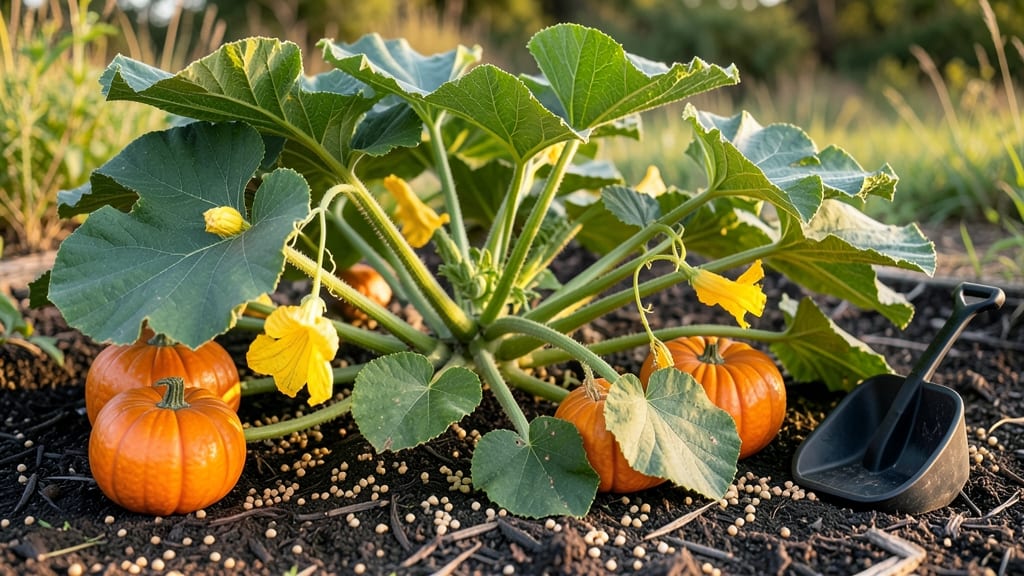
Fertilizing pumpkin plants correctly is what turns 6-inch seedlings into 30-foot vines carrying 50-pound fruits—and skips the frustration of half-size gourds.
Picture this: You’ve planted your 🎃 seeds in Zone 6a after the last frost, and they’re thriving—until they hit a wall. The leaves yellow, the vines slow, and suddenly, your jack-o’-lantern dreams are wilting. That’s not bad luck; it’s a nutrient gap, and the fix is simpler than you think.
Pumpkins are hungry plants, but they’re picky eaters. Too much nitrogen, and you’ll get leafy monsters with no fruit. Too little phosphorus, and those blossoms won’t turn into pumpkins. The key? A balanced approach—timed right from spring planting through harvest season.
In this guide, I’ll walk you through the exact soil prep, fertilizer types, and application schedule that’ll have your vines sprawling and your harvest overflowing—no guesswork, just results.
Optimal soil pH and nutrient requirements for pumpkin growth
Pumpkins are hungry plants—literally. To grow those monster vines and hefty fruits, they demand specific soil conditions and nutrient timing. The foundation starts with soil pH levels between 6.0 and 6.8, where nutrients unlock for root absorption.
Without this balance, even the hardiest pumpkin varieties like Howden or Cinderella will struggle to thrive.
Beyond pH, pumpkins require a precise nutrient cocktail of macronutrients (nitrogen, phosphorus, potassium) and micronutrients (magnesium, calcium). Too much of one nutrient can stunt growth or cause fruit deformities, while deficiencies show up as yellow leaves or weak stems.
Let’s break down what your pumpkin plants truly need to reach their full potential.
Soil pH is your first battleground. Test your garden soil before planting—most home test kits cost under $10 and take minutes. If your soil reads below 6.0, add lime to raise pH gradually. For soils above 6.8, incorporate sulfur or peat moss to acidify. Aim for 6.0–6.8 to maximize nutrient availability, especially for phosphorus and calcium, critical for root and fruit development.
Pumpkins are heavy feeders, meaning they deplete soil nutrients quickly. Start with a balanced fertilizer like 10-10-10 (nitrogen-phosphorus-potassium) at planting, but adjust as vines grow. Early growth favors nitrogen for leafy vines, while flowering and fruiting stages demand more phosphorus and potassium.
Ignore this shift, and you’ll end up with lush foliage but small, misshapen pumpkins.
Nitrogen is the vine expansion nutrient—think of it as the plant’s muscle builder. Too little results in stunted growth and pale leaves, while overdoing it leads to excessive foliage at the expense of fruit. Use organic options like composted manure or blood meal for a slow-release boost during the first 4–6 weeks after sprouting.
Phosphorus is the flower and fruit catalyst. Without enough phosphorus, pumpkin plants may produce fewer flowers or aborted fruit. Look for signs like dark purple stems or slow vine growth—these scream for a phosphorus-rich fertilizer like bone meal or a 5-10-10 blend. Apply this when vines start crawling aggressively (usually 6–8 weeks after planting).
Potassium is the stress fighter and disease resistor. It strengthens cell walls, helping pumpkins fend off powdery mildew and blossom end rot. Weak stems or yellow leaf edges (a classic potassium deficiency sign) mean it’s time to feed with wood ash, greensand, or a 1-0-2 fertilizer. Prioritize potassium during hot, dry spells or when fruits begin to swell.
Don’t overlook micronutrients like magnesium and calcium. Magnesium (found in Epsom salt) prevents interveinal chlorosis (yellowing between leaf veins), while calcium (from crushed eggshells) stops blossom end rot in developing pumpkins. A foliar spray of these nutrients can rescue plants showing early deficiency signs before roots suffer.
Here’s how to spot nutrient deficiencies before they cripple your pumpkins:
Nitrogen deficiency: Pale yellow leaves starting at the older leaves. Fix: Apply compost or fish emulsion immediately.
Phosphorus deficiency: Dark green or purple stems and leaves, slow growth. Fix: Work in bone meal or rock phosphate.
Potassium deficiency: Yellow edges on older leaves, weak stems. Fix: Use wood ash or potassium sulfate.
Calcium deficiency: Blossom end rot (brown, mushy spots on fruit). Fix: Sprinkle crushed eggshells around plants and water deeply.
Magnesium deficiency: Yellow patches between leaf veins. Fix: Spray with Epsom salt solution (1 tbsp/gallon of water).