
Companion Plants
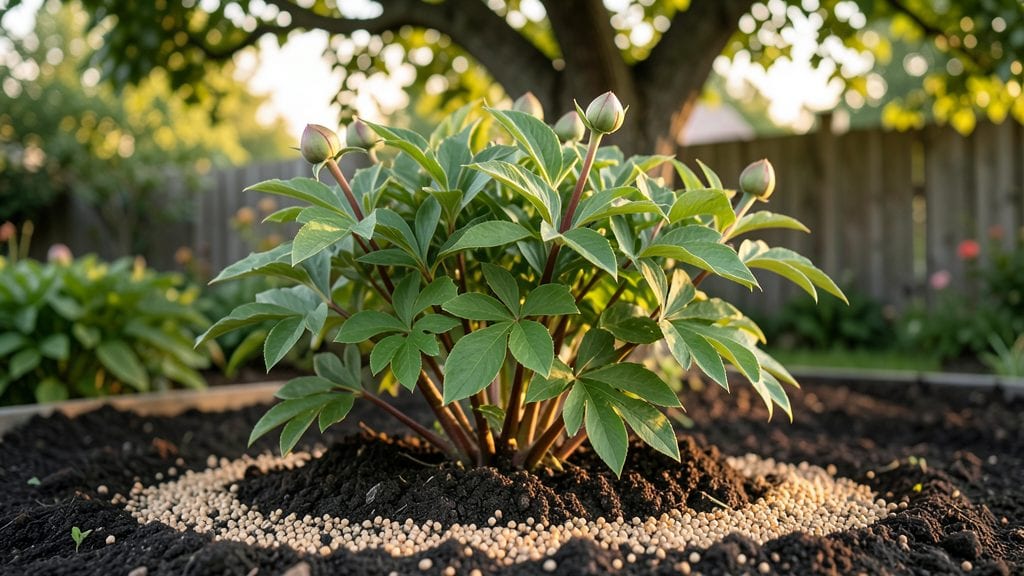
Feeding peony plants the right way is the difference between a handful of blooms and a garden bursting with 🌸 every spring.
Struggling to get your peony plants to bloom year after year? The secret lies in precise soil nutrition and timing—two factors that can transform your garden from a few weak stems to a stunning, long-lasting floral display.
Peonies thrive when fed with the right balance of nutrients, but timing matters just as much. Too much fertilizer at the wrong time can actually kill your blooms before they open, while the right approach ensures stronger stems and bigger flowers.
In this guide, I’ll walk you through the best fertilizers, when to apply them, and how to avoid common mistakes that leave your peonies looking lackluster. Let’s get those roots fed the right way!
Optimal soil pH and nutrient requirements for peony growth
Peonies thrive when their soil conditions match their natural preferences—slightly acidic to neutral pH and a steady supply of essential nutrients. If your peonies are struggling to bloom or showing weak foliage, the issue often starts with the soil.
I’ve learned that 6.0 to 7.0 pH is the sweet spot for these plants, but achieving it requires more than just throwing lime or sulfur into the ground. Let’s break down what peonies truly need to flourish.
Peonies are heavy feeders, meaning they demand a balanced diet of macronutrients (nitrogen, phosphorus, potassium) and micronutrients (iron, magnesium). Nitrogen kickstarts leafy growth in spring, phosphorus fuels root development and blooms, while potassium strengthens stems and disease resistance.
Without these in the right proportions, your peonies might produce lush foliage but few flowers—or worse, fail to establish at all.
Here’s the key: Soil testing is your first step. Many gardeners skip this, only to wonder why their peonies underperform. A simple home pH test kit (around $10) or a lab test will reveal whether your soil is too acidic, alkaline, or lacking critical nutrients.
Once you know the pH, you can adjust it naturally—lime for acidity or sulfur for alkalinity—without harming your plants.
Let’s dive into the specifics with this quick reference guide to feeding peony plants for optimal growth and blooms.
Adjusting your soil’s pH is simpler than you think. If your test shows a pH below 6.0, sprinkle pelletized lime over the soil in early spring and lightly till it in. For pH above 7.0, use elemental sulfur (apply in fall for gradual changes).
Aim for small adjustments—0.5 pH points per year—to avoid shocking your plants. Overcorrecting can lock out essential nutrients just as quickly as an imbalance does.
Micronutrients like iron and magnesium are often overlooked, yet they’re critical for peony health. Iron deficiency, for example, causes yellowing between leaf veins (a condition called chlorosis).
Best fertilizer types and application timing for peonies
Feeding your peonies at the right time with the right nutrients is key to unlocking their full blooming potential. Unlike many perennials, peonies thrive on a moderate feeding schedule—too much fertilizer can actually harm them by encouraging lush foliage at the expense of flowers.
The best approach focuses on timing and balanced nutrition to support both roots and blooms.
Peonies prefer a low-maintenance feeding routine with most activity concentrated in early spring. This aligns perfectly with their natural growth cycle, where they emerge from dormancy and begin pushing new shoots. Organic options like compost or well-rotted manure provide slow-release nutrients, while synthetic fertilizers offer precise NPK ratios.
The key is avoiding heavy feeding after mid-summer, as this can stimulate tender new growth that won't survive winter.
| Fertilizer Type | Best Application Time | NPK Ratio | Key Benefits |
|---|---|---|---|
| Slow-Release Granular (10-10-10) | Early spring (March-April) | Balanced NPK | Steady nutrient release for 3-6 months |
| Composted Manure | Early spring or fall | Variable (2-3-1) | Improves soil structure and microbial life |
| Fish Emulsion (5-1-1) | Post-bloom (June) | High nitrogen | Boosts foliage recovery after flowering |
| Bone Meal (3-15-0) | Early spring | High phosphorus | Promotes strong root and bloom development |
| Worm Castings | Year-round (light applications) | Balanced micronutrients | Gentle nutrient boost with no burn risk |
For early spring feeding (March-April), I recommend a balanced 10-10-10 fertilizer or bone meal to support root development and bud formation. Apply about 1 tablespoon per plant and work it into the top 2-3 inches of soil.
This timing coincides with when peonies are most active in breaking dormancy, making them receptive to nutrients. Avoid heavy-handed applications—peonies are sensitive to excess salts, which can damage their delicate roots.
After blooming (June-July), switch to a lighter feeding like fish emulsion to help the plant recover. This post-bloom nutrition supports foliage growth without encouraging late-season shoots that might not harden off before winter.
Organic options like worm castings or compost tea are excellent for this phase, providing gentle nourishment without risk of over-fertilization.
One of the most common mistakes is fertilizing peonies in late summer or fall. This can stimulate new growth that won't survive winter's freeze, leading to weak plants. Instead, focus on mulching with 2-3 inches of organic matter (like straw or shredded leaves) to insulate roots and retain moisture.
This natural approach supports soil health without the need for additional feeding during dormancy.
To maximize blooms, pair your fertilizer routine with proper soil preparation. Peonies thrive in well-draining soil with a pH between 6.0-7.0. Before planting, amend heavy clay soils with sand or perlite, and incorporate compost to improve fertility.
This foundation ensures your peonies can efficiently uptake nutrients when you do apply fertilizer, leading to stronger stems and more abundant flowers year after year.