Pruning
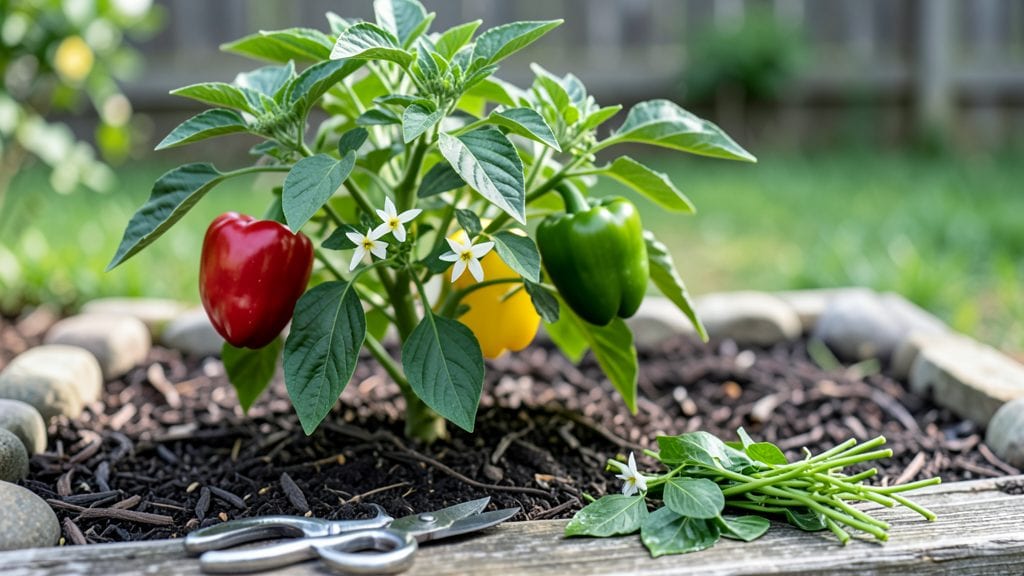
Trimming pepper plants isn't just about shaping them—it's how you coax more fruit from every plant. ✨ I spent years watching my peppers struggle with crowded branches until I learned the right cuts transform weak growth into productive powerhouses.
The difference between a handful of peppers and a bushel often comes down to when and where you make those snips.
Most gardeners skip pruning entirely, but peppers respond beautifully to strategic trimming. Focus on removing suckers (those little shoots between stems and branches) and any crowded or diseased growth. For bush varieties, a light cleanup keeps energy flowing to fruit, while indeterminate types benefit from more aggressive shaping.
The key is timing—wait until plants are at least 12 inches tall before touching them.
When done right, you'll see thicker stems, better airflow, and fruit that ripens faster. My jalapeños now produce twice as many peppers by midsummer because I trim the right spots—just above leaf nodes where new growth can sprout.
Even a small container pepper can become a fruit machine with the right cuts.
Here's the game-changer: prune early in the morning when plants are hydrated, and always use clean, sharp shears. The first trimming sets the stage for everything that follows—so don't rush it. We'll walk through the exact technique that works for both bush and vine types next.
📚 In This Guide
- What you need
- Instructions
- Tips and common mistakes
- Wrapping up and next steps
What you need
- ● Pruning shears or scissors – Sharp, clean, and sterilized (avoid dull tools that crush stems). A bypass pruner (for clean cuts) is ideal.
- ● Gloves – Thick gardening gloves to protect against thorns (especially on hot peppers) and dirt.
- ● Disinfectant (70% isopropyl alcohol or bleach solution) – 1 part bleach to 9 parts water to sterilize tools between cuts and prevent disease.
- ○ Small container or bucket – For collecting pruned branches (optional but helpful for composting or disposal).
- ● Sharp pencil or marker – To label plants if you’re experimenting with different pruning techniques.
- ● Hand pruners with a bypass blade – For precision cuts on smaller stems.
- ● Rubbing alcohol wipes – Quick cleanup for tools between plants.
- ● Garden twine or plant ties – If you need to support heavy pepper plants post-pruning.
- ○ Growth regulator (optional) – Like seaweed extract or kelp meal to help plants recover faster after trimming.
- ● Notebook or app – To track pruning dates, plant responses, and fruit production.
Instructions for pruning pepper plants to boost fruit production
Here's exactly how to shape your peppers for bigger yields without stressing the plant.
🌿 Step 1: Identify the Main Stem and First Branches
Start by locating the main stem—the thick, central stalk that grows straight up from the base. This is your plant's backbone, and everything else branches from it. Look for the first set of leaves that form a full circle around the stem; this is where the first branches will emerge.
I always begin pruning just above the first set of branches, about 12-18 inches from the soil. This encourages the plant to focus energy on developing a strong root system and thicker stem before producing fruit. Use clean, sharp pruning shears to make a clean cut at a 45-degree angle—this prevents water from pooling on the wound and causing rot.
✂️ Step 2: Remove Suckers for Better Airflow and Fruit
Suckers are the small shoots that grow in the V-shaped junction between the main stem and a branch. These compete with your fruit for energy, so removing them early ensures your peppers get all the nutrients. Pinch off suckers when they're still small—about the size of a pencil eraser—so they don’t drain the plant.
I do this every 7-10 days during the growing season, checking the undersides of branches where suckers often hide. If you miss a sucker, it’ll grow into a weak branch that produces small, poor-quality fruit. Always prune in the morning so any cuts have time to heal before evening moisture sets in.
☀️ Step 3: Thin Overcrowded Branches for Sun Exposure
Once your plant has multiple branches, step back and assess sunlight penetration. If leaves block light from reaching the center, thin out some branches to improve airflow and fruit development. Focus on removing the smallest, weakest branches first—they’re not contributing much to fruit production anyway.
Leave 3-4 main branches per plant, spacing them evenly around the stem. This creates a balanced shape that catches sunlight from all directions. You’ll see thicker, healthier stems and more uniform fruit size within a few weeks. Avoid cutting more than 20-30% of the plant’s foliage at once, or you’ll shock it into stress.
🌱 Step 4: Encourage Flowering with Strategic Cuts
When your plant starts flowering but fruit production lags, it’s time to stimulate more blooms. Trim back any non-fruiting branches that grow beyond the first 6-8 inches of the main stem. These are often leggy and produce few flowers. Focus on keeping the plant compact and bushy, with plenty of leaves below the fruit clusters.
I also remove any flowers that appear on the lowest 6 inches of the stem—these rarely develop into mature peppers. Redirecting that energy upward ensures your plant puts its best effort into the most accessible fruit. Watch for new side shoots forming after pruning; these will often produce more flowers than the original branches.
⏰ Step 5: Stop Pruning 4-6 Weeks Before First Frost
About 8 weeks before your average first frost date, taper off pruning to let the plant harden off and ripen existing fruit. New growth after this point won’t have time to mature before cold weather sets in. Instead, focus on harvesting peppers as they ripen and removing any diseased or damaged leaves to protect the plant.
You’ll know it’s time to stop when the days grow shorter and your plant starts dropping leaves. At this stage, I switch to gentle maintenance—just enough to keep the plant healthy until frost. Save any remaining unripe peppers and bring them indoors to ripen on a sunny windowsill.
Tips & tricks for pruning pepper plants
A few key strategies will help you maximize fruit production while keeping your pepper plants healthy and stress-free.
Timing is Everything: In Step 2, when removing suckers every 7-10 days, I always do this in the morning. The cuts have time to heal before evening moisture sets in, which dramatically reduces the risk of infection. You'll notice healthier growth and fewer problems with rot or disease when you follow this schedule. The morning light also helps the plant recover faster from the small stress of pruning.
Visual Cues Over Guessing: For Step 3's branch thinning, look for branches that are less than half the diameter of your main stem. These weak branches won't contribute much to fruit production anyway. I also check for leaves that block sunlight from reaching the center of the plant—this is your signal to thin. Remember, you should never remove more than 20-30% of the foliage at once, or you'll shock the plant and potentially reduce fruit set.
Strategic Pruning for Flowering: When you see flowers forming on the lowest 6 inches of the stem in Step 4, remove them immediately. These low flowers rarely develop into mature peppers and will drain energy that could go toward higher fruit production. Focus on keeping the plant compact with plenty of leaves below the fruit clusters—this ensures the plant can support the fruit it does produce. Watch for new side shoots after pruning, as these often produce more flowers than the original branches.
Seasonal Adjustments: In Step 5, when you're 8 weeks out from your first frost, shift to gentle maintenance. Remove only diseased or damaged leaves rather than doing heavy pruning. This gives your plant time to harden off and ripen existing fruit. I've found that peppers ripened indoors on a sunny windowsill after harvest taste just as good as those that ripened on the plant—sometimes even sweeter!
Pro Tips for Do You Trim Pepper Plants
- A few key strategies will help you maximize fruit production while keeping your pepper plants healthy and stress-free.
- Timing is Everything: In Step 2, when removing suckers every 7-10 days, I always do this in the morning.
- Visual Cues Over Guessing: For Step 3's branch thinning, look for branches that are less than half the diameter of your main stem.
Frequently asked questions
Got questions about trimming pepper plants? You’re not alone! Here are some of the most common concerns—and their answers—to help you prune like a pro.
Why should I trim my pepper plants at all?
Trimming pepper plants encourages bushier growth and more fruit by redirecting energy away from excessive foliage toward flowering and fruiting. Without pruning, plants can become leggy, overcrowded, or prone to pests/diseases. Think of it as giving your peppers a haircut for success!
When is the best time to trim pepper plants?
Start pruning early—once your plants are 6–8 inches tall and have 4–6 true leaves. Avoid heavy trimming during hot, dry spells or when flowers/fruit are already forming. Best times: Morning (when plants are hydrated) or after rain. Pro tip: Use sharp shears to avoid tearing stems!
How much should I trim off? What parts do I cut?
Remove up to 25% of the plant’s foliage in the first trim, focusing on:
- Yellow or diseased leaves (bottom 10% of the plant).
- Suckers (shoots growing between the main stem and branches).
- Overcrowded branches rubbing against each other.
Never cut more than 1/3 of the plant at once—this can stress it out!
Will trimming reduce my pepper harvest?
No! In fact, proper pruning increases yields by improving airflow and sunlight penetration. However, over-trimming (especially late in the season) can reduce fruit production. Balance is key—aim for healthier plants, not bare branches. If you’re worried, start with light trims and monitor growth.
What if my pepper plant looks sad after trimming?
Don’t panic! A little post-pruning stress is normal. To help your plant recover:
- Water deeply (1–2 inches per week).
- Avoid fertilizing for 1–2 weeks to prevent burn.
- Provide shade if trimming in hot weather.
If leaves wilt severely or turn brown/yellow, you may have overdone it—next time, trim less aggressively.
Are there pepper varieties that don’t need trimming?
Yes! Some determinate varieties (like bell peppers or ‘Banana’ peppers) grow in compact bushes and don’t benefit from heavy pruning. Others, like indeterminate types (e.g., ‘Jalapeño,’ ‘Cayenne,’ or ‘Habanero’), thrive with regular trimming. Check your seed packet or plant tag for guidance!
Wrapping up and next steps
Trimming your pepper plants isn’t just about keeping them tidy—it’s a game-changer for bigger harvests and healthier growth! 🌱 By mastering the right techniques, you’ll encourage more branches, better airflow, and fewer pests. Start small, observe your plants, and adjust as you go—your green thumb will grow with practice.
Ready to take the next step? Grab your pruners, pick a sunny day, and give your pepper plants the care they deserve! Happy gardening—and enjoy those juicy peppers in no time! 🌶️✨