Diseases
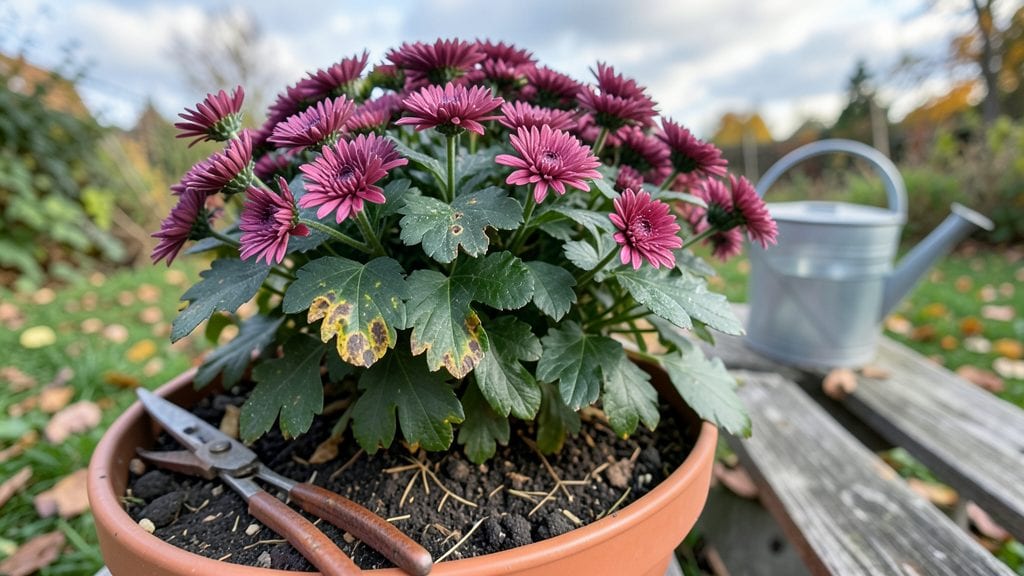
Chrysanthemum plant diseases turn vibrant blooms into sad, spotted messes faster than you can say "fall cleanup." 🌿 I’ve battled powdery mildew and leaf spots on my mums, and I’ll save you from the frustration of watching your hard work fade to brown.
The good news? Most issues respond to quick fixes—once you know what to look for.
Your chrysanthemums get sick from too much moisture, poor airflow, or stress—like when summer heat lingers past their prime. Powdery mildew leaves white dust on leaves, while leaf spots show up as dark, water-soaked marks.
The key to fixing them is acting fast with neem oil sprays, copper fungicides, or simply pruning infected leaves to improve airflow. It’s not rocket science, but it does require a little vigilance.
With the right approach, your plants bounce back in just 2-3 weeks, sporting fresh green leaves and those showstopping blooms again. You’ll spot the first signs of recovery in days—new growth pushing through, spots fading, and leaves perking up.
The secret? Catching problems early and giving your mums the care they need to fight back.
Works for garden beds, containers, or even those potted mums you buy at the store—just give them the same TLC. Let’s get those blooms back to their glory days without the guesswork.
Root Causes Of Chrysanthemum Struggles
Chrysanthemums are resilient, but even these hardy plants can fall victim to diseases when conditions align just right. Understanding why these issues arise is the first step to prevention.
Below, we break down the science behind common chrysanthemum diseases—so you can address the root of the problem, not just the symptoms.
Chrysanthemums thrive in well-spaced beds where air circulates freely. When plants are too close together, their leaves brush against each other, creating a damp, humid microclimate—perfect for fungal spores like Septoria or Botrytis to take hold.
Why it happens:
- Stagnant air: Poor airflow traps moisture, slowing evaporation and keeping fungal spores active.
- Root competition: Overcrowding stresses plants, weakening their defenses against pathogens.
- Water splash: Irrigation or rain droplets spread spores from infected leaves to healthy ones.
💡 Pro Tip: Space chrysanthemums 12–18 inches apart and prune lower leaves to improve airflow. If replanting, thin out older growth to reduce congestion.
Chrysanthemums hate soggy roots. While they need consistent moisture, standing water suffocates roots, inviting root rot (caused by Phytophthora or Pythium) and weakening the plant’s immune response to other diseases.
Why it happens:
- Poor drainage: Clay-heavy or compacted soil traps water, cutting off oxygen to roots.
- Overwatering: Frequent light waterings keep soil perpetually damp, ideal for fungal growth.
- Irrigation timing: Watering late in the day leaves foliage wet overnight, promoting fungal spread.
🌡️ Key Fix: Test soil drainage by digging a 6-inch hole—if water pools after 30 minutes, amend with compost or sand. Water at the base in the morning to allow foliage to dry.
Many chrysanthemum diseases, like powdery mildew or leaf spot, are caused by fungal spores that survive in soil, debris, or even on tools. These spores lie dormant until conditions—like warmth and humidity—trigger their growth.
Why it happens:
- Surviving pathogens: Spores from last season’s infected plants or fallen leaves can reinfect new growth.
- Warm, humid weather: Temperatures between 60–80°F (15–27°C) with high humidity accelerate spore germination.
- Contaminated tools: Pruners or shovels carrying spores from infected plants can spread disease to healthy ones.
✨ Prevention Hack: Sterilize tools with rubbing alcohol between uses. Remove and destroy infected plant debris (don’t compost it!). Space out plantings to reduce spore density.
Insects like aphids, spider mites, and whiteflies don’t just feed on chrysanthemums—they also transmit viruses (e.g., Tomato Yellow Leaf Curl Virus) and create sticky honeydew that fosters sooty mold, a secondary fungal issue.
Why it happens:
- Virus vectors: Aphids inject viruses while feeding, causing stunted growth and yellowing.
- Honeydew buildup: Sticky residue from sap-sucking insects attracts mold spores.
- Stress from feeding: Pests drain plant energy, making chrysanthemums more susceptible to other diseases.
🎯 Action Step: Inspect undersides of leaves weekly for pests. Use insecticidal soap or neem oil to control infestations before they spread.
Chrysanthemums deprived of essential nutrients (like nitrogen, phosphorus, or potassium) become stressed, making them easier targets for diseases. Over- or under-fertilization can also disrupt their natural defenses.
Why it happens:
- Nitrogen deficiency: Weakens leaf structure, making them more prone to fungal infections.
- Potassium shortage: Reduces disease resistance, especially in high-stress conditions.
- Salt buildup: Over-fertilization or poor-quality water can harm roots, inviting rot.
📊 Soil Test First: Use a soil test kit to check nutrient levels. Amend soil with balanced fertilizer (e.g., 10-10-10) in early spring. Avoid heavy applications late in the season, which can encourage weak, disease-prone growth.
How to Fix Common Chrysanthemum Ailments
Revive your chrysanthemums with these targeted solutions—each tailored to the root cause. Whether it’s fungal spots, wilting, or pest invasions, these steps will help your plants bounce back to their vibrant best. Prevention tips are included to keep future problems at bay!
Fungal diseases thrive in damp conditions, but with the right care, you can stop the spread and restore your plants.
🔥 Remove Infected Foliage Immediately
- Snip off yellowed, spotted, or powdery leaves with clean pruners (sterilize with rubbing alcohol).
- Dispose of them in the trash—do not compost to avoid reinfection.
- Focus on lower leaves first, as they’re often the first to show signs.
🍳 Apply Fungicidal Sprays (Organic & Chemical Options)
| Solution | How to Use | Frequency |
|---|---|---|
| Neem Oil Spray | Mix 1 tbsp neem oil + 1 tsp mild soap in 1 quart water. Spray evenly on tops and undersides of leaves. | Every 7–10 days until cured. |
| Baking Soda Spray | Combine 1 tbsp baking soda, 1 tsp oil, and 1 quart water. Spray in early morning to avoid leaf burn. | Weekly until symptoms fade. |
| Copper Fungicide | Follow label instructions for coverage. Best for severe rust or spot infections. | Every 10–14 days (rotate with organic options). |
🌡️ Improve Airflow & Reduce Humidity
- Space plants 12–18 inches apart to allow airflow.
- Water at the base (avoid overhead sprinkling) and water early in the day so leaves dry quickly.
- Use a fan on low near plants if humidity is high (ideal range: 40–60%).
✨ Pro Tip: Strengthen Plant Immunity
- Fertilize with compost tea or a balanced 10-10-10 fertilizer to boost health.
- Rotate crops if growing chrysanthemums annually—don’t plant in the same spot year after year.
Wilting can signal root rot (from overwatering) or underwatering. Diagnose first, then act!
👨🍳 Check the Roots (Gently!)
- Lift the plant and inspect roots:
- Healthy roots: Firm, white or light tan.
- Rotten roots: Mushy, dark brown/black, or smelly.
- If roots are firm but dry, it’s underwatering. If soggy, it’s root rot.
🔪 Trim Damaged Roots & Repot (If Needed)
- For root rot:
- Cut away black, mushy roots with sterilized scissors.
- Repot in fresh, well-draining soil (mix potting soil with perlite or sand).
- Skip watering for 3–5 days to let roots recover.
- For underwatering:
- Soak the pot in water for 20–30 minutes, then drain thoroughly.
- Water deeply but less frequently (check soil moisture 1–2 inches down).
🥘 Adjust Your Watering Routine
- Test soil moisture: Stick your finger in—if the top 1–2 inches are dry, it’s time to water.
- Use pots with drainage holes and saucers (empty excess water after 15 minutes).
- Mulch the soil (with straw or shredded bark) to retain moisture without waterlogging.
Pests weaken plants, making them more susceptible to diseases. Act fast to prevent an infestation.
🔪 Blast Off Pests with Natural Remedies
| Pest | Solution | How to Apply |
|---|---|---|
| Aphids | Soapy water spray: 1 tsp mild soap + 1 quart water. | Spray directly on clusters; repeat in 3–5 days. |
| Spider Mites | Neem oil or horticultural oil: Follow label for coverage. | Spray undersides of leaves (they hide there!). |
| Earwigs | Diatomaceous earth (DE): Sprinkle lightly around the base of plants. | Reapply after rain or watering. |
🌡️ Create an Unwelcoming Environment
- Install yellow sticky traps to catch flying pests like whiteflies.
- Encourage beneficial insects: Ladybugs and lacewings eat aphids—buy or attract them with dill or fennel plants.
- Prune heavily infested leaves and drop them in soapy water (not compost).
🎯 Long-Term Pest Prevention
- Inspect new plants before bringing them home (quarantine for a week if possible).
- Rotate planting locations to disrupt pest life cycles.
- Avoid over-fertilizing with nitrogen—it attracts soft-bodied pests like aphids.
💡 Final Reminder: Consistency is key! Monitor your chrysanthemums weekly for early signs of stress. A little preventive care now saves hours of cleanup later. Happy gardening! 🌼
Frequently asked questions
What causes those white powdery spots on my chrysanthemum leaves?
That’s powdery mildew—a fungal disease thriving in humid conditions. It starts as white patches and spreads quickly if left untreated. Prune infected leaves immediately and apply neem oil spray every 7-10 days to stop its progress.
Can I still save my chrysanthemums if the stems are mushy and black?
That’s root rot, likely from overwatering or poor drainage. Trim away the blackened roots, repot in fresh soil with perlite, and skip watering for 3-5 days to help recovery. For severe cases, consider propagating healthy stems in new containers.
Why do my chrysanthemum leaves turn yellow before the spots appear?
Yellowing often signals nutrient deficiency (like nitrogen) or early fungal stress. Test your soil and apply a balanced fertilizer (10-10-10). If spots follow, it’s likely leaf spot—remove infected leaves and improve airflow between plants.
How do I prevent chrysanthemum diseases next season?
Start with clean soil—remove all plant debris and rotate crops if possible. Space plants 12-18 inches apart for airflow, water at the base in the morning, and use copper fungicide preventatively in humid weather. Sterilize tools between uses too!
Are there any natural sprays that actually work against chrysanthemum fungal diseases?
Mix 1 tablespoon baking soda with 1 quart water and a few drops of dish soap for a mild fungicide. Spray in the morning weekly until symptoms disappear. For tougher cases, neem oil (1 tbsp per quart) works well too—just reapply every 7-10 days.