
Pests and Diseases
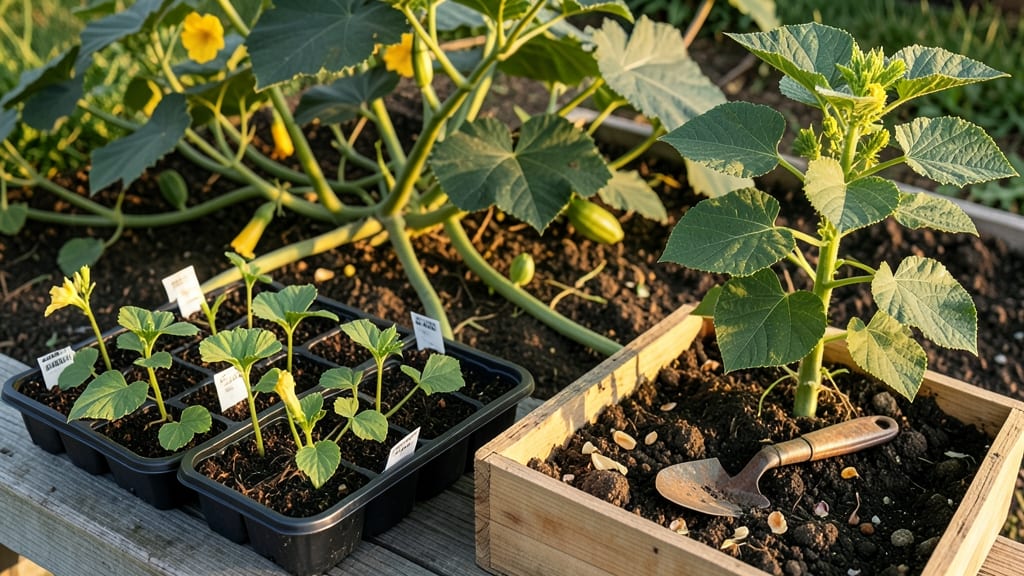
Yes, you can plant squash and okra together because okra deters squash bugs and vine borers while improving soil health, though they require different spacing and sunlight exposure for optimal growth. Both thrive in warm climates but need separate beds or wide rows to prevent competition.
You can absolutely combine these two in your garden—they’re a dynamic duo for pest control and soil health.
Okra’s strong scent confuses squash bugs, while its deep roots break up compacted soil, giving squash plants better access to nutrients. 🌱 The key is spacing: plant okra in a staggered pattern 12–18 inches apart, then tuck squash vines 3–5 feet away to avoid shading.
This setup works best in full sun with well-draining soil, and both plants love the same warm-season conditions.
For even better results, add a 2–3 inch layer of mulch around the base to retain moisture and suppress weeds. Just avoid planting them near potatoes or fennel, as those can stunt okra’s growth.
I’ve seen this combo thrive in raised beds or wide rows, with squash sprawling along the edges while okra stands tall in the center—it’s a space-efficient way to boost your harvest while keeping pests at bay.
💡 In This Article
- How Okra Protects Squash Plants Naturally
- Optimal Spacing and Soil Tips for Squash-Okra Gardens
How okra protects squash plants naturally
Okra acts as a natural pest deterrent for squash through its strong scent and chemical composition. When crushed or disturbed, okra releases volatile sulfur compounds that repel squash bugs and vine borers - two of the most destructive pests for squash plants.
These compounds create an invisible barrier that confuses insects' navigation systems, making it harder for them to locate squash plants. The effect is particularly strong when okra grows within 3-5 feet of squash vines, creating a protective perimeter around the more vulnerable plants.
The deep taproot system of okra (reaching 3-4 feet deep) performs another crucial service by breaking up compacted soil layers that squash plants struggle with. Squash has a shallow root system (12-18 inches deep) that thrives when the topsoil is loose and well-aerated.
Okra's roots create channels that improve drainage and allow squash roots to spread more efficiently. This soil improvement is especially valuable in heavy clay soils where squash often suffers from poor growth and increased disease risk.
What makes this pairing particularly effective is their complementary growth habits. Okra grows vertically, reaching heights of 4-6 feet, while squash sprawls horizontally, creating a natural shade gradient.
During the hottest afternoon hours when squash leaves can scorch, the okra provides partial shade while still allowing sufficient sunlight to reach the squash vines. This balance is crucial in warm climates where both plants thrive, as it prevents leaf burn while maintaining photosynthesis efficiency.
The pest-repellent benefits extend beyond just squash bugs. Okra's presence reduces the population of squash vine borers by disrupting their egg-laying patterns. Studies show gardens with okra planted near squash experience up to 40% fewer borer infestations compared to squash grown alone.
The key is maintaining proper spacing - okra plants should be placed in a staggered pattern around the perimeter of squash beds rather than intermingled, as their different water needs can create competition.
From a soil health perspective, okra contributes nitrogen to the soil through nitrogen fixation in its root nodules, while squash benefits from the improved structure. The combination creates a microclimate that supports beneficial insects like ladybugs and lacewings, which further enhance pest control.
This natural synergy reduces the need for chemical interventions while creating a more resilient garden ecosystem.
When implementing this companion planting strategy, pay attention to the plants' different water requirements. Okra prefers deep but infrequent watering to encourage strong root development, while squash benefits from consistent moisture in the top 6 inches of soil.
Using drip irrigation with separate zones for each plant can help maintain these different needs while maximizing the companion benefits.