
Propagation
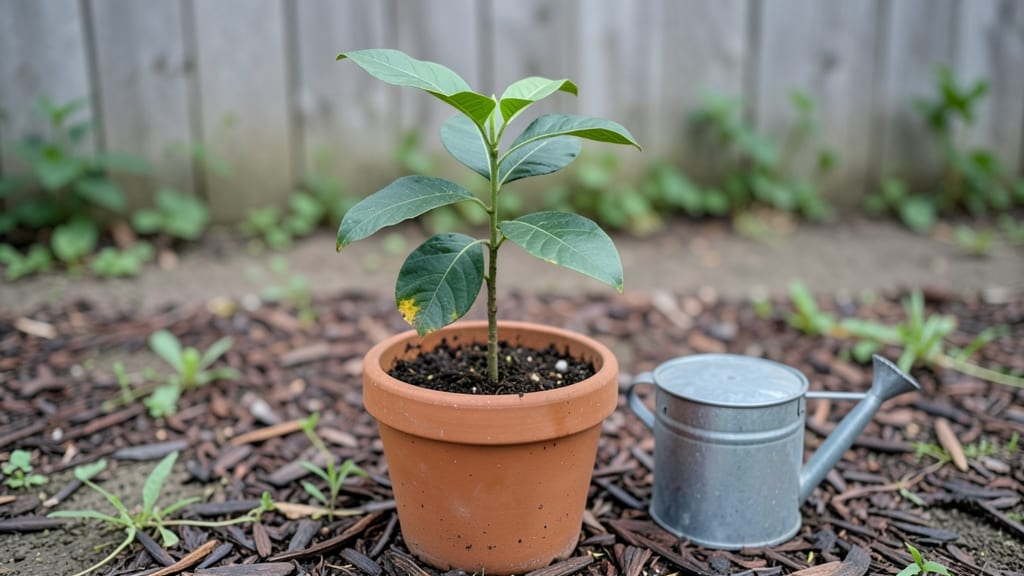
Planting a mango seed is possible, but it requires patience—germination takes 2-4 weeks, and the resulting tree may take 5-10 years to bear fruit. Start by drying the seed, then plant it in moist soil with warmth and indirect light for best results.
Growing a mango tree from seed is a rewarding but slow process, as nature designed mango seeds to resist quick germination. 🌱 The key to success lies in breaking dormancy by drying the seed for a few days before planting—this mimics the natural drying period in tropical climates.
I’ve found that using seeds from ripe, organic mangoes yields stronger seedlings, while store-bought varieties often produce weaker trees due to hybridization. Once planted in well-draining soil, maintaining consistent moisture and warmth (around 75-85°F) is critical for encouraging root development.
The real challenge comes later, as most seed-grown mango trees produce fruit that doesn’t match the parent’s quality—this is why commercial growers prefer grafting. However, the journey itself is fascinating, especially when you watch those first leaves unfurl after 2-4 weeks.
Patience is everything, but the payoff of a homegrown mango tree—even if it takes a decade—is unmatched. 🌟
💡 In This Article
- Mango Seed Germination Science and Conditions
- Step-by-Step Guide to Growing a Mango Tree from Seed
Mango seed germination science and conditions
The biological process of mango seed germination begins with a natural dormancy mechanism designed to protect the seed in its native tropical environment. Mango seeds contain a hard, fibrous outer layer called the endocarp, which resists water absorption until it undergoes a drying period.
This dormancy breaking mimics the natural drying process that occurs when mangoes fall to the ground in the wild. Once the seed absorbs moisture, enzymes activate to break down stored nutrients, kickstarting root growth within 7-14 days under ideal conditions. 🌱
Temperature plays a critical role in germination success, with optimal ranges between 75-85°F (24-29°C). At these temperatures, enzymatic activity peaks, allowing the radicle (embryonic root) to penetrate the seed coat and emerge first.
Below 68°F (20°C), germination slows dramatically, while above 90°F (32°C), the seed risks overheating and dying. Moisture levels must remain consistent—too dry and the seed won't activate, too wet and it risks fungal infections. The ideal soil moisture is like a well-wrung sponge: damp but not soggy.
Light requirements are often misunderstood—mango seeds don't need direct sunlight to germinate. In fact, they thrive with indirect light, which prevents overheating while still providing energy for photosynthesis once the shoot emerges.
This is why placing seeds near a bright window (but not in direct sun) yields better results than a sunny windowsill. The seedling's first leaves, called cotyledons, will appear within 2-4 weeks after root emergence, marking the transition to photosynthetic growth. ✨
Store-bought mango seeds often have lower viability because commercial varieties are often hybridized for shelf life and transport, not germination. These seeds may be treated with fungicides or have thinner seed coats that dry out too quickly.
In contrast, seeds from organic, tree-ripened mangoes have thicker protective layers and higher nutrient reserves, giving them a 60-80% germination rate compared to 30-50% for store-bought varieties. This is why gardeners swear by using seeds from homegrown or farmers' market mangoes.
Here's what's actually happening at the cellular level: The seed's embryo contains meristematic cells that divide rapidly once water and warmth trigger metabolic activity. These cells produce auxins—plant hormones that regulate root growth downward while shoots grow upward.
The seed's natural curvature (often visible before planting) is due to uneven hormone distribution, guiding the radicle toward moisture. This biological process explains why some seeds germinate faster than others—it's not just luck, but the seed's internal hormonal balance. 💫
One common misconception is that larger seeds always produce stronger seedlings. In reality, seed size correlates more with the parent tree's fruit size than germination potential. A 1-inch (2.5 cm) seed from a small mango might outperform a 2-inch (5 cm) seed from a hybrid variety.
The key factors are seed freshness (within 2-3 months of harvest) and proper dormancy breaking—neither of which are guaranteed by seed size alone.