Picking
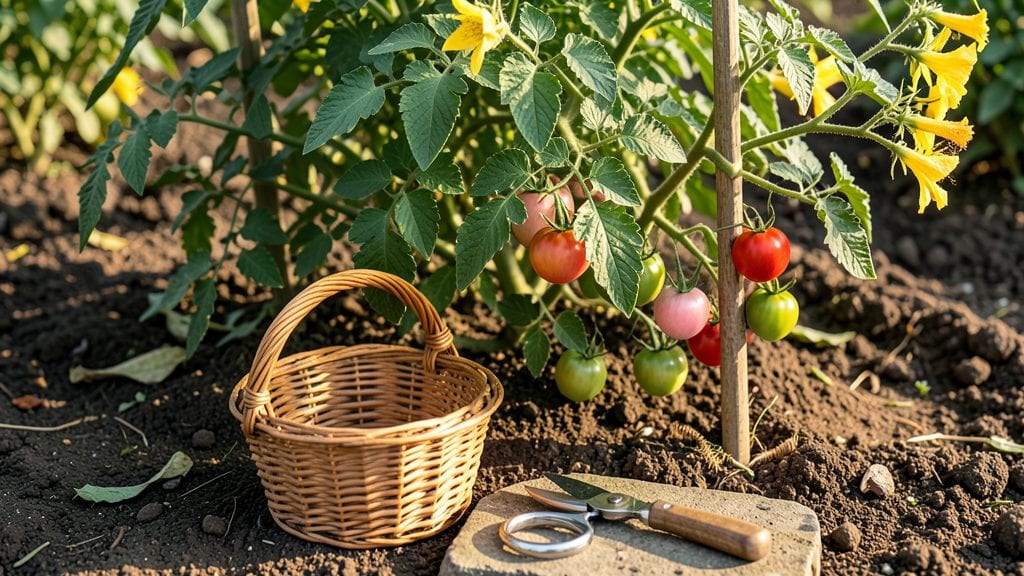
Knowing when to pick tomatoes off the plant ensures peak flavor and prevents waste: vine-ripened varieties should be fully colored and slightly soft when gently squeezed, while green tomatoes can be harvested early for indoor ripening or cooking. Always check for a rich hue and firmness to maximize taste and storage potential.
Timing matters more than you might think—tomatoes ripen faster in warm climates but can take weeks longer in cooler regions. 🌱 The color shift from green to red (or yellow, purple, or black, depending on the variety) signals sugar development, which directly impacts sweetness.
I’ve found that heirloom tomatoes, for example, often need an extra 5-7 days on the vine compared to hybrid varieties to reach their full flavor potential. Overripe tomatoes—those with soft spots or cracks—should be harvested immediately to avoid attracting pests or spoilage.
Your harvesting technique also plays a role. Always twist or gently cut the stem to avoid damaging the plant, and never pull tomatoes directly from the vine. This preserves the plant’s energy for future fruit production.
For green tomatoes, harvesting early lets you control ripening indoors, where you can monitor them closely for the perfect balance of firmness and color.
💡 In This Article
- Tomato Ripeness Stages Explained
- Harvesting Tomatoes by Variety and Purpose
Tomato ripeness stages explained
Tomatoes undergo a fascinating biological process called ripening, driven primarily by the plant hormone ethylene. This gaseous compound triggers color changes, sugar accumulation, and softening as chlorophyll breaks down and carotenoids (like lycopene) take over.
The transition from green to red (or other mature colors) typically takes 20-40 days after flowering, though heirloom varieties often require 5-10 days longer than hybrids. Temperature plays a crucial role here—cool nights below 55°F can delay ripening by slowing ethylene production, while consistent warmth above 75°F accelerates the process.
The sugar content—measured as brix (a ratio of dissolved solids to water)—is a key indicator of ripeness. Fully ripe tomatoes typically register between 4-6% brix, with heirlooms often reaching 6-8% brix due to their thicker skins and slower maturation.
This sugar development is why vine-ripened tomatoes taste exponentially sweeter than those harvested early.
The texture also changes as pectin breaks down, making the fruit yield slightly when gently squeezed—a telltale sign of peak ripeness. 🌿 What most gardeners don’t realize is that tomatoes continue to ripen off the vine if they’re already at this stage, but their flavor won’t improve.
Climate significantly alters these stages. In hot, dry regions like California, tomatoes may ripen in just 3-4 weeks after flowering, while in cooler climates like the Pacific Northwest, the process can stretch to 6-8 weeks.
Humidity also affects ripening—high moisture levels can lead to fungal growth, while low humidity may cause cracking as the fruit expands. Varieties like Beefsteak tomatoes, which develop slowly due to their large size, benefit from consistent warmth and even watering to avoid stress-induced cracking.
The key factor here is balance: too much heat speeds up ripening but can reduce sugar content, while cool temperatures slow development but may enhance flavor complexity.
Premature harvesting—removing tomatoes before they’ve fully ripened—has lasting consequences. Green tomatoes lack the sugar and acid balance of ripe ones, resulting in a bland, grassy taste. Their cell walls are also firmer, meaning they won’t soften properly when cooked.
What’s more, unripe tomatoes contain higher levels of solanine, a natural toxin that can cause digestive upset if consumed in large quantities.
However, harvesting green tomatoes for indoor ripening is a smart strategy in cooler climates, as they’ll develop flavor more predictably on a sunny windowsill or in a paper bag with a banana (the banana emits extra ethylene).
Overripe tomatoes, identifiable by soft spots, cracks, or a mushy texture, should be harvested immediately to prevent spoilage and pest attraction. These signs indicate the fruit’s cells have broken down, releasing enzymes that accelerate decay.
While overripe tomatoes are best used in sauces or salsas where their softened texture is desirable, their flavor often peaks just before these physical changes occur.
For storage, fully ripe tomatoes last 5-7 days at room temperature, while green tomatoes can be stored for 2-3 weeks in a cool, dry place.
The secret to extending their shelf life lies in avoiding ethylene exposure—never store them in the fridge until fully ripe, as cold temperatures destroy their cell membranes and turn the flesh mealy.
Here’s what’s actually happening at the cellular level: as tomatoes ripen, their cell walls weaken due to the action of enzymes like polygalacturonase, which breaks down pectin. This process is irreversible and explains why overripe tomatoes become mushy.
Meanwhile, the production of volatile organic compounds (VOCs) like hexanal and β-ionone gives ripe tomatoes their signature aroma. These compounds are what make a vine-ripened tomato smell irresistible—something you’ll never get from a store-bought specimen that was picked green and gassed with ethylene later. 💫