
Pruning
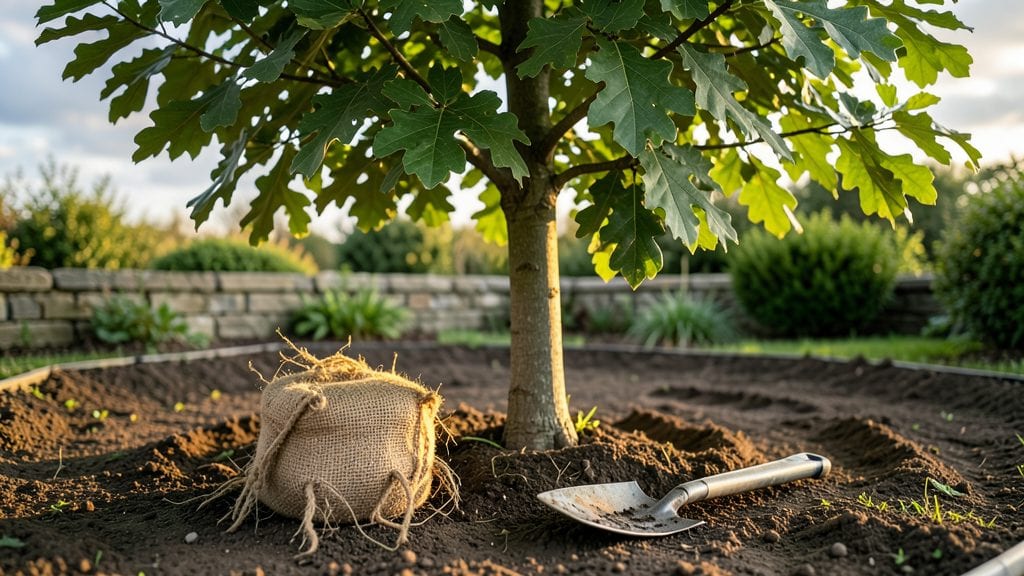
Master these essential tree planting tips before you dig—because a single misstep can doom your sapling to a slow, silent death. I’ve learned the hard way that digging too deep or ignoring soil prep turns even the hardiest saplings into slow, struggling survivors.
The right technique means your tree grows strong from day one, not just survives.
First, match the tree to its spot: full sun for oaks and maples, partial shade for dogwoods, and moist soil for willows. A shovel, wheelbarrow, and 5-gallon tree are all you need to start.
Dig a hole twice as wide as the root ball but no deeper—buried roots suffocate. Loosen the soil at the bottom to encourage roots to spread outward, not circle the hole.
After planting, water deeply to settle the soil, then add 2-3 inches of mulch to lock in moisture and block weeds. The first year is critical: check soil moisture weekly, especially in summer heat. A properly planted tree needs 10-15 gallons of water every 7-10 days, depending on rain.
Season matters—spring or fall planting gives roots time to establish before extreme heat or cold. Avoid planting in winter (frozen roots) or peak summer (stress). Even the best-planted tree can fail if you skip the follow-up care, so stick with it.
Your future shade, fruit, or wildlife haven starts with these steps.
📚 In This Guide
- What you need
- Instructions
- Tips and common mistakes
- Wrapping up and next steps
What you need
- ● Tree sapling or seedling: 1–3 trees (depending on your space and goals)
- ● Choose native species for best local adaptation
- ● Size: 1–3 feet tall (for faster establishment)
- ● Shovel or tree spade: 1 round-point shovel (for digging holes) or 1 tree spade (for minimal root disturbance)
- ● Size: 12–18 inches wide (adjust for tree size)
- ● Compost or organic matter: 5–10 gallons (mix with native soil for nutrients)
- ● Options: Well-rotted manure, leaf mold, or peat moss
- ● Watering can or hose with nozzle: 1 watering can (5+ gallons) or hose with gentle spray setting
- ● Mulch: 3–4 inches of wood chips, straw, or shredded bark (cover the soil surface, not the trunk!)
- ● Avoid plastic mulch—it traps heat and suffocates roots.
- ○ Gloves and knee pads (optional but recommended): 1 pair gardening gloves (for protection)
- ● 1 pair knee pads (for comfort)
- ● Tree stake and soft tie (for young, top-heavy trees in windy areas)
- ● Soil tester kit (to check pH and nutrient levels)
- ● Post-hole digger (if planting in clay or rocky soil)
- ● Pruners (for trimming damaged branches post-planting)
- ● Tree guard or wire cage (to protect from animals or lawn equipment)
Step-by-Step instructions for planting trees with long-term success
Here's how to plant trees the right way—so they thrive for decades, not just seasons.
Choose the Right Spot and Dig the Perfect Hole
Pick a location with at least 6-8 feet of clear space around the tree's mature size. Avoid low spots where water pools—roots need oxygen, not soggy soil. I always check the site for underground utilities before digging, because hitting a buried line can ruin everything.
Dig a hole twice as wide as the root ball but only as deep. The top of the root ball should sit 2-3 inches above ground level—this prevents water from pooling at the base. Loosen the sides of the hole with a shovel to help roots spread outward instead of circling the hole.
Prepare the Root Ball and Position the Tree
If the tree arrived balled-and-burlapped, remove the burlap but leave the root ball intact. For bare-root trees, soak the roots in lukewarm water for 1-2 hours before planting to revive them. Inspect the roots—any that are dried or broken should be trimmed back with clean pruners.
Place the tree in the center of the hole, ensuring the root flare (where the roots meet the trunk) is visible above the soil line. Use a level to confirm it’s straight—tilting now means leaning later. Fill the hole with native soil, tamping down gently in layers to eliminate air pockets.
Water Deeply and Mulch for Retention
After planting, water the tree slowly and deeply until water runs out the bottom of the hole. This helps settle the soil and removes air gaps around the roots. I always water again 3-4 days later to encourage root growth into the surrounding soil.
Spread 2-3 inches of mulch (wood chips or bark) in a 3-foot diameter circle around the base, keeping it 6 inches away from the trunk. Mulch locks in moisture and regulates soil temperature, but too much can suffocate roots. Avoid piles—think of it as a donut, not a volcano.
Stake Only When Necessary and Prune for Strength
Staking is controversial, but I only use it for young trees in windy areas or with shallow roots. If you stake, use two stakes on opposite sides, tied loosely with rubberized tree ties—tight straps can girdle the trunk as it grows. Remove stakes after 1-2 years to let the tree develop natural stability.
Prune dead, diseased, or crossing branches with clean, sharp pruners, cutting just outside the branch collar. Avoid heavy pruning—never remove more than 25% of the canopy at planting. This ensures the tree focuses on root establishment, not leaf regrowth.
Monitor and Adjust for Seasonal Changes
Check the soil moisture weekly—young trees need 1-2 inches of water per week, more in hot or dry spells. Water deeply at the base, not overhead, to avoid fungal diseases. In winter, wrap the trunk with tree guard if your climate dips below 10°F to prevent sunscald.
Watch for signs of stress: yellowing leaves, wilting, or leaf drop. These usually mean overwatering, underwatering, or poor drainage. Adjust your care routine based on what you observe—trees don’t lie, they just show you what’s wrong.
Tips & tricks for planting trees with long-term success
Planting a tree that thrives for decades starts with these essential tricks—most people miss the details that make all the difference.
Location is Everything: I can't stress this enough—avoid planting near sidewalks, driveways, or other structures. Trees grow, and their roots will seek out the easiest path, which often means cracking concrete or damaging foundations. Measure your tree's mature size (usually listed on the tag) and give it at least twice that space in all directions. For example, a 30-foot tree needs at least 60 feet of clear space when mature.
Root Ball Placement Matters: When positioning your tree in Step 2, that 2-3 inch elevation above ground level isn't just a suggestion—it's critical. This prevents water from pooling around the trunk, which can cause rot. I've seen too many trees planted too deep, where the roots suffocate and the tree struggles from day one. Use a level to check straightness, but don't obsess over perfect alignment—trees adjust better than we think.
Watering Wisdom: That first deep watering after planting isn't just about settling the soil—it's about removing air pockets around the roots. I've learned the hard way that skipping the 3-4 day follow-up watering leads to poor root establishment. Think of it as giving your tree a strong foundation before it has to fend for itself. In hot climates, you might need to water every 2-3 days during the first year until the roots establish.
Mulch Like a Pro: The 2-3 inches of mulch in a 3-foot circle isn't just decoration—it's a game-changer for moisture retention and temperature regulation. But here's what nobody tells you: refresh that mulch every year as it breaks down. And never pile it against the trunk—keep it 6 inches away to prevent rot. I've seen trees with mulch volcanoes that actually suffocated their own roots by trapping too much moisture against the bark.
Pro Tips for Tree Planting Tips
- Planting a tree that thrives for decades starts with these essential tricks—most people miss the details that make all the difference.
- Location is Everything: I can't stress this enough—avoid planting near sidewalks, driveways, or other structures.
- Root Ball Placement Matters: When positioning your tree in Step 2, that 2-3 inch elevation above ground level isn't just a suggestion—it's critical.
Frequently asked questions
Got questions about planting trees? You’re not alone! Here are some of the most common queries—and straightforward answers—to help you get started with confidence.
When is the best time to plant a tree?
The ideal window is late fall to early spring (dormant season), when soil is cool and moist. Avoid extreme heat or frost, as these stress young roots. Pro tip: If you must plant in summer, water deeply 2-3 times a week to keep roots hydrated.
How often should I water a newly planted tree?
Water thoroughly 2-3 times per week for the first year, aiming for 10-15 gallons per inch of trunk diameter. After that, taper to once a week (or more in drought). Watch for: Wilting leaves or dry soil 2-3 inches deep—these signal it’s time to water.
Can I plant a tree in a small yard or urban area?
Choose dwarf varieties (like Japanese maples) or fast-growing species (e.g., redbuds) with shallow roots. Avoid planting near sidewalks or foundations—stick to at least 3 feet from structures. Bonus: Raised beds or large containers work for tiny spaces!
What should I do if my tree’s leaves turn yellow or brown?
Yellowing leaves often mean overwatering or poor drainage. Brown edges? Likely underwatering or stress. Check soil moisture, mulch properly (2-4 inches), and avoid compacting soil around the base. Rule of thumb: If the problem persists after 2 weeks, test soil pH or consult a local arborist.
Are there low-maintenance trees for beginners?
Yes! Try these resilient picks:
- Crape Myrtle – Drought-tolerant, pest-resistant, and blooms yearly.
- Dogwood – Thrives in partial shade with minimal pruning.
- Ginkgo – Handles pollution well and requires little care.
Wrapping up and next steps
Planting trees is more than just a seasonal task—it’s an investment in our planet’s future. 🌱 Whether you’re a beginner or a seasoned gardener, the key to success lies in preparation, patience, and proper technique.
Choose the right species, prepare the soil, and give your tree the love it needs to thrive year-round.
Now that you’re armed with these root-deep tips, why not take the next step? Pick a spot in your yard, grab your tools, and start planting today! Every tree makes a difference—let’s grow something beautiful together. 🌳✨